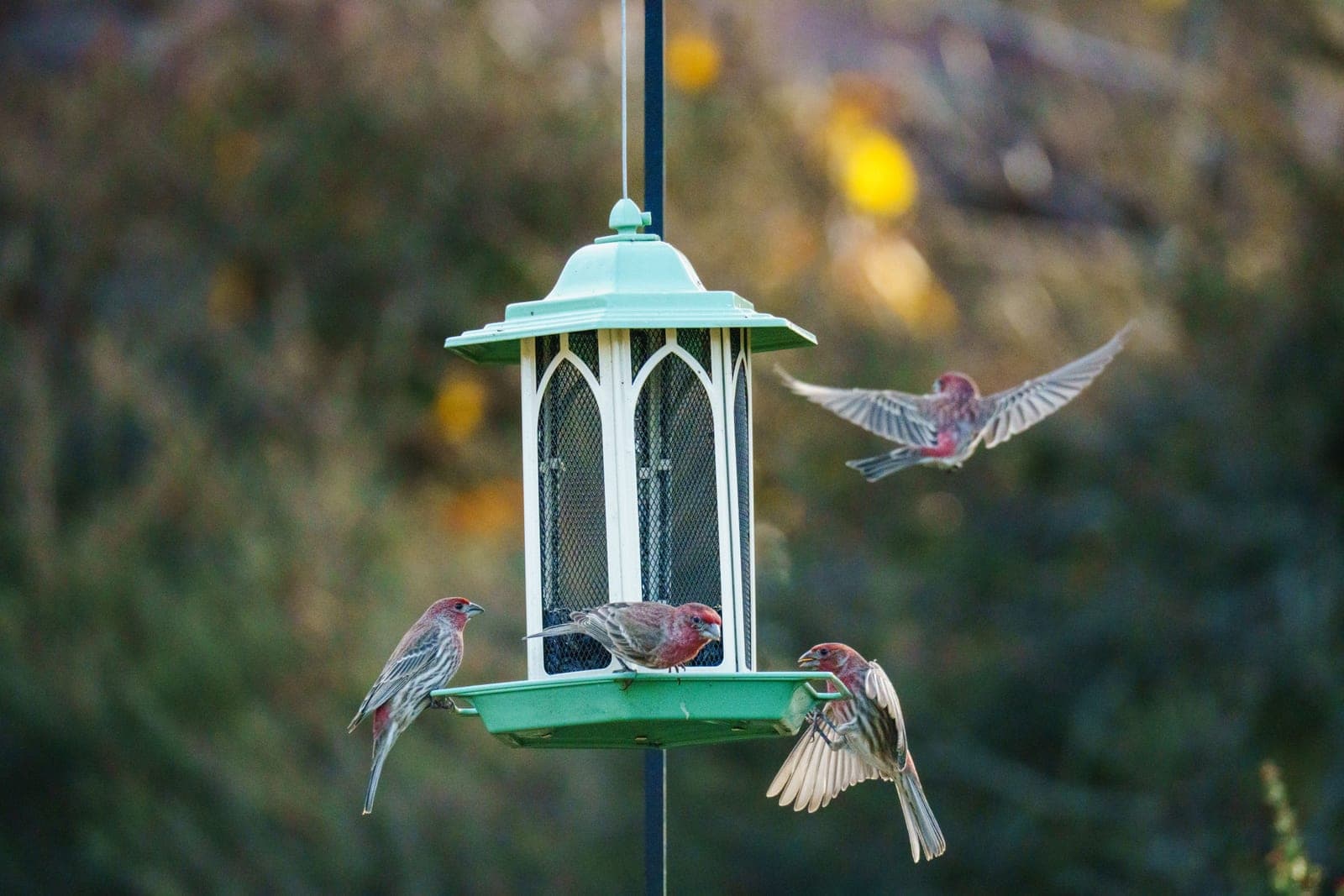
Best Squirrel Baffle
The best squirrel baffles
Seven baffles ranked by published dimensions and mount fit, with the clearance rule that decides all of it.
Scooter M.

$39.99 on Amazon
Top pick: Erva SB6 Pole-Mount Disk Baffle, 22.5 in · #ad
Defend the feeder and garden
The feeder war
A baffle does not fail because it is the wrong brand. It fails because it is in the wrong place. Start with the geometry, then pick the shape that fits what your feeder is actually mounted on.
Start here
If you only read one page on this site, read how high a squirrel baffle has to be. Almost every baffle that fails was installed at the wrong height or with too little clear air around it, and no amount of steel fixes that.

Best Squirrel Baffle
Seven baffles ranked by published dimensions and mount fit, with the clearance rule that decides all of it.
Scooter M.
Top pick: Erva SB6 Pole-Mount Disk Baffle, 22.5 in · #ad
Every review in this category ranks baffles against each other as though the product decides the outcome. It mostly does not. A gray squirrel can jump about four feet vertically and roughly twice that horizontally, according to the Alabama Cooperative Extension System. Those two numbers, and where your pole sits relative to the nearest fence, branch or rail, decide whether a baffle works far more than the gauge of its steel does.
That is why this hub is organized by mount type rather than by brand. The question that matters is not which baffle is best in the abstract; it is which baffle physically fits a round pole, a 4x4 wooden post, a shepherd's hook, a tree trunk or a hanging feeder, and whether you can give it the clearance it needs once it is on.
There are only three mechanisms in this category, and the marketing names obscure them.
None of these stops an animal that lands above the baffle. That is the whole reason clearance decides the outcome. If a squirrel can leap from a fence rail onto the feeder itself, the baffle underneath is decoration.
The question that decides most purchases in this category, and the one almost no listing answers directly. Products appear here only where the maker states the mount.
| Mount | What fits | Note |
|---|---|---|
| Round pole | Erva SB6 Pole-Mount Disk Baffle, 22.5 in; Erva SB2D Cylindrical Squirrel and Raccoon Baffle, 28 x 6.25 in; ReTang 19 in Metal Wrap-Around Baffle; Erva Round-Pole Cylindrical Baffle; Gtongoko 19 in Wrap-Around Squirrel Baffle | The default feeder mount |
| 4x4 post (3.5 in actual) | Erva SB3 Raccoon & Squirrel Baffle, 4x4 post; Erva SB7GLV 4x4 Disk Baffle; Erva Post-Mounted Baffle, 8 in diameter | Square section; most pole baffles do not fit |
| Shepherd's hook | iBorn 10.6 in Hummingbird Feeder Rain Cover with Integrated Ant Moat; Gtongoko 19 in Wrap-Around Squirrel Baffle | Usually too short for the geometry |
| Hanging line or branch | iBorn 10.6 in Hummingbird Feeder Rain Cover with Integrated Ant Moat | A dome above, not a baffle below |
| Tree trunk | No baffle in our set is published as fitting this. Exclude at the feeder instead. | One route out of many |
| Deck rail | No baffle in our set is published as fitting this. Exclude at the feeder instead. | A launch point at feeder height |
Compiled from each maker’s own published listing. A blank is a blank, not an inference: where a maker does not state the mount, we do not guess it.
Audubon says the baffle should sit between four and five feet off the ground and the feeder should be at least 8 to 10 feet from anything solid. Those are two different measurements: one vertical, one horizontal. A page-one result in this category publishes 6 to 10 feet as the mounting height, which reads like the horizontal figure has been pasted into the vertical slot. Follow it on a standard seven-foot feeder pole and there is nowhere left to hang the feeder.
We flag disagreements like that rather than smoothing them over. The clearance guide shows both numbers, names both sources, and works through the arithmetic so you can check it against your own yard rather than take our word for it.
If the pole itself is the problem — too short, too thin, too close to the fence — a complete pole system is often cheaper than a baffle plus the fix. And if the squirrels are also working your vegetable beds, the same animal is the subject of the garden section: same species, different target.
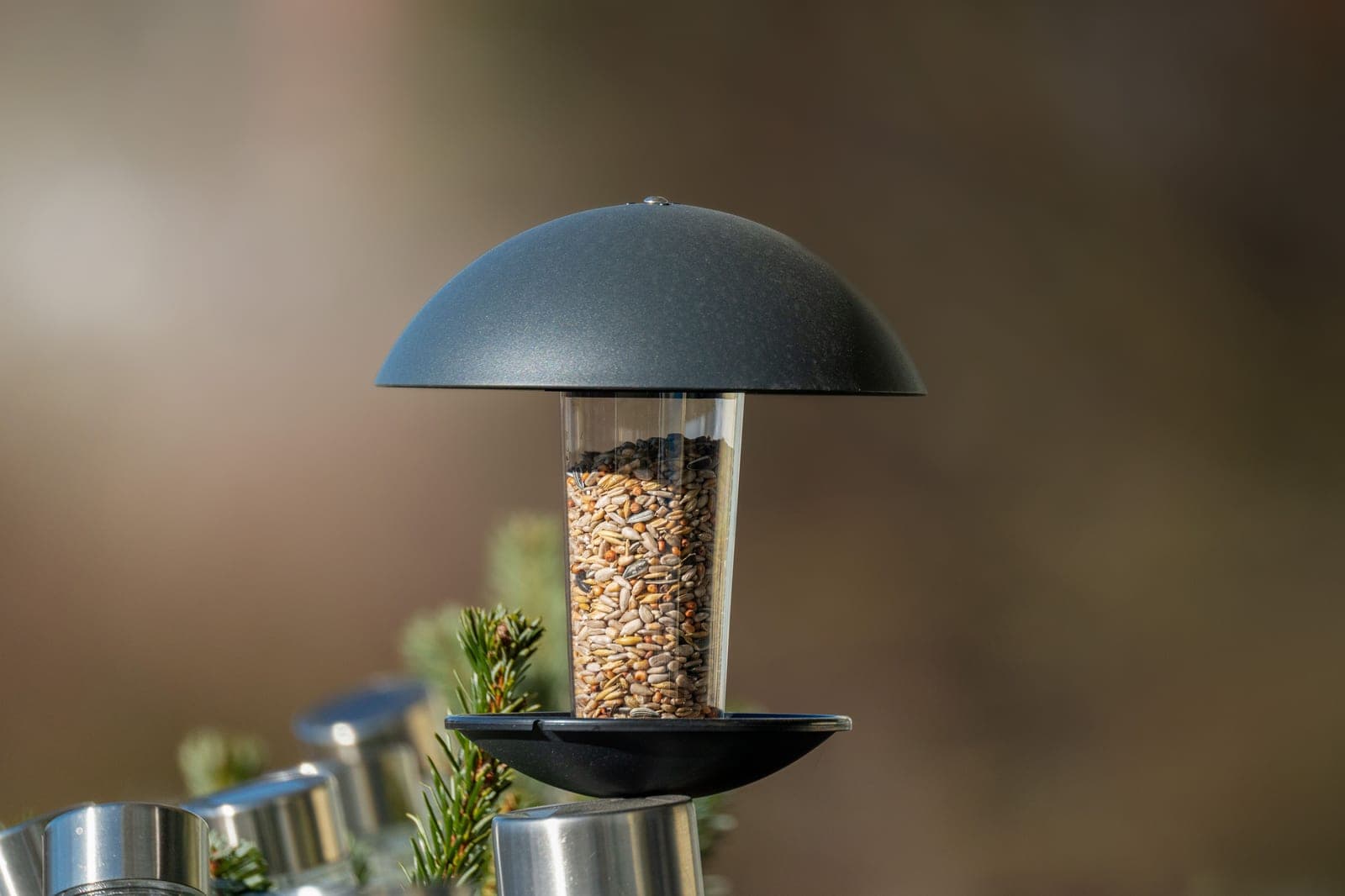
Comparison
Three baffle shapes, three different mechanisms, and which mount each one actually belongs on.
Scooter M.
Top pick: Erva SB6 Pole-Mount Disk Baffle, 22.5 in · #ad
Fitment
Disk or torpedo on a round pole, what diameter matters, and the four-to-five-foot rule that decides it.
Scooter M.
Top pick: Erva SB6 Pole-Mount Disk Baffle, 22.5 in · #ad
Fitment
A nominal 4x4 is 3.5 in and square, so most pole baffles do not fit. Here is what does.
Scooter M.
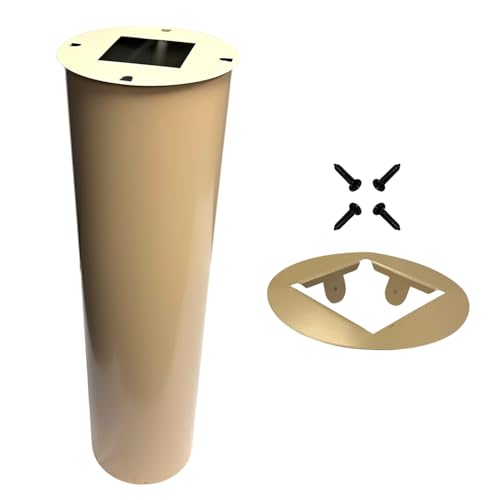
Top pick: Erva SB3 Raccoon & Squirrel Baffle, 4x4 post · #ad

Fitment
Why hooks disappoint, what fits a shaft, and when a caged feeder beats a baffle entirely.
Scooter M.

Top pick: Erva SB2D Cylindrical Squirrel and Raccoon Baffle, 28 x 6.25 in · #ad
Fitment
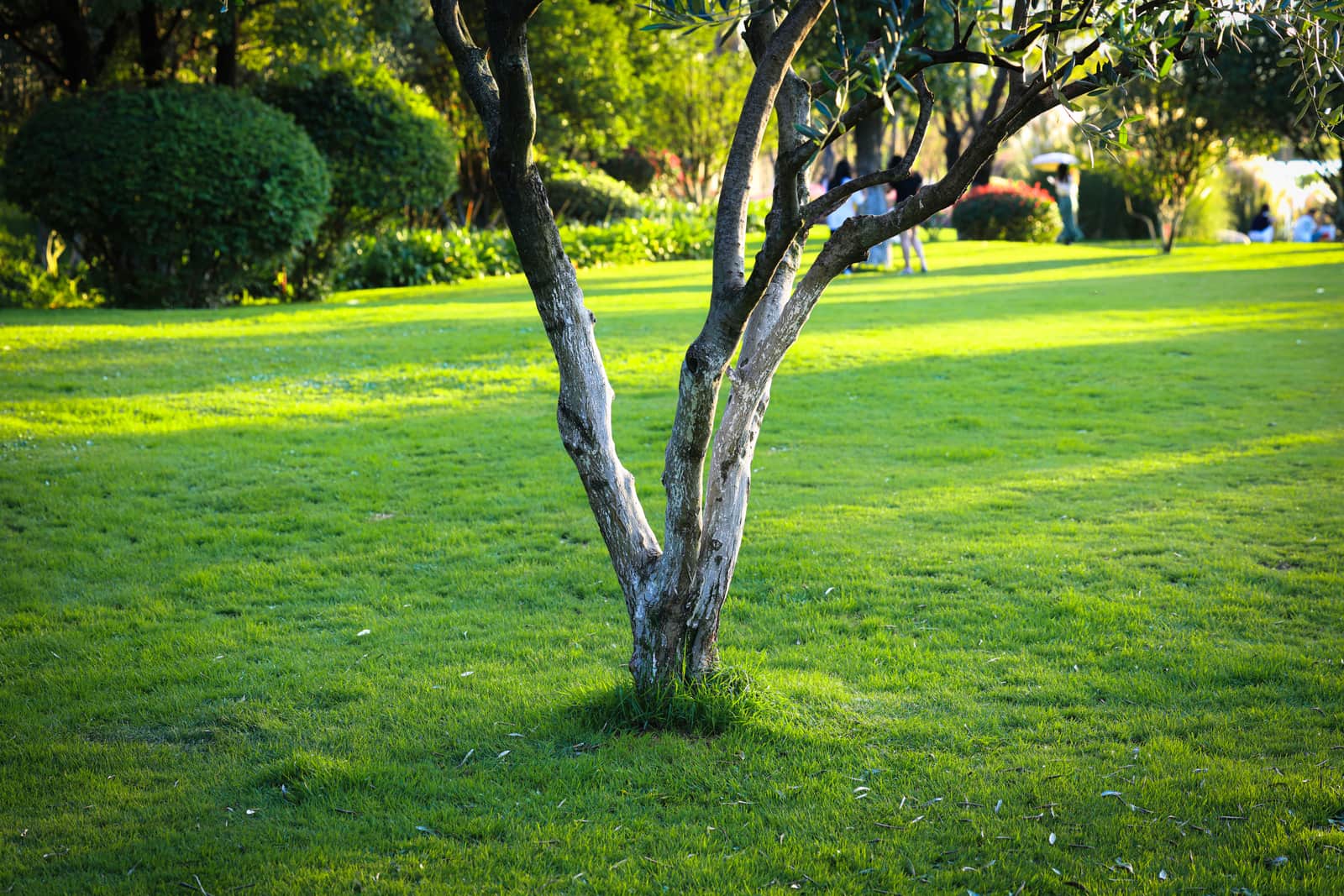
A trunk baffle closes one route out of many. What to do instead when the feeder has to stay in the tree.
Scooter M.

Top pick: Girvenith Metal Caged Seed Feeder, 4 port · #ad

Fitment
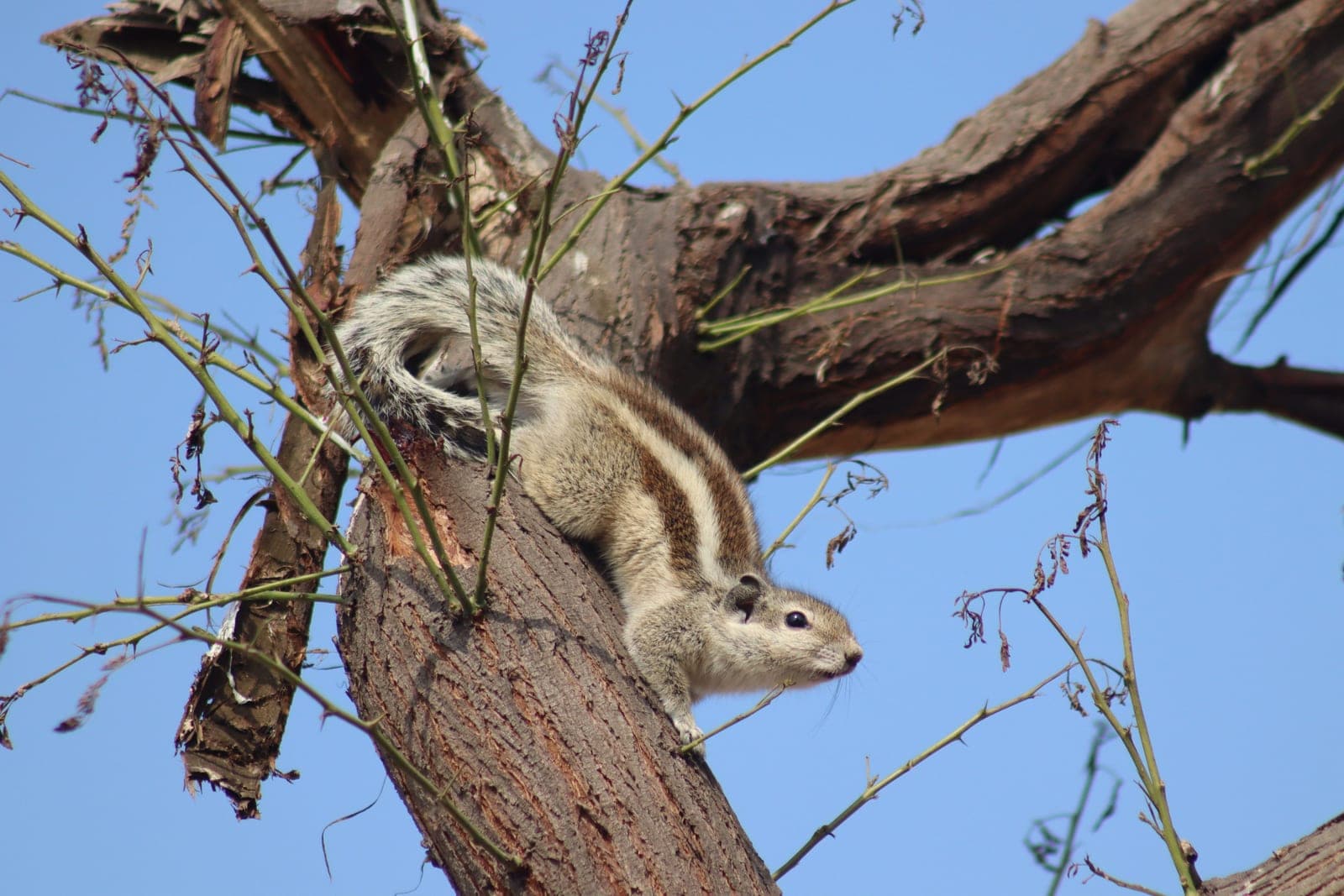
A dome above a feeder blocks a drop and nothing else. How to tell whether that is your problem.
Scooter M.
Top pick: Girvenith Metal Caged Seed Feeder, 4 port · #ad
Guide
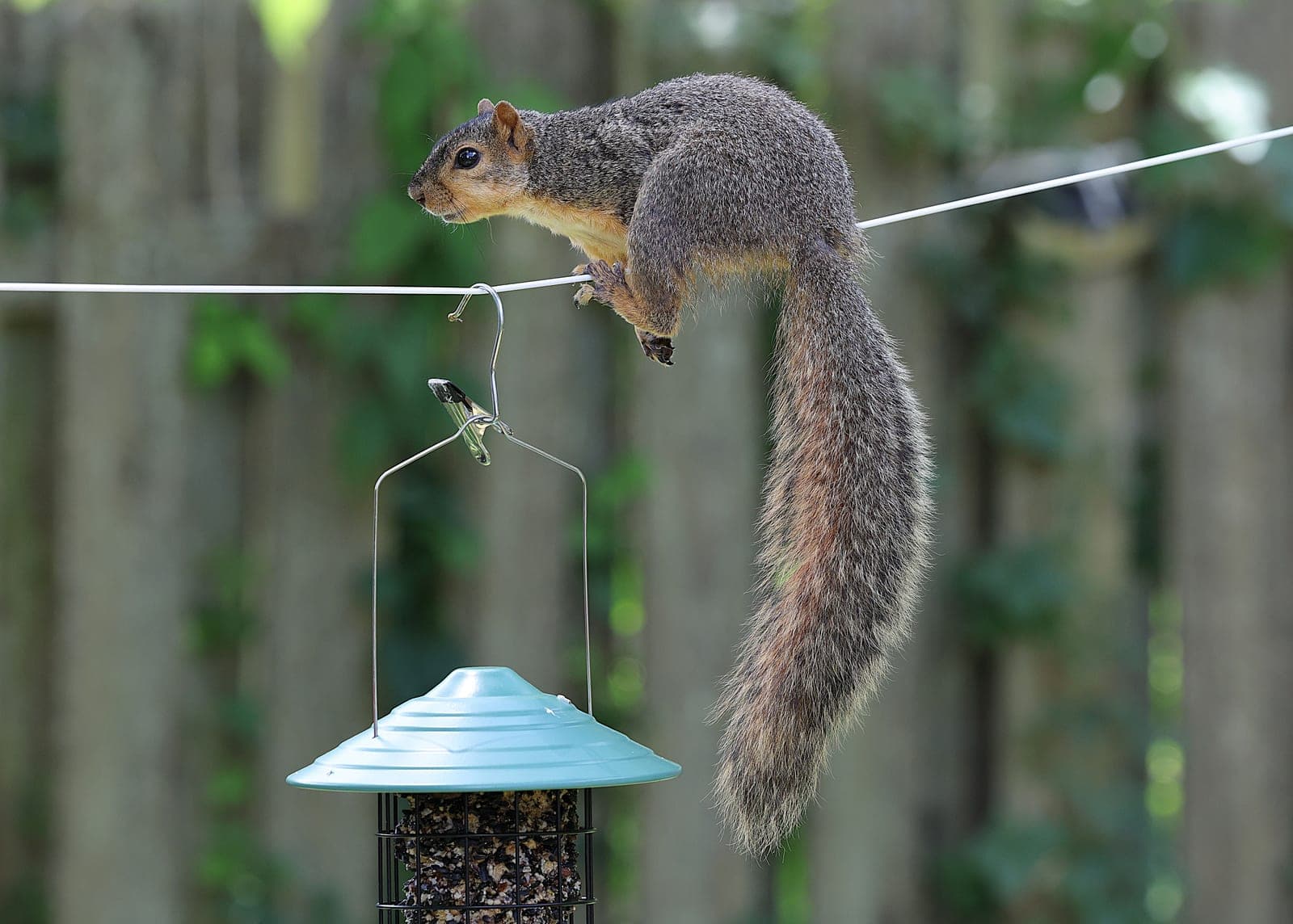
Four to five feet high, eight to ten feet clear. The sourced numbers, the arithmetic, and the popular page that gets it wrong.
Scooter M.
Top pick: Erva SB6 Pole-Mount Disk Baffle, 22.5 in · #ad
Guide
Yes, within a narrow set of conditions. The four failure modes and how to diagnose yours in ten minutes.
Scooter M.
Top pick: Erva SB6 Pole-Mount Disk Baffle, 22.5 in · #ad
Guide
The whole subject in one page: the two jump distances, the three barriers, and where to go for each fight.
Scooter M.
Top pick: Erva SB6 Pole-Mount Disk Baffle, 22.5 in · #ad