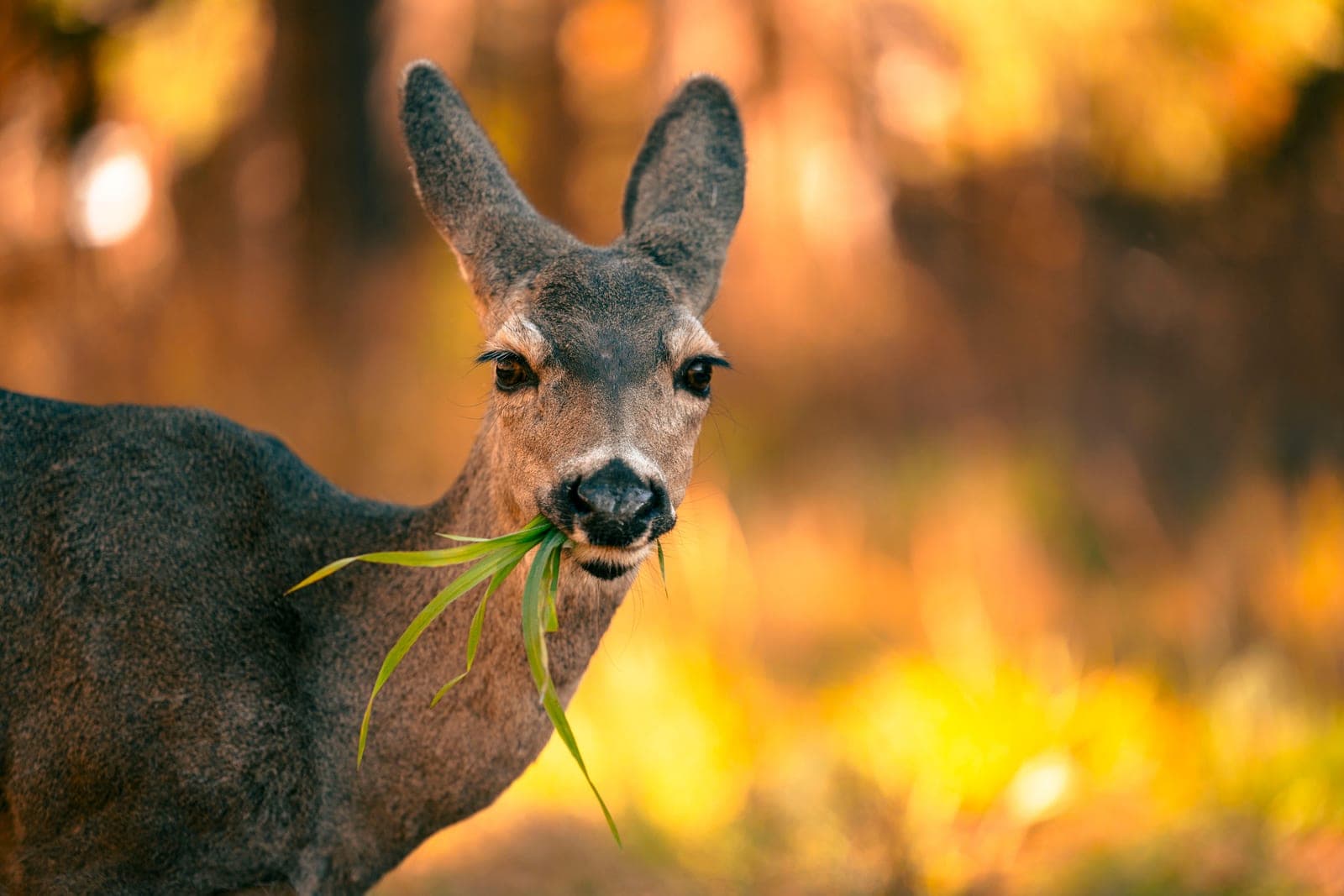
Best Deer Repellent
The best deer repellents
Ranked on published yield and format, with an honest account of why repellents fail: reapplication, not chemistry.
Scooter M.

$65.47 on Amazon
Top pick: Plantskydd Powder Concentrate, 2.2 lb · #ad
Defend the feeder and garden
The garden war
There is one method that reliably works and several that reduce the damage. Knowing which is which before you spend anything is the difference between solving this and repeating it every spring.
Start here
The height is the decision. Michigan State University Extension puts effective deer perimeters at 8 to 10 ft, and notes that the only sure barriers are woven wire fences or walls at least 10 ft tall. Every 7.5 ft mesh fence sold as a deer fence, including the ones we recommend, is a knowing compromise against that figure.
Best Deer Repellent
Ranked on published yield and format, with an honest account of why repellents fail: reapplication, not chemistry.
Scooter M.
Top pick: Plantskydd Powder Concentrate, 2.2 lb · #ad
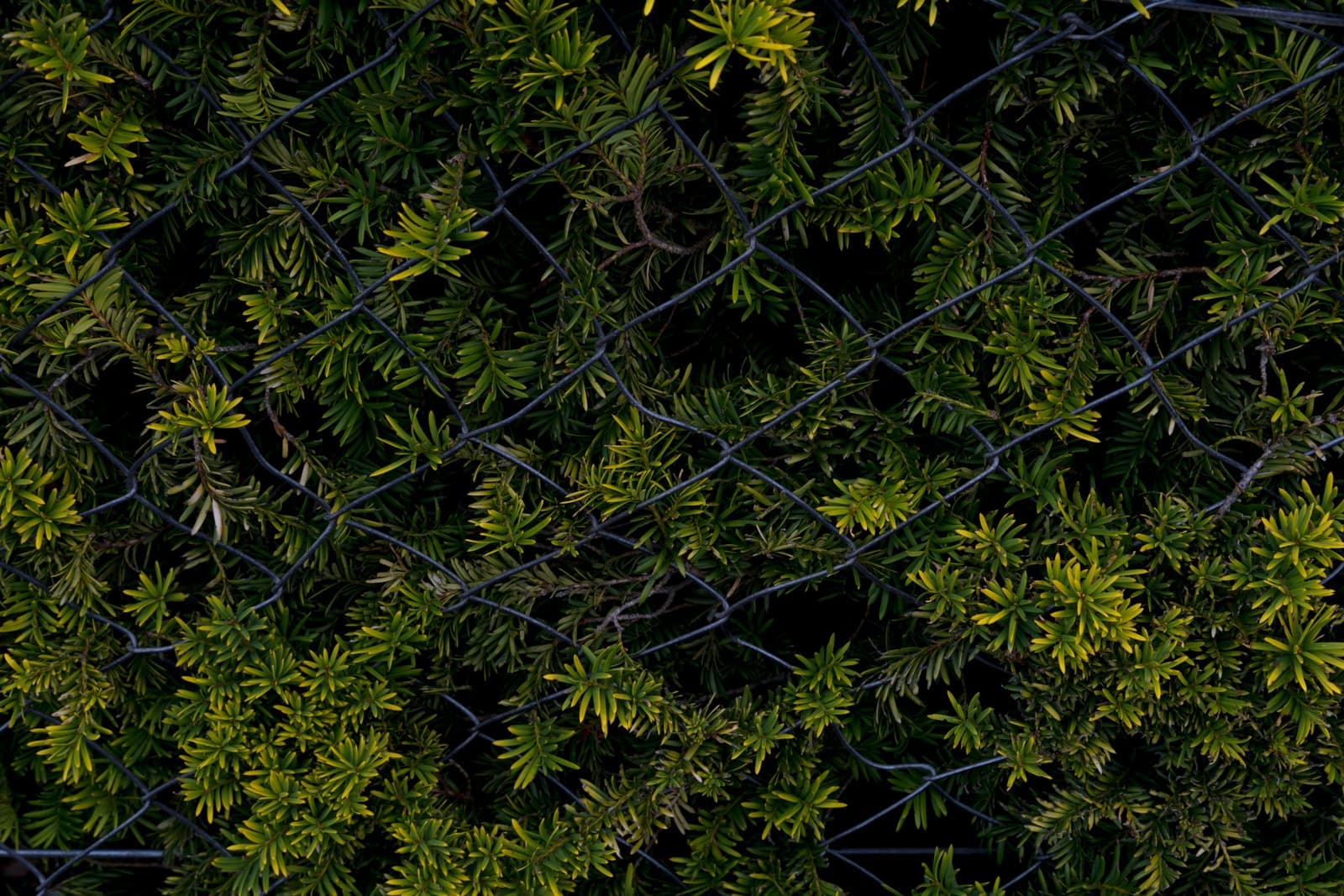
Best Deer Fence
Every mesh deer fence sold online is 7.5 ft; extension services say 8 to 10. What that compromise buys.
Scooter M.

Top pick: Tenax Select Deer Fence, 7.5 ft x 100 ft · #ad
Best Deer Deterrent Device
Ranked on whether the maker publishes a checkable mechanism. Sprinklers do; ultrasonic and LED units do not.
Scooter M.

Top pick: Orbit Yard Enforcer Motion-Activated Sprinkler (62100) · #ad

Best Tree Protection
Buck rub and browse are different problems with no shared fix. Trunk guards by height, netting held clear, and where sprays actually help.
Scooter M.

Top pick: A.M. Leonard Vinyl Spiral Tree Guards, 36 in, 5 pack · #ad
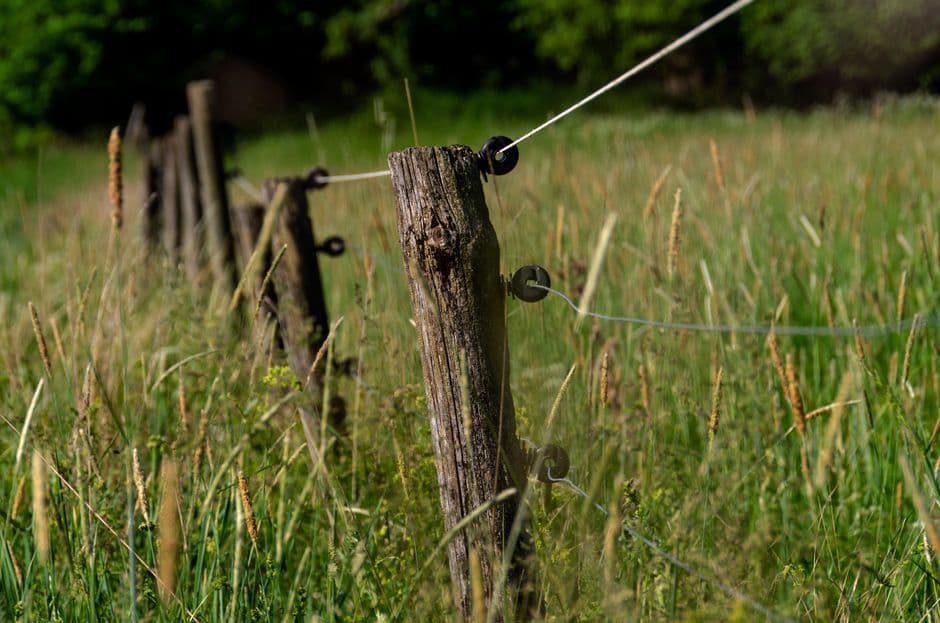
Best Deer Fence Post
A deer fence is only as tall as its posts let it stand. Post length versus burial depth, sleeves versus driven posts, spacing, corners, and the bottom-edge hardware that decides whether any of it works.
Scooter M.

Top pick: 8 ft Deer Fence Post with Ground Sleeve, 7 pack · #ad
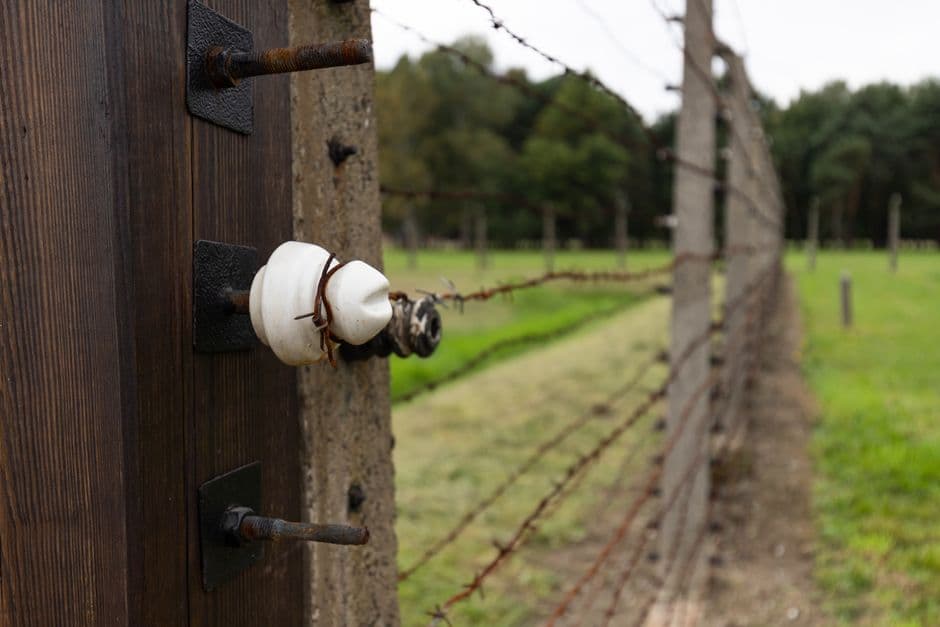
Best Electric Deer Fence Setup
An electric deer fence teaches avoidance rather than blocking a jump, which is why every published design baits the line. Construction specs, the 90% and 99% effectiveness figures, and the safety limits.
Scooter M.

Top pick: Gallagher S20 Solar Fence Energizer, 0.2 joule · #ad
Extension services are unusually consistent here, and unusually blunt. Michigan State University Extension states that perimeter fences need to be at least 8 to 10 feet tall to be effective, and that the only sure deer barriers are woven wire fences or walls at least 10 feet tall. Penn State Extension notes that deer are capable of jumping an 8 ft fence and suggests considering 10 to 12 ft.
That is worth sitting with, because almost every polypropylene deer fence sold online is 7.5 ft. The ones on this site are 7.5 ft. They are a compromise, they are usually an effective one on sloping or wooded ground where a deer cannot see a clean landing, and they are the wrong product for flat open ground under heavy browse pressure. We would rather tell you that than sell you a fence that fails in March.
The useful framing is that these are not competitors. A fence handles the perimeter, a repellent handles the ornamentals you did not fence, and a sprinkler handles the one gate you keep leaving open. Spray vs fence vs device is the direct comparison.
Almost always because of reapplication. A repellent is a coating; a coating on a growing plant covers a shrinking fraction of it every week. New leaves are untreated leaves. Rain strips product. And deer are perfectly capable of eating something they dislike if they are hungry enough and the alternative is nothing.
So the honest advice is: buy the concentrate rather than the ready-to-use bottle, because cost per treated area is what determines whether you keep spraying; put it on a calendar; and rotate products with different bases so habituation has less to work with. Plantskydd is blood-meal based and Bobbex is a different formulation, which is what makes rotating them meaningful rather than cosmetic.
Nothing on this page is as cost-effective as not planting the thing deer prefer. Colorado State University Extension publishes deer-resistant plant lists, and while nothing is deer-proof under enough pressure, moving the most-browsed species out of the front line reduces how hard every other method has to work. Keeping deer out of the garden covers this alongside the physical methods.
We have not installed any of these fences and we have not run a repellent trial. What we have done is compile the published specifications — heights, breaking loads, stated life expectancies, mixing ratios — and put them beside what the extension services publish about what actually excludes a deer. That is a real piece of work and it is checkable. How we pick sets out exactly where the line is.

Comparison
Exclusion, mitigation and startle are three different jobs. Which method does which.
Scooter M.
Top pick: Tenax Select Deer Fence, 7.5 ft x 100 ft · #ad

Fitment
Dried blood, odor-based, OMRI listed, and a published yield that makes the powder the size to buy. The claims that are specs and the ones that are marketing.
Scooter M.
Top pick: Plantskydd Powder Concentrate, 2.2 lb · #ad

Comparison
Blood, egg-and-garlic, and a fish-oil sticker: three bases, three published schedules, and one maker's rotation claim we disagree with.
Scooter M.
Top pick: Plantskydd Powder Concentrate, 2.2 lb · #ad
Guide
Fence, repel, deter, replant — in that order, with the published height that decides step one.
Scooter M.
Top pick: Tenax Select Deer Fence, 7.5 ft x 100 ft · #ad

Guide
Eight to ten feet, per every extension service. Why the market sells 7.5, and when that is enough.
Scooter M.
Top pick: Tenax Select Deer Fence, 7.5 ft x 100 ft · #ad

Guide
Resistant means less-preferred, not inedible. What planting actually buys, and where to get a list that applies to your region.
Scooter M.
Top pick: Plantskydd Powder Concentrate, 2.2 lb · #ad
Guide
The buds in late winter are the expensive loss, not the summer leaves. Netting held clear, or repellent on a calendar.
Scooter M.

Top pick: Tenax Deer Netting, 7 ft x 100 ft · #ad

Guide
Rutgers rates hosta D and says plant it only with protection. The repellent calendar, the rotation, and the cage that works because a hosta is low.
Scooter M.

Top pick: Plantskydd Ready-to-Use Liquid, 1.3 gal · #ad

Guide
Yes, and mostly in winter — when repellents are hardest to reapply. Rutgers rates American arborvitae D and Western C. The 6 ft barrier rule and what to buy.
Scooter M.
Top pick: Plantskydd Powder Concentrate, 2.2 lb · #ad
Guide
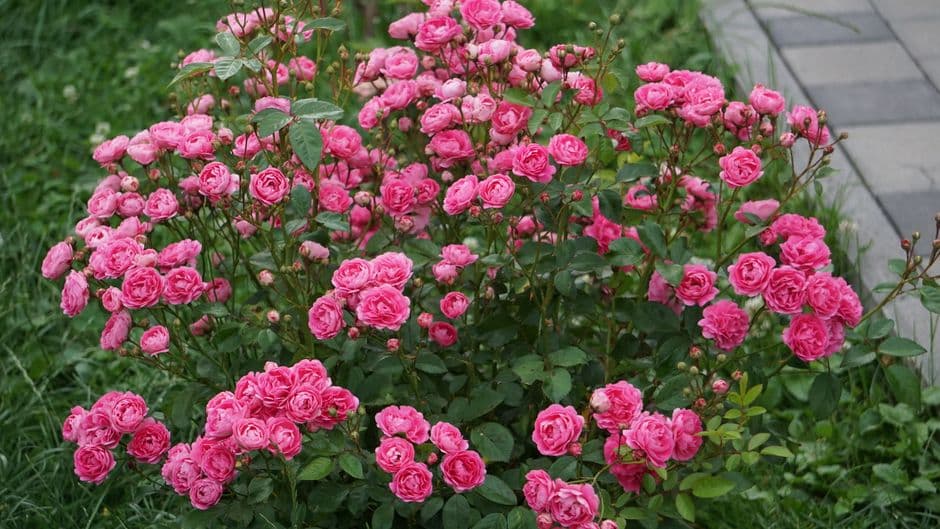
Even Rugosa Rose only rates a C on Rutgers' deer scale, so variety choice is not a plan. Netting a single bush, rotating repellents, and the two seasons that matter.
Scooter M.

Top pick: Bobbex Concentrated Deer Repellent, 32 oz · #ad