Deer / Electric fencing
Electric deer fence: how it actually works
A deer can clear an electric fence without touching it. The published designs all assume that, and solve a different problem instead.
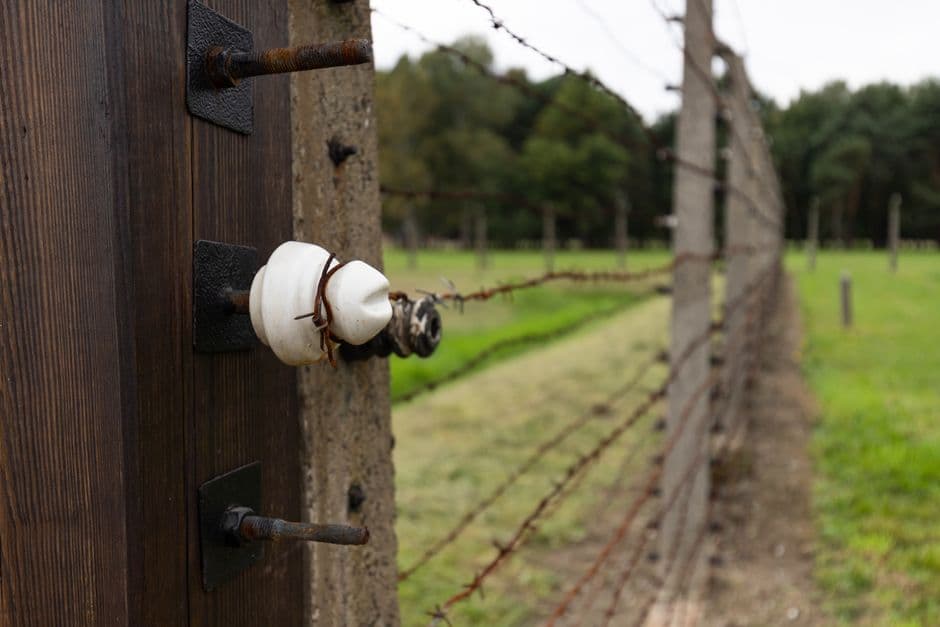
An electric deer fence does not block deer - it teaches them to avoid a line they could easily clear. That is why every published design baits the wire with peanut butter: the deer has to touch it with its nose to learn it. University of Maryland Extension reports temporary electric fencing reducing deer damage in smaller areas by as much as 90%, but it needs weekly maintenance and is the wrong choice wherever people have uncontrolled access.
Most pages on this subject describe an electric fence as though it were a shorter version of a physical fence. It is not the same category of thing, and starting from that misunderstanding is why so many of them end up as abandoned wire in a field.
Baffleworks is funded by affiliate commission. If you buy through a link on this page we may earn a commission at no extra cost to you, and it never decides a ranking. Full disclosure · how we pick.
Quick picks
Ranked, with the trade-off named. Tap a row for the full write-up; the price button goes straight to Amazon.
| # | Product | Best for | Price |
|---|---|---|---|
| 1 |  Gallagher S20 Solar Fence Energizer, 0.2 joule0.2 joule, rated for up to 2 miles of typical fence, from a maker that has been publishing fence specifications for decades. The conservative number is the reason to buy it, not a reason to look elsewhere. | A published rating you can take at face value | $289.99 on Amazon |
| 2 |  Briidea Solar Fence Energizer, 1.2 joulePublishes 1.2 joules and a 10-mile rating, runs on solar or an AC adapter, and has a warning light that flashes with the pulse so you can see the fence is live without touching it. | Dual power and a fault light | $89.99 on Amazon |
| 3 |  Zareba PT656WH-Z Polytape, 1/2 in x 200 m, whiteWhite half-inch polytape, 200 m on the roll. Visibility is the specification here: extension construction steps call for white or yellow tape because a deer has to see the line before it can learn it. | The conductor the published specs actually call for | $34.99 on Amazon |
| 4 |  Gallagher Fiberglass Rod Posts, 48 in x 3/8 in, 20 packFour-foot, three-eighths-inch fiberglass rods — the exact line-post specification ICWDM publishes for both the baited wire fence and the polytape fence. | Matching the published construction spec exactly | $49.99 on Amazon |
| 5 |  Fiberglass Post Insulator Clips for 3/8 in Rods, 100 packThe clips that hold tape or wire to a 3/8 in rod at a set height. Cheap, unglamorous, and the published construction steps do not work without them. | Attaching the line without a short | $25.99 on Amazon |
| 6 |  Grounding Rod Kit with Clamps, 3/8 in x 4 ft, 3 packThree 4 ft rods with clamps. Every published construction step ends with the same phrase — connect to a well-grounded fence charger — and grounding is the single most common reason a fence tests weak. | The part that decides whether the fence works at all | $36.50 on Amazon |
| 7 |  Electric Fence Warning Signs, 10 x 4 in, 8 packEight signs at a few dollars. Whether your jurisdiction requires them or not, an energized line that nobody has been told about is the part of this project most likely to cause a problem. | Telling people the line is live | $8.99 on Amazon |
#ad how we are funded · price as of September 26, 2026
The picks in full
Top pick A published rating you can take at face value
Gallagher S20 Solar Fence Energizer, 0.2 joule
0.2 joule, rated for up to 2 miles of typical fence, from a maker that has been publishing fence specifications for decades. The conservative number is the reason to buy it, not a reason to look elsewhere.
Published specifications
- Output
- 0.2 joule (published)
- Rated length
- Up to 2 miles of typical fence (published)
- Power
- Solar, lithium battery (published)
- Stated uses
- Poultry, livestock, gardens, pets (published)
Trade-offs
- Gallagher rates in joules and qualifies the mileage as 'typical fence', which is a meaningfully different claim from an unqualified mile number
- Lithium battery and integrated solar, so there is no separate battery to buy, charge or replace each season
- Two miles of rated capacity is far more than a garden perimeter needs, which leaves headroom for the vegetation contact every real fence develops
- By a wide margin the most expensive energizer here, and the lowest headline joule figure on the page
- 0.2 joule has little margin if you let weeds grow into the line — this unit rewards the weekly maintenance the extension guidance asks for anyway
- Solar output drops in a shaded garden corner, which is exactly where people want to hide the box
Who it is forA permanent garden perimeter where you would rather buy a known quantity once than compare marketplace spec sheets.
Skip it ifYou need a long run through heavy vegetation. That is a higher-output energizer and a different budget.
#ad how we are funded · price as of September 26, 2026
Where these specifications came from
No. 2 Dual power and a fault light
Briidea Solar Fence Energizer, 1.2 joule
Publishes 1.2 joules and a 10-mile rating, runs on solar or an AC adapter, and has a warning light that flashes with the pulse so you can see the fence is live without touching it.
Published specifications
- Output
- 1.2 joule (published)
- Rated length
- 10 miles (published)
- Power
- Solar and AC adapter (published)
- Rating
- IP64 (published)
Trade-offs
- Dual power is genuinely useful — a shaded garden can run the AC adapter and keep the solar panel as backup
- The pulse indicator light is the cheapest fault diagnosis there is; a dead light means a dead fence
- IP64 is a published weather rating rather than an unqualified 'waterproof'
- Mile ratings on marketplace energizers are not measured to any common standard, so a 10-mile claim is not comparable with a 2-mile claim from an established brand
- No published grounding requirement, and grounding is the thing extension guidance actually insists on
- Unknown service life; fence energizers are outdoor electronics that live through winters
Who it is forA first electric fence, or a seasonal run where you want more headline output for less money and will maintain the ground and the vegetation yourself.
Skip it ifYou want a rating you can compare against published agricultural specifications. Those come from the established fencing brands.
#ad how we are funded · price as of September 26, 2026
Where these specifications came from
No. 3 The conductor the published specs actually call for
Zareba PT656WH-Z Polytape, 1/2 in x 200 m, white
White half-inch polytape, 200 m on the roll. Visibility is the specification here: extension construction steps call for white or yellow tape because a deer has to see the line before it can learn it.
Published specifications
- Width
- 1/2 in (published)
- Length
- 200 m / 656 ft (published)
- Color
- White (published)
- Model
- PT656WH-Z (published)
Trade-offs
- White is one of the two colors ICWDM names as most visible, and visibility is not cosmetic on a fence that works by teaching
- Zareba is a long-standing electric fence brand rather than a one-season listing
- 656 ft covers a single-strand garden perimeter with slack for corners and splices
- Polytape catches wind and needs re-tensioning; it is not a set-and-forget conductor
- A 1/2 in tape carries fewer conductor strands than the wider tapes, so a broken strand costs proportionally more
- Needs insulators and clips to attach — the tape alone is not a fence
Who it is forA garden or orchard perimeter following the published polytape design, at one or two strands.
Skip it ifYou are building the baited smooth-wire version instead, which calls for 17-gauge wire rather than tape.
#ad how we are funded · price as of September 26, 2026
Where these specifications came from
No. 4 Matching the published construction spec exactly
Gallagher Fiberglass Rod Posts, 48 in x 3/8 in, 20 pack
Four-foot, three-eighths-inch fiberglass rods — the exact line-post specification ICWDM publishes for both the baited wire fence and the polytape fence.
Published specifications
- Length
- 48 in / 4 ft (published)
- Diameter
- 3/8 in (published)
- Quantity
- 20 (published)
- Material
- Fiberglass, white (published)
Trade-offs
- Matches the published spec rather than approximating it, which is rare enough to be worth saying
- Fiberglass is a non-conductor, so a rod touching the tape is not a short — the whole reason these are used instead of steel
- At the published 45 ft line-post interval, 20 rods covers a long perimeter
- Fiberglass splinters with age and handling; gloves, and replace rods that have gone fuzzy
- 4 ft rods driven properly leave under 3 ft standing, which suits the published 1 ft and 3 ft strand heights and nothing taller
- Corner posts are a separate purchase — the published designs call for wooden corners or heavier 5/8 in rods
Who it is forLine posts on any of the published electric designs.
Skip it ifYou are building a physical exclusion fence. Those carry mesh and need proper fence posts, not rods.
#ad how we are funded · price as of September 26, 2026
Where these specifications came from
No. 5 Attaching the line without a short
Fiberglass Post Insulator Clips for 3/8 in Rods, 100 pack
The clips that hold tape or wire to a 3/8 in rod at a set height. Cheap, unglamorous, and the published construction steps do not work without them.
Published specifications
- Fits
- 3/8 in round posts (published)
- Quantity
- 100 (published)
- Function
- Insulator clip
- Color
- Black (published)
Trade-offs
- 100 clips covers two strands on a long run with spares, and spares matter because these are the part that gets lost
- Snap onto the rod at whatever height the design calls for, so the 1 ft and 3 ft strand heights are easy to set
- Costs a fraction of the energizer and prevents the most common fault, which is the line resting against something
- Plastic clips embrittle in UV over a few seasons and snap when you re-tension
- Sized for 3/8 in rods only — they will not fit the heavier 5/8 in corner rods
- No published material or UV rating
Who it is forAny fiberglass-rod electric fence. Buy them with the rods, not after.
Skip it ifYou bought step-in posts with integrated clips already molded in.
#ad how we are funded · price as of September 26, 2026
Where these specifications came from
No. 6 The part that decides whether the fence works at all
Grounding Rod Kit with Clamps, 3/8 in x 4 ft, 3 pack
Three 4 ft rods with clamps. Every published construction step ends with the same phrase — connect to a well-grounded fence charger — and grounding is the single most common reason a fence tests weak.
Published specifications
- Length
- 4 ft each (published)
- Diameter
- 3/8 in (published)
- Quantity
- 3, with clamps (published)
- Material
- Copper electrical ground rod (published)
Trade-offs
- Multiple rods rather than one is the practice energizer makers describe, and this kit sells them as a set with the clamps
- Clamps included, so the connection to the ground wire is a proper mechanical joint rather than wire twisted round a stake
- Cheap relative to the energizer it protects the performance of
- 4 ft rods are shorter than the 8 ft rods electrical codes specify for building grounds — this is fence grounding, not house grounding, and the two are not interchangeable
- Dry or sandy soil grounds poorly whatever you drive into it; grounding degrades in drought exactly when deer pressure rises
- Driving three rods is real work, and it is the step people shorten
Who it is forEvery electric fence. This is not optional equipment.
Skip it ifYour energizer shipped with a grounding system and you are using it as supplied.
#ad how we are funded · price as of September 26, 2026
Where these specifications came from
No. 7 Telling people the line is live
Electric Fence Warning Signs, 10 x 4 in, 8 pack
Eight signs at a few dollars. Whether your jurisdiction requires them or not, an energized line that nobody has been told about is the part of this project most likely to cause a problem.
Published specifications
- Size
- 10 x 4 in (published)
- Quantity
- 8 (published)
- Material
- Plastic
- Requirement
- Varies by jurisdiction — check yours
Trade-offs
- Cheapest item in the whole build and the one that addresses the risk to people rather than the risk to plants
- Eight signs covers a garden perimeter with one on each approach and one on the gate
- Plastic rather than paper, so they survive a season outdoors
- Signs are not a substitute for siting the fence away from where children play
- Local requirements vary and none of this page is legal advice — check your own rules before energizing anything
- Small plastic signs fade and go brittle; expect to replace them
Who it is forEvery energized run, and especially any boundary a neighbor, delivery driver or child could reach.
Skip it ifNothing skips this. If the fence is live, mark it.
#ad how we are funded · price as of September 26, 2026
Where these specifications came from
What we would skip
An unbaited single strand, strung and forgotten
This is the version that fails and gives the whole method its bad reputation. A deer that has never touched the line has no reason to respect it and will walk through or jump it. Every published design baits the line deliberately, because the fence has to be touched with the nose to teach anything.
An energized line anywhere children play or the public can reach
An electric fence works by delivering a shock to whatever touches it, and it cannot tell the difference between a deer and a child chasing a ball. Where you cannot control access, build a physical fence. This is a siting decision, not a signage decision.
It is a training system, not a barrier
A white-tailed deer clears an eight-foot physical fence with difficulty and a three-foot electric line without noticing it. So the electric fence is not attempting exclusion by height. It is attempting behavior change: one unpleasant contact, and the animal routes around that line for a long time afterward.
That single fact reorganizes every design decision. The line has to be visible, so the deer registers it. It has to be touched, which is why it is baited. And the charge has to be reliably present, which makes grounding and vegetation contact more important than headline output.
The two published designs
The Internet Center for Wildlife Damage Management publishes step-by-step construction for both common versions. These are quoted rather than paraphrased, because the numbers are the whole value.
The baited wire fence
Scope first: "The peanut-butter fence is effective for small gardens, nurseries, and orchards up to 5 acres subject to moderate deer pressure." The steps:
- "Install wooden corner posts."
- "String a strand of 17-gauge smooth wire around the corners and apply light tension."
- "Set 4-foot, 3/8-inch round fiberglass rods along the wire at 45-foot intervals."
- "Attach the wire to insulators on the rods 2 1/2 feet above ground level and apply 50 pounds of tension."
- "Attach 3- x 4-inch foil strips to the wire at 3-foot intervals, using 1- x 2-inch strips of cloth adhesive tape."
- "Apply a 1:1 mixture of peanut butter and vegetable oil to the adhesive tape strips and fold the foil over the tape."
- "Connect the wire to the positive (+) post of a well-grounded fence charger."
For anything larger, the guidance simplifies the labor: "For fields larger than 1 acre, it is more practical to apply the mixture of peanut butter directly to the wire...Apply the mixture once a month."
The polytape fence
Wider scope — "Use these fences to protect up to 40 acres under moderate deer pressure" — and a different conductor:
- "Drive 5/8-inch round fiberglass posts 2 feet into the ground at the corners. String 2 strands of polytape (white or yellow are most visible) around the corners and apply light tension (1 strand that is about 2 1/2 feet high can be used)."
- "Use square knots or 1/2-hitches to splice or secure the polytape to corner posts."
- "Set 4-foot, 3/8-inch round fiberglass rods along the wires at 45-foot intervals."
- "Attach the 2 strands of polytape to insulators on the rods at 1 and 3 feet above ground level and apply 30 pounds of tension."
- "Connect the polytape to the positive (+) post of a well-grounded fence charger."
- "Apply 2-foot swatches of peanut butter to the polytape every 6 feet where deer presence is expected to be high."
- "Check the fence weekly for damage by deer and grounding by vegetation."
Read the strand heights: 1 ft and 3 ft. Nothing in either design is trying to be tall. The products on this page are chosen to build these, which is why the fiberglass rods are 4 ft x 3/8 in and the tape is white.
What the effectiveness numbers actually say
University of Maryland Extension's deer damage guidance gives two figures worth knowing. The general one: "Temporary electric fencing has been shown to reduce [deer] damage in smaller areas by as much as 90%". The specific one, with a citation attached: "Seamans and VerCauteren (2006) found a 5-strand polyrope fence was 99% effective".
Those are strong numbers and they come with a boundary condition in the same document: "Research has found these fences may be better suited to smaller areas, as fencing large fields where there is little other forage available may lead to increased testing and breaking of the fence."
Put plainly: the method works best where the deer has somewhere else to go. A hungry animal with no alternative forage tests a fence it would otherwise respect - the same pattern that governs deer repellents and every other behavior-based method on this site.
The energizer, and the spec that is not on the box
Energizers are sold on two numbers: joules and miles. It is worth knowing what those are and are not.
| Gallagher S20 | Briidea | |
|---|---|---|
| Published output | 0.2 joule | 1.2 joule |
| Published length | Up to 2 miles of typical fence | 10 miles |
| Power | Solar, lithium battery | Solar plus AC adapter |
| Qualifier in the claim | "of typical fence" | None stated |
Both figures are quoted from the makers. There is no common test standard governing marketplace energizer ratings, so a 10-mile claim and a 2-mile claim are not measured against each other.
What the published construction steps actually insist on is neither of those numbers. Both ICWDM designs end with the same requirement — "a well-grounded fence charger" — and the maintenance instruction is about vegetation, not output: "Control vegetation near fences by mowing or applying herbicides to avoid excessive fence grounding by weeds."
A powerful energizer draining through wet grass delivers less at the far corner than a modest one on a clean line with three ground rods in it. Buy the grounding and do the mowing before you buy joules.
Maintenance is the real cost
This is the honest downside, and it is not a small one. ICWDM: "Weekly inspection and maintenance are required." UMD's baiting interval is every 1 to 2 weeks with peanut butter or molasses, and ICWDM's is monthly for a wire fence applied directly, or every 6 ft of tape where pressure is high.
- Walk the line weekly. Check for vegetation touching the conductor and for damage where deer have hit it.
- Re-bait on schedule. An unbaited fence stops teaching, and a fence that stops teaching stops working as animals turn over.
- Mow or trim under the line. Weeds are the most common cause of a fence that tests weak.
- In snow, ICWDM's instruction is direct: "Disconnect the lower wires if they are covered by snow." UMD describes the same fix as de-electrifying the bottom wire to prevent shorting.
- Test the line rather than assuming. A pulse indicator or a fence tester turns a guess into a fact.
Temporary electric fencing is explicitly seasonal in the guidance — "Temporary electric fences provide inexpensive protection for crops during periods without snow" — which suits a vegetable garden and suits an ornamental border you care about in winter much less well.
Safety, honestly
A fence energizer is designed to deliver an unpleasant but survivable pulse. That is still a decision you are making on behalf of everyone who can reach the line, including people who did not agree to it.
- Do not energize a line where children play or where a neighbor, delivery driver or dog walker can reach it. Site it inside a garden, not along a public boundary.
- Mark it. Warning signs cost a few dollars and some jurisdictions require them.
- Check your local rules before energizing anything. Requirements vary by state and municipality and nothing here is legal advice.
- Ground the energizer properly. Poor grounding does not make a fence safer, it makes it unreliable.
- Keep the bait strategy in mind around pets — peanut butter on a live line is attractive to a dog as well as a deer.
Electric or physical?
The cost argument is not as one-sided as it is usually presented. UMD: "Electric fencing is generally less expensive to install than welded or woven wire fences, and has similar costs of installation as plastic mesh fences." Against plastic mesh — which is what most home deer fences actually are — electric is roughly a wash on installation and adds a permanent maintenance schedule.
| Electric | Physical mesh | |
|---|---|---|
| Mechanism | Behavior change through contact | Exclusion by height |
| Works while ignored | No — needs weekly checks and re-baiting | Yes |
| Winter | Bottom wires off in snow; often taken down | Unchanged |
| Risk to people and pets | Real, needs siting and signage | None |
| Best case | Small garden, moderate pressure, alternative forage nearby | Any perimeter you want to stop thinking about |
| Install cost vs mesh | Similar (UMD) | Baseline |
Our position: for a home garden, a physical fence at the published height is the better default, and electric earns its place where a tall fence is not allowed, not wanted or not affordable across a long perimeter. Deer fencing covers the mesh, how high a deer fence needs to be covers the height argument, and deer fence posts covers what holds either one up.
If you are weighing this against the non-fence options, spray vs fence vs device sets the three approaches side by side.
How we picked
- We started from the fence height cooperative extension services publish, and measured every product against it rather than against its competitors.
- We recorded published specifications only — heights, roll lengths, breaking loads, stated life expectancies, yields and mixing ratios.
- We said plainly where a product is a compromise. Every polypropylene deer fence sold online is below the height extension services recommend, and pretending otherwise would be the easiest way to waste your money.
- We named at least one product to skip on every page, with the reason.
- We have not installed or trialed any of these. How we pick sets out what that does and does not cover.
Everyone in this category says they tested twenty of these. We have not tested any, and we say so. What we did instead: read the manuals, compiled the published specifications, worked out the clearance geometry, and cited every source. The full method is published.
Questions people actually ask
- Does an electric fence actually keep deer out?
- Yes, within limits, and not by blocking them. University of Maryland Extension reports temporary electric fencing reducing deer damage in smaller areas by as much as 90%, and cites Seamans and VerCauteren (2006) finding a 5-strand polyrope fence 99% effective. The same guidance notes the method suits smaller areas better, because deer with no alternative forage test the fence.
- How tall does an electric deer fence need to be?
- Much lower than a physical fence, because it is not trying to stop a jump. ICWDM's polytape design puts two strands at 1 ft and 3 ft above ground, and its baited wire design uses a single strand at 2 1/2 ft.
- Why do you put peanut butter on an electric fence?
- To make the deer touch it. The fence teaches avoidance rather than blocking, so a controlled nose contact is the mechanism. Both published ICWDM designs include baiting as a numbered construction step, and UMD's interval is every 1 to 2 weeks with peanut butter or molasses.
- How many joules do I need for a deer fence?
- The published construction guidance does not specify a joule figure - it specifies a well-grounded fence charger and weekly vegetation control. Grounding and a clean line matter more than headline output, and marketplace mile ratings are not measured to a common standard.
- How far apart do the posts go?
- ICWDM sets 4-foot, 3/8-inch fiberglass rods along the line at 45-foot intervals for both designs, with heavier posts or wooden posts at the corners.
- Is an electric fence safe around children and pets?
- It delivers a real shock and cannot tell who touched it. Do not energize a line where children play or where the public has access, mark it with warning signs, and check your local requirements before energizing anything. Where access cannot be controlled, build a physical fence instead.
- What do I do in winter?
- ICWDM's instruction is to disconnect the lower wires when they are covered by snow, and UMD describes the same step as de-electrifying the bottom wire to prevent shorting. Temporary electric fencing is described as protection for periods without snow.
- Is electric cheaper than a mesh deer fence?
- Not meaningfully. UMD puts electric fencing at similar installation cost to plastic mesh, and cheaper than welded or woven wire. The difference is ongoing: electric adds weekly inspection and a re-baiting schedule that mesh does not have.
Sources
- Internet Center for Wildlife Damage Management, Deer Damage Prevention and Control Methods
- University of Maryland Extension, The 4 Pillars of Managing Deer Damage (EB-2024-0740)
- Michigan State University Extension, Deer Barriers: Fencing, Repellents, Dog Restraint Systems
- Colorado State University Extension, Preventing Deer Damage
Read next
- The best deer fencing
Every mesh deer fence sold online is 7.5 ft; extension services say 8 to 10. What that compromise buys.
- The best deer fence posts, and how to set them
A deer fence is only as tall as its posts let it stand. Post length versus burial depth, sleeves versus driven posts, spacing, corners, and the bottom-edge hardware that decides whether any of it works.
- How high does a deer fence need to be?
Eight to ten feet, per every extension service. Why the market sells 7.5, and when that is enough.
- Spray vs fence vs device
Exclusion, mitigation and startle are three different jobs. Which method does which.
- Deer Deterrence
Fencing at the height extension services publish, plus the repellents that fill the gaps around it.