Deer / Tree protection
Protecting trees from deer
Deer damage trees two completely different ways, and the fix for one does nothing for the other. Work out which you have before you spend anything.

Work out whether the damage is rubbing or browsing. Buck rub strips bark from the trunk and needs a physical guard — a 36 in vinyl spiral covers the zone antlers reach. Browsing takes leaves and shoots and needs netting held clear of the foliage, a fence, or a repellent on a schedule.
This page exists because the two kinds of damage look unrelated to the tree and identical in a search box. People buy a repellent for a rubbing problem, it fails completely, and they conclude that deer deterrence does not work.
The two kinds of damage
| Buck rub | Browse | |
|---|---|---|
| What it looks like | Bark stripped in vertical strips, usually 1 to 4 ft up. Wood exposed | Leaves, buds and shoot tips gone. A ragged torn edge rather than a clean cut |
| Why the deer does it | Territorial marking and velvet removal, mostly autumn | Feeding, hardest in late winter and spring |
| Does a repellent help? | No — it is not tasting the tree | Yes, while the coating is on the foliage |
| What actually works | A physical trunk guard | Netting held clear, a fence, or repellent on a schedule |
| How bad is it? | Often fatal — girdling kills the tree | Survivable; costs a season of growth |
The severity difference is worth dwelling on. Browsing sets a tree back. Rubbing that goes all the way around the trunk girdles it, and a girdled tree dies — it cannot move water and sugars past the damage. That is why trunk protection is the higher priority on a young tree even though browse damage is more visible.
Trunk guards: buy by height
A spiral guard is a strip of vinyl that stretches open and wraps up the trunk. It expands as the tree grows, which is the property that separates it from a rigid sleeve, and it needs no tools.
The published spec that decides the purchase is height. The tall spiral on this shelf publishes 36 in in a five-pack, and the short spirals run to about 15.7 in. Rubbing happens above two feet, so the 36 in is the deer product and the short one is the rodent-gnaw product. Buying the shorter one for a deer problem protects the part of the trunk that was not at risk.
Baffleworks is funded by affiliate commission. If you buy through a link on this page we may earn a commission at no extra cost to you, and it never decides a ranking. Full disclosure · how we pick.
Quick picks
Ranked, with the trade-off named. Tap a row for the full write-up; the price button goes straight to Amazon.
| # | Product | Best for | Price |
|---|---|---|---|
| 1 |  A.M. Leonard Vinyl Spiral Tree Guards, 36 in, 5 packThirty-six inches of vinyl spiral, which is the height that actually covers the zone a buck rubs rather than just the base of the trunk. | Buck rub on young trunks | $25.90 on Amazon |
| 2 |  Tenax Deer Netting, 7 ft x 100 ftNetting rather than fence: lighter, easier to drape over a shrub or a bed, and not pretending to be a perimeter barrier. | Draping and small enclosures | $53.34 on Amazon |
| 3 | 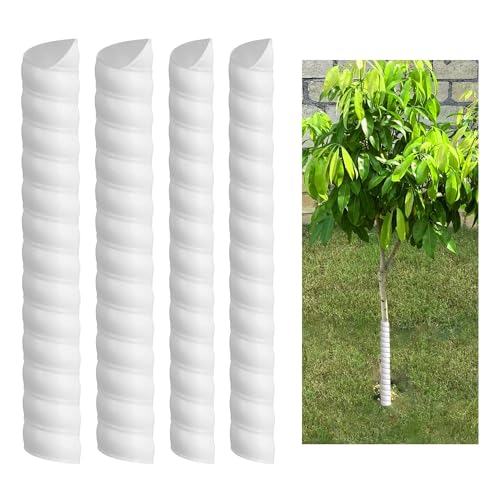 Watayo Spiral Tree Guard, 15.7 in, 4 packThe short spiral: 15.7 in of trunk covered, in two widths, four to a pack — and they connect end to end when one length is not enough. | Small saplings and rodent gnaw at the base | $14.99 on Amazon |
| 4 |  Plantskydd Ready-to-Use Liquid, 1.3 galReady-to-use and covering the widest published species list here: deer, rabbits, elk, moose, voles, squirrels and chipmunks from one bottle. | No mixing, widest species list | $80.18 on Amazon |
| 5 |  Bobbex Concentrated Deer Repellent, 32 ozA concentrate rather than a ready-to-use bottle, which is the right format if you are going to spray often enough for a repellent to work at all. | Rotation partner, concentrate | $25.60 on Amazon |
| 6 |  Tenax Select Deer Fence, 7.5 ft x 100 ftPolypropylene mesh at 7.5 ft with a published breaking load, which is the only spec on a deer fence that actually predicts whether it survives a deer hitting it. | The full-height barrier | $133.93 on Amazon |
#ad how we are funded · price as of October 24, 2026
The picks in full
Top pick Buck rub on young trunks
A.M. Leonard Vinyl Spiral Tree Guards, 36 in, 5 pack
Thirty-six inches of vinyl spiral, which is the height that actually covers the zone a buck rubs rather than just the base of the trunk.
Published specifications
- Height
- 36 in (published)
- Quantity
- 5 per pack (published)
- Material
- Vinyl (published)
- Fitting
- Spiral — stretches open and wraps around the trunk
Trade-offs
- 36 in covers the rub zone rather than only the lowest foot of trunk, which is where shorter guards stop
- Spiral fitting means no tools and no removing anything already planted
- Five per pack covers a small orchard row or a run of young ornamentals
- A spiral expands as the trunk grows rather than girdling it, which is what separates the form from a fixed sleeve
- Vinyl is visible on an ornamental tree in a front garden in a way netting is not
- A spiral is not a browse barrier — it protects bark, not the foliage above it
- Needs checking each spring; a guard left on too long traps moisture against the bark
- The listing publishes height, count and material and little else — no weather rating and no trunk diameter range
Who it is forYoung or thin-barked trees where buck rub in autumn is the actual damage. Bark damage is what kills a sapling, and a rubbed trunk rarely recovers.
Skip it ifThe damage is to leaves and shoots rather than bark. That is browsing, and it needs a fence or a repellent rather than a trunk guard.
#ad how we are funded · price as of October 24, 2026
Where these specifications came from
No. 2 Draping and small enclosures
Tenax Deer Netting, 7 ft x 100 ft
Netting rather than fence: lighter, easier to drape over a shrub or a bed, and not pretending to be a perimeter barrier.
Published specifications
- Height
- 7 ft (published)
- Length
- 100 ft
- Material
- Black polypropylene
- Structure
- Quadrangular mesh (published)
Trade-offs
- Light enough to throw over a shrub or a fruit cage without a post system
- Cheap enough per foot to protect a lot of individual plants
- Not a perimeter fence, and treating it as one is how people conclude that deer fencing does not work
- Loose netting can entangle wildlife if it is left slack and unpegged
Who it is forIndividual shrubs, small beds and winter protection on ornamentals, rather than a garden boundary.
Skip it ifYou want a perimeter. Buy the fence, set posts, and tension it — the height guide explains why the two are not interchangeable.
#ad how we are funded · price as of October 24, 2026
Where these specifications came from
No. 3 Small saplings and rodent gnaw at the base
Watayo Spiral Tree Guard, 15.7 in, 4 pack
The short spiral: 15.7 in of trunk covered, in two widths, four to a pack — and they connect end to end when one length is not enough.
Published specifications
- Length
- 15.7 in (published)
- Widths
- 1.6 in and 2 in (published, two sizes in the pack)
- Quantity
- 4 (published)
- Material
- Plastic (published)
- Fitting
- Spiral — wraps the trunk from the bottom up; lengths connect (published)
Trade-offs
- Two widths in one pack, so a pack covers saplings at different stages
- Spiral guards expand as the trunk does, which a rigid tube does not
- Connectable end to end, which is the honest answer to the short length
- Cheap enough to protect a whole row of young stock
- 15.7 in is short — it covers rodent gnaw and rabbit browse at the base and does nothing about deer buck rub higher up
- Publishes no wall thickness or UV rating, so service life is unknown
- Plastic spirals trap moisture against bark if left on year-round in a wet climate
- Four guards will not go far on an orchard
Who it is forYoung saplings with a rabbit or vole problem at ground level, or new stock needing trimmer protection.
Skip it ifThe damage is buck rub. That happens well above 15.7 in and needs the 36 in spiral or a taller guard.
#ad how we are funded · price as of October 24, 2026
Where these specifications came from
No. 4 No mixing, widest species list
Plantskydd Ready-to-Use Liquid, 1.3 gal
Ready-to-use and covering the widest published species list here: deer, rabbits, elk, moose, voles, squirrels and chipmunks from one bottle.
Published specifications
- Size
- 1.3 gal ready-to-use (published)
- Targets
- Deer, rabbit, elk, moose, voles, squirrels, chipmunks
- Form
- Ready-to-use liquid
- Part number
- PS-5L
Trade-offs
- No mixing, so it is the one people actually reapply on schedule
- The species list covers the garden raiders as well as the browse animals
- 1.3 gal is enough to treat a real garden rather than a planter
- Ready-to-use costs considerably more per treated area than concentrate
- It is a blood-meal-based product and it smells like one for a day or so
Who it is forA mixed garden problem — deer on the shrubs, rabbits on the greens, chipmunks in the bulbs — where you want one bottle rather than three.
Skip it ifYou are treating a large area regularly. Buy the powder concentrate and mix it; the ready-to-use maths stops working quickly at scale.
#ad how we are funded · price as of October 24, 2026
Where these specifications came from
No. 5 Rotation partner, concentrate
Bobbex Concentrated Deer Repellent, 32 oz
A concentrate rather than a ready-to-use bottle, which is the right format if you are going to spray often enough for a repellent to work at all.
Published specifications
- Size
- 32 oz concentrate (published)
- Targets
- Deer, elk, moose
- Form
- Dilute and spray
- Part number
- B550100
Trade-offs
- Concentrate is far cheaper per treated square foot than ready-to-use
- A different active profile from Plantskydd, which is what makes rotation possible
- Repellents are a reapplication commitment: rain, new growth and habituation all reset them
- Mixing and spraying is a job, and the ones that stop working are usually the ones that stopped being sprayed
Who it is forOrnamental beds and shrubs where fencing is not acceptable, used on a schedule rather than in a panic.
Skip it ifYou want to solve this once. Extension services are consistent that a fence is the exclusion method and a repellent is a mitigation. Read what actually keeps deer out before you buy a spray instead of a fence.
#ad how we are funded · price as of October 24, 2026
Where these specifications came from
No. 6 The full-height barrier
Tenax Select Deer Fence, 7.5 ft x 100 ft
Polypropylene mesh at 7.5 ft with a published breaking load, which is the only spec on a deer fence that actually predicts whether it survives a deer hitting it.
Published specifications
- Height
- 7.5 ft (published)
- Length
- 100 ft
- Material
- UV-stabilized polypropylene
- Breaking load
- Certified 600 to 650 lb (published)
- Life expectancy
- 10 to 15 years (published)
- Origin
- Made in USA
Trade-offs
- A certified breaking load is a real, checkable spec in a category full of adjectives
- UV-stabilized with a stated 10 to 15 year life, so it is not an annual replacement
- Black mesh disappears at a distance far better than wire
- 7.5 ft is below the 8 to 10 ft that extension services recommend for a flat-ground perimeter
- Polypropylene will not stop a determined animal the way woven wire does
Who it is forA garden perimeter where you want the fence to vanish visually. Read how high a deer fence has to be first — the height is the whole decision.
Skip it ifYou are fencing flat, open ground with heavy browse pressure. Michigan State Extension puts the perimeter figure at 8 to 10 ft, and 7.5 ft is a deliberate compromise you should make knowingly.
#ad how we are funded · price as of October 24, 2026
What we would skip
A repellent spray, if the damage is to the trunk
Buck rub is territorial behavior, not feeding. A deer rubbing antlers on a sapling is not tasting it, so a taste-and-smell repellent has nothing to act on. This is the single most common wasted purchase in tree protection.
A 24 in guard against buck rub
Rubbing happens well above two feet. The shorter spiral is the right product for rabbit and vole gnaw at ground level and the wrong one for antlers. Buy the 36 in if deer are the problem.
Leaving any trunk wrap on year-round, indefinitely
A guard that stays on through wet seasons traps moisture against the bark, and a guard that stays on for years can constrict a growing trunk. Spirals expand, which helps, but they still need checking every spring.
Netting draped directly on the foliage
A deer browses straight through mesh that is resting on the leaves. Netting only works held clear of the plant, which on a tree means a frame or a cage rather than a drape.
Browse protection on a tree is harder than on a bed
Netting works on a shrub because you can drape it and gather the edges. On a tree the browse line is the outer foliage at deer height, and mesh lying on those leaves is mesh a deer simply eats through.
So browse protection on a tree means one of three things: netting on a frame that holds it off the foliage, a fence at the height extension services publish, or a repellent program. Tenax publishes 7 ft x 100 ft netting for draping and 7.5 ft fencing for perimeters — different products for different jobs, covered in deer fencing.
Michigan State University Extension puts effective deer perimeters at 8 to 10 ft, with woven wire at 10 ft as the only sure barrier. If you are fencing an orchard rather than protecting three saplings, the height guide is the page that matters.
Where repellents genuinely help
On foliage, on a schedule. Plantskydd publishes a ready-to-use gallon-and-a-third and a powder concentrate that makes 2.5 gallons; Bobbex publishes a 32 oz concentrate. Rotating between them is meaningful because the bases differ.
The limits are the same as everywhere else on this site: rain strips the coating, new growth is untreated, and a hungry deer will eat something it dislikes. Best deer repellents goes through the reapplication arithmetic properly.
Timing
- Late summer, before rut — fit trunk guards. Rubbing starts when bucks shed velvet, and a guard fitted in November is a guard fitted after the damage.
- Autumn through winter — the trunk guard does the work. Repellents are largely wasted on a bare deciduous tree.
- Spring — remove or check every guard. This is the step people skip, and a guard left on through a wet spring is a moisture trap.
- Spring through summer — browse season. Repellent on a calendar, or netting held clear.
The spring check is the one worth setting a reminder for. A trunk guard is a cheap insurance policy that becomes a liability if it is never looked at again.
Squirrels damage trees differently - they take the crop rather than the bark, and the fix is a band and a net rather than a trunk guard. Protecting fruit trees from squirrels covers it.
Antlers are not the only thing that ruins a trunk. Voles girdle bark in a ring at soil level over winter, and the fix is a different guard at a different height. Vole control covers the quarter-inch cylinder spec and the vegetation-free zone that goes with it.
How we picked
- We split the products by damage type first, because trunk damage and browse damage have no overlapping solution.
- We recorded published figures only: guard height, pack quantity, material, netting dimensions, repellent yields.
- We noted that spiral guards are bought by trunk diameter and height, so we lead with the published height rather than the brand.
- We named at least one thing to skip, with the reason.
- We have not tested any of these. How we pick sets out what that does and does not cover.
Everyone in this category says they tested twenty of these. We have not tested any, and we say so. What we did instead: read the manuals, compiled the published specifications, worked out the clearance geometry, and cited every source. The full method is published.
Questions people actually ask
- How do I stop deer rubbing on my trees?
- A physical trunk guard. Rubbing is territorial behavior rather than feeding, so a repellent has nothing to act on. A.M. Leonard publishes a 36 in vinyl spiral, which covers the height antlers actually reach.
- Will deer repellent protect a tree trunk?
- No. Repellents work on taste and smell on foliage. A buck rubbing antlers on a sapling is not tasting it. Use a guard for trunk damage and save the repellent for browse.
- What height tree guard do I need for deer?
- 36 in for buck rub, because rubbing happens well above two feet. The 24 in version is the right size for rabbit and vole gnaw at ground level.
- Can deer damage kill a tree?
- Rubbing can. Bark stripped all the way around girdles the trunk and the tree cannot move water and sugars past it. Browse damage is usually survivable and costs a season of growth.
- Should I leave tree guards on all year?
- Check them every spring. A guard left on through wet weather traps moisture against the bark, and one left on for years can constrict a growing trunk. Spirals expand, which helps, but they still need looking at.
- Does netting work on trees?
- Only held clear of the foliage. A deer browses straight through mesh resting on leaves, so netting on a tree needs a frame or a cage rather than a drape.
Sources
Read next
- The best deer repellents
Ranked on published yield and format, with an honest account of why repellents fail: reapplication, not chemistry.
- The best deer fencing
Every mesh deer fence sold online is 7.5 ft; extension services say 8 to 10. What that compromise buys.
- How high does a deer fence need to be?
Eight to ten feet, per every extension service. Why the market sells 7.5, and when that is enough.
- How to keep deer out of the garden
Fence, repel, deter, replant — in that order, with the published height that decides step one.
- Deer Deterrence
Fencing at the height extension services publish, plus the repellents that fill the gaps around it.