Deer / Fence posts
The best deer fence posts, and how to set them
Nobody buys a deer fence and then wonders what to hang it on until the mesh has already arrived. This is the part of the job that decides whether the fence is the height on the box.
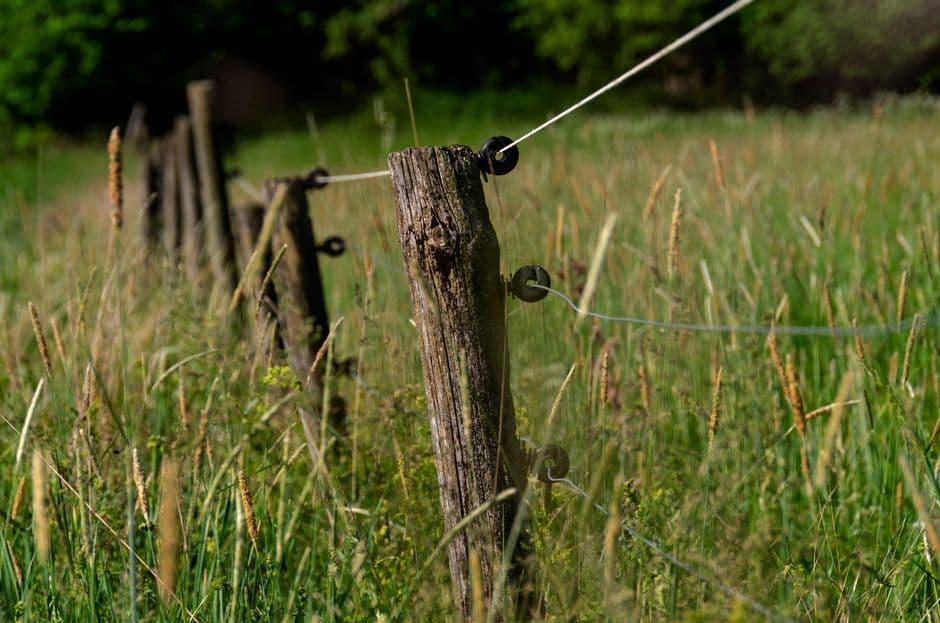
Buy posts taller than your mesh, because the ground takes the difference. ICWDM's published spec for a line post is 8 ft set 2 ft deep — which leaves 6 ft standing, a foot and a half short of a 7.5 ft fence. Either buy a 9 to 10 ft post, or use a ground-sleeve system where the sleeve is buried and the full post height stays above grade.
The mesh gets all the attention. It is the thing with the specification on the box, it is what the reviews argue about, and it is what people research for a week before ordering. Then it arrives, and the actual question turns out to be what holds it up.
Baffleworks is funded by affiliate commission. If you buy through a link on this page we may earn a commission at no extra cost to you, and it never decides a ranking. Full disclosure · how we pick.
Quick picks
Ranked, with the trade-off named. Tap a row for the full write-up; the price button goes straight to Amazon.
| # | Product | Best for | Price |
|---|---|---|---|
| 1 |  8 ft Deer Fence Post with Ground Sleeve, 7 packThe sleeve is the whole point: it goes in the ground, the post does not, so all 8 feet of post stands above grade instead of losing two feet to burial. | Full mesh height standing above grade | $329.00 on Amazon |
| 2 |  8.7 ft Adjustable Steel Angle Deer Fence Posts, 6 pack8.7 ft in a two-piece post with pre-drilled holes and 12 ground stakes. The extra height over a standard 8 ft post is exactly the height you lose to the ground. | The most published height per dollar | $179.97 on Amazon |
| 3 |  Tenax Deer Fence Kit, 7 ft x 100 ftMesh and mounting hardware from the maker whose netting anchors the rest of this site's fencing coverage. A kit removes the failure mode where the fence arrives and the thing to hang it on does not. | One box, one run, no sourcing | $169.99 on Amazon |
| 4 |  VEVOR 7 ft U-Channel Fence Posts, 10 packCheapest post per unit by a wide margin, and honestly the wrong post for a deer fence: drive 7 ft of post the recommended 2 ft down and you have a 5 ft fence. | Rabbit and groundhog fencing, not deer | $63.37 on Amazon |
| 5 |  12 lb T-Post Driver with HandlesA weighted sleeve you drop over the post and slam down. It is the difference between posts that go in plumb in a minute and posts that go in bent over an afternoon. | Driving posts straight without wrecking them | $34.99 on Amazon |
| 6 |  HOOPLE Landscape Staples, 6 in, 11 gauge, 100 packSix inches of 11 gauge galvanized wire, a hundred of them. This is the cheapest item on the page and the one most likely to decide whether the fence works. | Pinning the bottom edge, which is where fences fail | $14.99 on Amazon |
#ad how we are funded · price as of September 23, 2026
The picks in full
Top pick Full mesh height standing above grade
8 ft Deer Fence Post with Ground Sleeve, 7 pack
The sleeve is the whole point: it goes in the ground, the post does not, so all 8 feet of post stands above grade instead of losing two feet to burial.
Published specifications
- Post length
- 8 ft (published)
- Quantity
- 7 posts (published)
- Mount
- Ground sleeve, post drops in
- Usable height
- Close to the full 8 ft, because the sleeve takes the burial
Trade-offs
- Solves the arithmetic that defeats most home deer fences — a driven 8 ft post gives you about 6 ft of fence, this one does not
- The post lifts out of the sleeve, so the fence can come down seasonally and the sleeve stays put and aligned
- Purpose-built for deer fence rather than a farm post pressed into the job
- By far the most expensive option here, per post and per run
- A sleeve is only as good as the soil it is driven into; in loose sand or saturated clay it works loose where a longer driven post would not
- Seven posts at roughly 10 to 15 ft spacing covers well under 100 ft of perimeter
Who it is forA permanent enclosure where you want the full published mesh height standing, or a fence that comes down each winter.
Skip it ifBudget is the binding constraint. A taller cheap post driven deeper gets to the same height for less, it just never comes out again.
#ad how we are funded · price as of September 23, 2026
Where these specifications came from
No. 2 The most published height per dollar
8.7 ft Adjustable Steel Angle Deer Fence Posts, 6 pack
8.7 ft in a two-piece post with pre-drilled holes and 12 ground stakes. The extra height over a standard 8 ft post is exactly the height you lose to the ground.
Published specifications
- Post height
- 8.7 ft (published)
- Quantity
- 6 posts, 12 stakes (published)
- Construction
- 2-piece with screws (published)
- Fixings
- Pre-drilled holes (published)
Trade-offs
- 8.7 ft is the tallest published height in this set, which is the spec that decides whether a 7.5 ft mesh can actually stand at 7.5 ft
- Pre-drilled holes mean the mesh gets fixed to the post rather than cable-tied to a smooth pole and sliding down it
- Ships with ground stakes, so the bottom fixing is not a second order
- Two-piece posts have a joint, and a joint halfway up a fence post is the place it bends in wind
- Black steel angle will rust at cut edges and at the screw holes over time
- Six posts is one short side of a typical enclosure, not a perimeter
Who it is forA run where you want real height without the price of a sleeve system, and you are happy to drive posts permanently.
Skip it ifYou want the fence to come down seasonally. Driven posts are not designed to come back out.
#ad how we are funded · price as of September 23, 2026
Where these specifications came from
No. 3 One box, one run, no sourcing
Tenax Deer Fence Kit, 7 ft x 100 ft
Mesh and mounting hardware from the maker whose netting anchors the rest of this site's fencing coverage. A kit removes the failure mode where the fence arrives and the thing to hang it on does not.
Published specifications
- Coverage
- 7 ft x 100 ft (published)
- Model
- 084060 / 2A130002 (published)
- Contents
- Kit — mesh plus mounting hardware
- Maker
- Tenax, same line as the netting reviewed site-wide
Trade-offs
- Everything in the box is meant to work together, which is not true of a mesh roll plus posts bought separately
- 7 ft is the practical market height and this is a complete run of it
- Tenax publishes real specifications on its fencing line rather than leaving the listing to guess
- 7 ft is below the 8 ft floor the extension sources publish, so this is the compromise height, not the recommended one
- Kit hardware is sized for the kit; a longer run means buying posts separately anyway
- Costs more than the equivalent mesh bought alone
Who it is forA single garden enclosure of about 100 ft of perimeter where you want to order once and start on Saturday.
Skip it ifYour run is much longer than 100 ft, or you already own mesh. Then you are buying posts, and the posts below are the decision.
#ad how we are funded · price as of September 23, 2026
Where these specifications came from
No. 4 Rabbit and groundhog fencing, not deer
VEVOR 7 ft U-Channel Fence Posts, 10 pack
Cheapest post per unit by a wide margin, and honestly the wrong post for a deer fence: drive 7 ft of post the recommended 2 ft down and you have a 5 ft fence.
Published specifications
- Post length
- 7 ft (published)
- Quantity
- 10 posts (published)
- Profile
- U-channel, steel (published)
- Height above grade at 2 ft burial
- About 5 ft
Trade-offs
- Ten posts for the price of two purpose-built deer posts, which is the right economics for a low fence
- U-channel drives straight and takes a post driver without mushrooming
- Correct choice for the 2 to 3 ft fences that stop rabbits and groundhogs
- Too short for deer at any honest burial depth — this is the central point, not a nitpick
- Green paint over steel, so cut or scraped sections corrode
- No pre-drilled holes, so mesh attaches with ties rather than fixings
Who it is forA rabbit fence, a groundhog fence, or the lower section of a two-stage barrier.
Skip it ifThis is your deer fence. It will be a 5 ft fence, and deer clear 5 ft without breaking stride.
#ad how we are funded · price as of September 23, 2026
Where these specifications came from
No. 5 Driving posts straight without wrecking them
12 lb T-Post Driver with Handles
A weighted sleeve you drop over the post and slam down. It is the difference between posts that go in plumb in a minute and posts that go in bent over an afternoon.
Published specifications
- Weight
- 12 lb (published)
- Type
- Manual drop driver with handles
- Fits
- T-posts and U-channel posts
- Alternative
- None that works — a sledge deforms the post top
Trade-offs
- Keeps the post vertical while it goes in, which is the single thing that decides whether a fence line looks and holds straight
- 12 lb is enough mass for normal soil without being unusable overhead on a tall post
- One purchase covers every fence you will build afterward
- Driving a post above about 7 ft means lifting a 12 lb sleeve over your head, which is genuinely hard work and awkward on a ladder
- Useless on sleeve-mounted posts, which is one of the arguments for a sleeve system
- No help at all in rocky ground, where you need to dig instead
Who it is forAnyone driving more than about six posts. Below that, borrow one.
Skip it ifYou are using ground sleeves or setting posts in dug holes.
#ad how we are funded · price as of September 23, 2026
Where these specifications came from
No. 6 Pinning the bottom edge, which is where fences fail
HOOPLE Landscape Staples, 6 in, 11 gauge, 100 pack
Six inches of 11 gauge galvanized wire, a hundred of them. This is the cheapest item on the page and the one most likely to decide whether the fence works.
Published specifications
- Length
- 6 in (published)
- Gauge
- 11 (published)
- Quantity
- 100 (published)
- Finish
- Galvanized (published)
Trade-offs
- 11 gauge is thick enough to drive into firm soil without folding, which 12 and 14 gauge staples do
- 100 staples at roughly one every 2 ft covers about 200 ft of bottom edge
- Galvanized, so they survive being left in wet ground season after season
- 6 in is short for loose or sandy soil, where a longer pin or a buried apron holds better
- Pinning a bottom edge is slow, unglamorous work that most people skip — which is precisely why it is on this page
- They disappear into grass, so mark the line before you mow
Who it is forEvery mesh fence, without exception. The top of a deer fence gets all the attention and the bottom is where the animals get through.
Skip it ifYou are burying an apron of wire instead, which is better and considerably more work.
#ad how we are funded · price as of September 23, 2026
Where these specifications came from
What we would skip
Any post shorter than your mesh is tall
This is the mistake the whole page exists to prevent. A 7 ft post driven the recommended 2 ft into the ground is a 5 ft fence. Deer clear 5 ft without effort, and no amount of good mesh fixes a post that ended too low.
Bamboo, thin garden canes and plastic-coated tomato stakes
They are sold in the same aisle and they are not fence posts. A 7 ft span of mesh in wind loads a post harder than people expect, and these bow, then lean, then lie down with the fence on top of them.
The arithmetic nobody does before ordering
A deer fence has a height requirement and a post has a length. Those are not the same number, and the gap between them is the single most common reason a finished fence is shorter than the mesh that went into it.
The Internet Center for Wildlife Damage Management publishes the burial figure plainly for a line post: "Set 8-foot line posts 2 feet deep." For the heavier agricultural systems the numbers get larger — "Set 16-foot posts along the wire at 40-foot intervals, to a depth of 4 to 6 feet" — but the principle is identical at every scale. A quarter of the post is in the ground.
| Post length | Buried 2 ft | Carries 7.5 ft mesh? | Honest use |
|---|---|---|---|
| 7 ft | 5 ft standing | No | Rabbit or groundhog fence |
| 8 ft | 6 ft standing | No | A 6 ft fence, which is below the deer floor |
| 8.7 ft | About 6.7 ft standing | Close, at reduced height | The practical compromise |
| 10 ft | 8 ft standing | Yes | A full-height fence, driven |
| 8 ft in a ground sleeve | Close to 8 ft standing | Yes | Full height without a 10 ft post |
Burial depth of 2 ft follows the ICWDM line-post spec. Softer ground needs more, not less.
Read the bottom row twice, because it is the reason sleeve systems cost what they do. A sleeve is driven into the ground and the post drops into it, so the burial depth comes out of the sleeve rather than out of your fence height. You get a full 8 ft of standing post from an 8 ft post.
What height you are aiming for
This page takes the height question as settled and solves the post problem that follows from it. In short: University of Georgia Extension states that "To keep deer out, a minimum fence height of 6 to 8 feet should be considered", Michigan State puts perimeter fences at 8 to 10 feet, and the mesh market has standardized on 7.5 ft because that is what ships and installs without equipment.
How high a deer fence needs to be works through the disagreement between those sources and when 7.5 ft is genuinely enough. Bring the number you land on back here, add your burial depth, and that is your post length.
Sleeve or driven: the real decision
| Ground sleeve | Driven post | |
|---|---|---|
| Height you keep | Nearly all of it | Post length minus burial |
| Post length needed for 7.5 ft mesh | About 8 ft | 9 to 10 ft |
| Comes back out | Yes, lifts out of the sleeve | No, not without a fight |
| Cost per post | Highest | Lower |
| Holds in soft or sandy ground | Less well — short bearing depth | Better, the post is the anchor |
| Tools needed | Driver for the sleeve | Post driver, and height to swing it |
The case for a sleeve is not laziness. It is that you keep the mesh height you paid for, the fence can come down for winter or for a season you are not growing, and the sleeve stays in the ground holding the line straight for next time.
The case against is soil and money. A sleeve bears on a short section of ground; a 10 ft post driven 2.5 ft down is its own anchor. In loose sand, saturated clay or a windy exposed site, the long driven post is the more durable answer.
Spacing, corners and the parts under load
Line posts on a home poly-mesh fence sit roughly 10 to 15 ft apart, with makers publishing their own figure for their own mesh — check the roll, because a lighter mesh sags sooner and wants closer posts. The published extension intervals are much wider because they describe tensioned agricultural wire, not netting: ICWDM's woven-wire spec sets 16 ft posts at 40 ft intervals, which is a different structure doing a different job.
Corners are where the load concentrates, and they are the place extension guidance is most emphatic. ICWDM again: "Rigid brace assemblies (corners, ends, and gates) are the backbone of all high-tensile fence systems." A home mesh fence does not need a farm brace assembly, but it does need the corner posts set deeper, or doubled, or angle-braced back into the enclosure.
- Set corner and gate posts first and get them plumb. Everything else lines up to them.
- Put corner posts deeper than line posts — an extra six inches is cheap insurance against the whole run pulling inward.
- Keep the mesh under light, even tension. Poly deer mesh is not high-tensile wire and over-tightening tears the edge rather than straightening the run.
- Fix the mesh to the post rather than relying on a tie sliding on a smooth pole. This is what pre-drilled holes are for.
- Gates take the most abuse of anything on the line. The height guide covers why the gate is the weakest point of every fence.
The bottom edge is where the fence actually fails
Deer go under far more often than people expect. So do rabbits, groundhogs and dogs, and frost heave opens a gap every spring in ground that was tight in October. ICWDM's maintenance instruction for a finished deer fence is one line: "Inspect for locations where deer can crawl under the fence."
University of Georgia Extension's version is shorter still — "Be sure to anchor the fence to the ground" — and that is a hardware instruction, not a suggestion. Ground staples every couple of feet, or a buried apron of wire, or a tensioned bottom wire. Any of the three. Not none of them.
This is the cheapest part of the whole build and the part most likely to be skipped, which is why a 100-pack of staples is on this page next to the most expensive post system here. A fence pinned at the top and loose at the bottom is a curtain. Deer fencing covers the reinforced-edge meshes built for exactly this stress.
Tools, honestly
A post driver is the one tool that matters. It is a weighted sleeve you drop over the post top and slam down, and it keeps the post vertical while it goes in. A sledgehammer mushrooms the post top, works it crooked, and takes four times as long.
The honest limitation: driving a 10 ft post means lifting a 12 lb driver above the top of it. That is hard work at full height and awkward on a ladder, and it is a genuine argument for the sleeve system if you are doing a long run alone.
In rocky ground, no driver helps. Dig the hole, set the post, backfill in layers and tamp each one.
A build order that works
- Walk the line and mark it. Measure the perimeter properly — post count and mesh length both come from this number.
- Settle the fence height, then add your burial depth. That total is the post length you order.
- Set corner and gate posts first, deeper than the rest, and check them plumb from two directions.
- Run a string line between corners and set the line posts to it at 10 to 15 ft, closer on a light mesh.
- Hang the mesh from the top down, lightly tensioned, fixed at each post rather than tied loosely.
- Pin the bottom edge continuously before you stand back and admire it. This is the step that gets skipped.
- Walk the line each spring for heave, washouts and gaps, and again after any storm that moved things.
How we picked
- We started from the fence height cooperative extension services publish, and measured every product against it rather than against its competitors.
- We recorded published specifications only — heights, roll lengths, breaking loads, stated life expectancies, yields and mixing ratios.
- We said plainly where a product is a compromise. Every polypropylene deer fence sold online is below the height extension services recommend, and pretending otherwise would be the easiest way to waste your money.
- We named at least one product to skip on every page, with the reason.
- We have not installed or trialed any of these. How we pick sets out what that does and does not cover.
Everyone in this category says they tested twenty of these. We have not tested any, and we say so. What we did instead: read the manuals, compiled the published specifications, worked out the clearance geometry, and cited every source. The full method is published.
Questions people actually ask
- How tall do deer fence posts need to be?
- Mesh height plus burial depth. ICWDM's line-post spec is 8 ft set 2 ft deep, so a driven post for a 7.5 ft fence needs to be about 9 to 10 ft. A ground-sleeve system is the exception: the sleeve takes the burial, so an 8 ft post stands close to 8 ft.
- How far apart should deer fence posts be?
- Roughly 10 to 15 ft for home poly mesh, closer for lighter mesh that sags. The much wider intervals in extension literature - ICWDM sets 16 ft posts at 40 ft - describe tensioned agricultural wire, which is a different structure.
- How deep should a deer fence post go?
- About 2 ft for a standard line post, per ICWDM. Soft, sandy or wet ground needs more. Corner and gate posts should go deeper than line posts because that is where the load concentrates.
- Do I need a ground sleeve?
- You need one if you want the full mesh height standing without buying a 10 ft post, or if the fence needs to come down seasonally. You do not if the site is windy, sandy or soft, where a long driven post anchors better.
- Can I use T-posts for a deer fence?
- Only if they are long enough. A 7 ft T-post buried 2 ft gives a 5 ft fence, which deer clear easily. T-posts and U-channel posts are the right choice for rabbit and groundhog fencing, where the fence is 2 to 3 ft tall.
- What holds the bottom of a deer fence down?
- Ground staples every couple of feet, a buried wire apron, or a tensioned bottom wire. UGA Extension's instruction is to anchor the fence to the ground, and ICWDM's maintenance step is to inspect for places deer can crawl under.
- Do I need a post driver?
- For more than about six posts, yes - it keeps them vertical and saves hours. It stops being practical above roughly 7 ft of post, because you have to lift 12 lb over the post top, which is one of the better arguments for a sleeve system.
Sources
- Internet Center for Wildlife Damage Management, Deer Damage Prevention and Control Methods
- University of Georgia Extension, Garden Fencing (C1027-9)
- Michigan State University Extension, Deer Barriers: Fencing, Repellents, Dog Restraint Systems
- Colorado State University Extension, Preventing Deer Damage
Read next
- The best deer fencing
Every mesh deer fence sold online is 7.5 ft; extension services say 8 to 10. What that compromise buys.
- How high does a deer fence need to be?
Eight to ten feet, per every extension service. Why the market sells 7.5, and when that is enough.
- Hardware cloth vs chicken wire
Chicken wire stops rabbits; hardware cloth stops rodents. The published extension mesh specs by animal, plus gauge, and which roll to buy for the five common garden jobs.
- How to keep deer out of the garden
Fence, repel, deter, replant — in that order, with the published height that decides step one.
- Deer Deterrence
Fencing at the height extension services publish, plus the repellents that fill the gaps around it.