Garden / Materials
Hardware cloth vs chicken wire
They are not two grades of the same thing. One is a 2 in hexagonal barrier for rabbit-sized animals; the other is a welded grid for animals that fit through anything bigger.
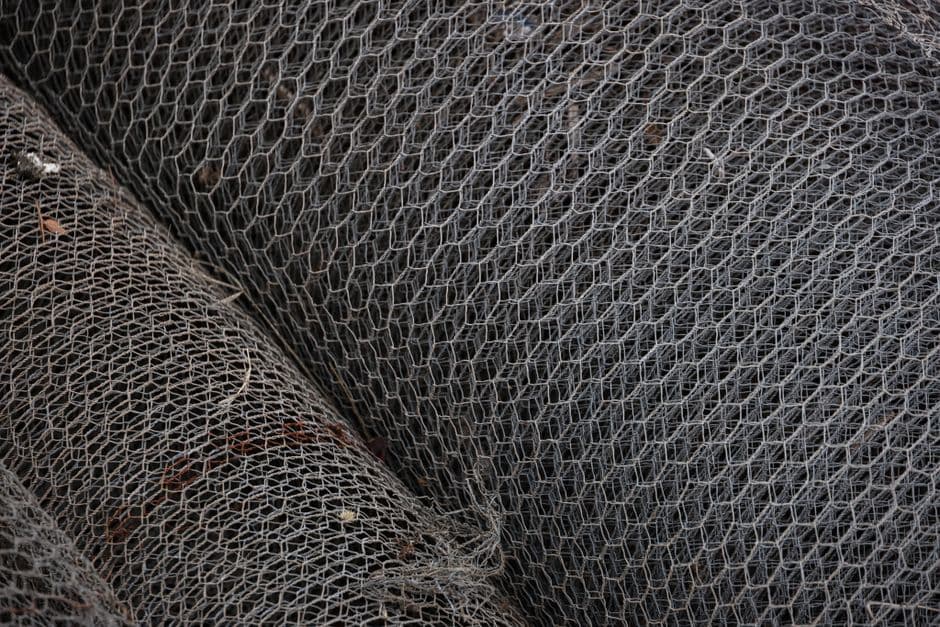
Chicken wire is 1-2 in hexagonal poultry netting: cheap, flexible, and the right buy for rabbit fencing and freestanding row covers. Hardware cloth is a welded square grid, usually 1/4 in or 1/2 in: the right buy for rodents, for sealing gaps in a structure, and for anything that will be chewed. The mesh size is the specification - everything else follows from it.
Almost every wire mistake in a garden is the same mistake: buying the cheap roll for a job that needed the expensive one, or the expensive roll for a job the cheap one would have done. The published extension specifications settle it quickly.
Baffleworks is funded by affiliate commission. If you buy through a link on this page we may earn a commission at no extra cost to you, and it never decides a ranking. Full disclosure · how we pick.
Quick picks
Ranked, with the trade-off named. Tap a row for the full write-up; the price button goes straight to Amazon.
| # | Product | Best for | Price |
|---|---|---|---|
| 1 | 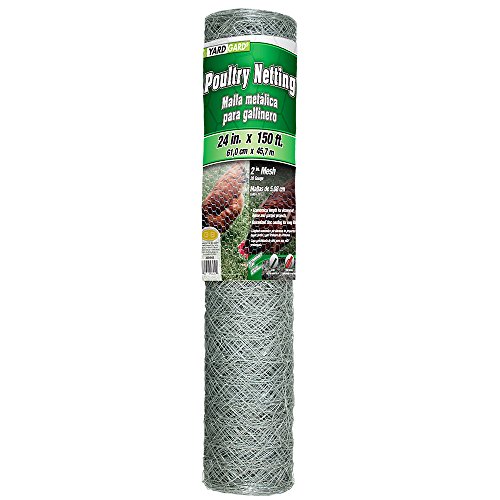 YARDGARD 2 in Poultry Netting, 24 in x 150 ft, 20 gaugeClassic hexagonal chicken wire: 2 in mesh, 20 gauge, 150 feet of it. Cheap, light, easy to cut and bend — and 2 in openings stop nothing smaller than a rabbit. | Cheap coverage over a big area | $29.99 on Amazon |
| 2 |  HUNKA Hardware Cloth, 1/2 in mesh, 36 in x 50 ft, 19 gaugeRecommended by specification rather than by brand: 1/2 in mesh, 36 in tall, galvanized. This roll meets it — any roll matching the same three numbers does the same job. | A permanent rabbit barrier | $44.45 on Amazon |
| 3 |  Amagabeli Hardware Cloth, 1/4 in mesh, 48 in x 50 ft, 23 gaugeQuarter-inch welded mesh — the size extension guidance names for vole cylinders and for closing entry points. Nothing rodent-sized gets through a 1/4 in square. | The tightest mesh, for rodents and structure work | $59.49 on Amazon |
| 4 |  Tongmo Welded Wire Fence, 3 ft x 100 ft, 2 x 4 in, 16 gaugeThe same 3 ft height in a 100 ft roll. Fewer joins around a real garden, at the cost of a lighter gauge than the 50 ft option. | A long perimeter in one run | $75.99 on Amazon |
#ad how we are funded · price as of September 21, 2026
The picks in full
Top pick Cheap coverage over a big area
YARDGARD 2 in Poultry Netting, 24 in x 150 ft, 20 gauge
Classic hexagonal chicken wire: 2 in mesh, 20 gauge, 150 feet of it. Cheap, light, easy to cut and bend — and 2 in openings stop nothing smaller than a rabbit.
Published specifications
- Mesh
- 2 in hexagonal (published)
- Gauge
- 20 (published)
- Size
- 24 in x 150 ft (published)
- Finish
- Galvanized steel (published)
Trade-offs
- 150 feet is enough to cage a whole vegetable bed run, at a price hardware cloth cannot touch
- Light and flexible: it bends around hoops and cuts with ordinary snips
- Fine for the jobs extension guidance actually recommends 1-2 in mesh for — rabbit fencing and freestanding covers over rows
- 2 in openings pass chipmunks, mice, voles and young rats without slowing them down
- 20 gauge is thin enough that a determined squirrel can work an opening wider
Who it is forRabbit fencing, row covers and cages where the animal you are excluding is rabbit-sized or bigger.
Skip it ifYou are excluding rodents or sealing a structure. Use hardware cloth — this is the wrong material and it fails the same way every time.
#ad how we are funded · price as of September 21, 2026
Where these specifications came from
No. 2 A permanent rabbit barrier
HUNKA Hardware Cloth, 1/2 in mesh, 36 in x 50 ft, 19 gauge
Recommended by specification rather than by brand: 1/2 in mesh, 36 in tall, galvanized. This roll meets it — any roll matching the same three numbers does the same job.
Published specifications
- Mesh
- 1/2 in x 1/2 in (published); 1 in or smaller is the spec, 1/2 in excludes young rabbits
- Roll
- 36 in W x 50 ft L (published)
- Gauge
- 19, 0.91 mm wire diameter (published)
- Material
- Hot-dip galvanized over annealed wire (published)
- Height above ground
- At least 2 ft (Colorado State Extension)
- Buried depth
- 4 to 8 in (Colorado State Extension)
Trade-offs
- Extension services put chicken wire, hardware cloth or flexible netting at 2 ft high and buried 4 to 8 in as fairly effective against rabbits
- A permanent fix rather than a reapplication schedule
- Half-inch mesh also excludes young rabbits, which 2 in poultry netting does not
- Hot-dip galvanized after weaving, which is the coating that survives being buried
- Burying the bottom edge is the whole job, and it is real digging
- Galvanized wire is visible in a way black deer netting is not
- 36 in tall means you are burying roughly a third of what you paid for
- The listing warns of sharp edges at both ends — this is a gloves job, and nothing about this brand makes it better than any other roll at the same spec
Who it is forA vegetable plot or a border with a persistent rabbit problem, where you would rather dig once than spray for years.
Skip it ifDeer are the actual problem. Two feet of wire is a step-over for a deer; the height that matters there is 8 ft and up. See deer fencing.
#ad how we are funded · price as of September 21, 2026
Where these specifications came from
No. 3 The tightest mesh, for rodents and structure work
Amagabeli Hardware Cloth, 1/4 in mesh, 48 in x 50 ft, 23 gauge
Quarter-inch welded mesh — the size extension guidance names for vole cylinders and for closing entry points. Nothing rodent-sized gets through a 1/4 in square.
Published specifications
- Mesh
- 1/4 in welded square (published)
- Gauge
- 23 (published)
- Size
- 48 in x 50 ft (published)
- Finish
- Galvanized (published)
Trade-offs
- 1/4 in is the mesh UC IPM names for closing squirrel entry points, and NC State names for vole cylinders — it is the default for rodent work
- Welded rather than woven, so cut edges hold their shape instead of unravelling
- 48 in width covers a raised bed base or a trunk cylinder without seaming
- 23 gauge is thinner wire than the 19 gauge half-inch cloth; for a chew-resistant barrier the heavier gauge is better
- Stiff and sharp to work with — gloves are not optional
Who it is forSealing gaps, lining bed bottoms, building vole cylinders, and anywhere mice are part of the problem.
Skip it ifYou just want a rabbit fence. A quarter-inch mesh over a big area costs many times what poultry netting does for no extra benefit.
#ad how we are funded · price as of September 21, 2026
Where these specifications came from
No. 4 A long perimeter in one run
Tongmo Welded Wire Fence, 3 ft x 100 ft, 2 x 4 in, 16 gauge
The same 3 ft height in a 100 ft roll. Fewer joins around a real garden, at the cost of a lighter gauge than the 50 ft option.
Published specifications
- Height
- 3 ft (published)
- Roll length
- 100 ft (published)
- Mesh
- 2 x 4 in (published)
- Gauge
- 16 (published)
- Material
- Galvanized steel, welded (published)
Trade-offs
- 100 ft covers most home vegetable plots without a join
- Every join in a buried fence is a weak point, and this removes one or two of them
- Same published 3 ft height and 2 x 4 in mesh as the heavier roll
- Cheaper per foot than buying two 50 ft rolls
- 16 gauge is lighter wire than the 15 gauge roll — thinner, and easier to deform where it is bent
- A 100 ft roll of galvanized wire is heavy and awkward to handle alone
- The listing's own note warns about sharp edges after cutting
- Still bare galvanized, so it is a visible fence
Who it is forA full garden perimeter where join count and cost per foot matter more than the extra stiffness of heavier wire.
Skip it ifYou are fencing a short run or a single bed. The 50 ft roll in 15 gauge is stiffer where it counts and you will not waste half of it.
#ad how we are funded · price as of September 21, 2026
Where these specifications came from
What we would skip
Chicken wire, for anything rodent-sized
2 in hexagonal openings pass mice, voles, chipmunks and young rats without contact. Using it against rodents is not a weaker barrier, it is no barrier - and it is the most common mesh mistake in a garden.
Quarter-inch hardware cloth, for a rabbit fence
It works, and it costs several times what the job needs. Extension guidance specifies 1 in mesh for rabbit fencing. Spend the difference on burying the bottom edge properly instead.
What the guidance actually specifies
NC State Extension's wildlife chapter gives mesh sizes by animal rather than by material, which is the useful way round.
| Animal | Specification | Material that means |
|---|---|---|
| Rabbits | 1 in mesh wire fence, 18-24 in high, bottom staked or buried at least 6 in | Chicken wire |
| Rabbits, on tree trunks | Cylinders of 1/4 in mesh hardware cloth, 18-24 in high, set firmly in the ground | Hardware cloth |
| Voles | Hardware cloth cylinders, 1/4 in or less, buried 6 in | Hardware cloth |
| Squirrels, on crops | A fence of 1 in mesh wire for high-value crops | Chicken wire |
| Squirrels, newly planted bulbs | 1 in mesh poultry wire | Chicken wire |
| Squirrels, entry points into a building | Sheet metal or 1/4 in wire hardware cloth (UC IPM) | Hardware cloth |
Specifications as published by NC State Extension's Gardener Handbook and UC IPM's Tree Squirrels Pest Notes. Where two sources cover the same job, both are listed rather than averaged.
Read down that table and the pattern is clean: out in the garden, against rabbit-sized animals, 1 in mesh is the published spec. Against rodents, or anywhere the wire is a structural barrier, it is 1/4 in hardware cloth.
The physical difference
| Chicken wire | Hardware cloth | |
|---|---|---|
| Construction | Woven hexagonal | Welded square grid |
| Typical mesh | 1 in or 2 in | 1/4 in or 1/2 in |
| Typical gauge | 20 (thin) | 19-23 depending on mesh |
| Cut edges | Unravel and spring open | Hold their shape |
| Bends around hoops | Easily | Poorly - it wants to stay flat |
| Cost per square foot | Lowest | Several times higher |
| Stops rabbits | Yes | Yes |
| Stops mice, voles, chipmunks | No | Yes at 1/4 in |
| Resists chewing | Poorly | Well at 19 gauge |
Woven versus welded is not a detail. A woven hex mesh can be pushed out of shape and a chewed strand unravels its neighbors; a welded grid fails only where it is actually cut.
Gauge, briefly, because it is the second spec
Mesh size decides what fits through. Gauge decides what can chew through - and lower numbers are thicker wire.
The 1/2 in hardware cloth here is 19 gauge; the 1/4 in is 23 gauge. That is the usual trade in this material: finer mesh is sold in thinner wire. If you are building something a squirrel or rat will work at directly, the heavier gauge matters more than the extra quarter-inch of mesh.
Welded wire fence is the third material
There is a third roll in most garden centers and it belongs in this comparison: welded wire fencing, typically 2 x 4 in openings in a much heavier gauge. It is a structural fence, not a mesh - the right buy for a garden perimeter against groundhogs and rabbits where you want the fence to stand up on its own.
It passes everything rodent-sized, exactly like chicken wire, so it is a fence material rather than an exclusion material. Rabbit fencing and keeping groundhogs out of the garden cover the shapes these fences need to take.
Which to buy for the five common jobs
- Fencing a vegetable bed against rabbits - chicken wire, 1 in mesh, 18-24 in high, bottom buried 6 in.
- Covering a newly planted bulb bed or seeded row - chicken wire. UC IPM specifically describes cage-like freestanding covers of one-inch hexagon chicken wire for newly seeded crops.
- A cylinder around a young trunk - hardware cloth, 1/4 in, set firmly in the ground.
- Lining the base of a raised bed against voles - hardware cloth, 1/4 in or less, buried 6 in at the edges.
- Sealing a gap in a soffit, vent or foundation - hardware cloth or sheet metal, never poultry netting.
Raised bed covers and plant cages and cloches cover the ready-made versions of the first two jobs, which are usually cheaper than building from a roll once you count your own time.
Working with either one
- Gloves, always. Cut hardware cloth edges are genuinely sharp and cut chicken wire springs.
- Cut hardware cloth with aviation snips, not wire cutters - you will be cutting a lot of strands.
- Bury or stake the bottom edge. Almost every failure is an animal going under an edge that was left sitting on the soil.
- Galvanized-after-welding lasts longer in wet ground than galvanized-before; the listings that do it say so.
- Overlap seams by several inches and wire them together rather than butting them.
How we picked
- We started from the published exclusion spec for each animal, taken from cooperative extension services rather than from product listings.
- We preferred products that publish dimensions, because a barrier you cannot check against your bed is a barrier you may have to return.
- We separated barriers by what they exclude. A 30 in mesh cage and an 8 ft deer fence are not competing products, and treating them as though they were is how people conclude that exclusion does not work.
- We named at least one product to skip on every page, with the reason.
- We have not installed any of these. How we pick sets out what that does and does not cover.
Everyone in this category says they tested twenty of these. We have not tested any, and we say so. What we did instead: read the manuals, compiled the published specifications, worked out the clearance geometry, and cited every source. The full method is published.
Questions people actually ask
- What is the difference between hardware cloth and chicken wire?
- Chicken wire is woven hexagonal poultry netting with 1-2 in openings. Hardware cloth is a welded square grid, usually 1/4 or 1/2 in. The mesh size is the real difference: chicken wire stops rabbit-sized animals, hardware cloth stops rodents.
- Will chicken wire keep squirrels out?
- Out of a crop row or off a bulb bed, yes - NC State and UC IPM both specify 1 in mesh wire for exactly those jobs. Out of a structure, no. For entry points UC IPM specifies sheet metal or 1/4 in hardware cloth.
- What size hardware cloth do I need for rodents?
- 1/4 in or smaller. NC State specifies 1/4 in or less for vole cylinders, and UC IPM names 1/4 in hardware cloth for closing squirrel entry points.
- Is hardware cloth worth the extra cost?
- For rodents and for structure work, yes - chicken wire simply does not do those jobs. For rabbit fencing, no. Extension guidance calls for 1 in mesh there, and the money is better spent burying the bottom edge properly.
- What gauge hardware cloth should I use?
- Lower numbers are thicker wire. 19 gauge is common in 1/2 in mesh and 23 gauge in 1/4 in. Where something will chew at the barrier directly, prioritize the heavier gauge over the finer mesh.
- Can I use welded wire fence instead?
- For a standing garden perimeter, yes - 2 x 4 in welded wire is heavier and self-supporting. It passes everything rodent-sized though, so treat it as fencing rather than exclusion.
Sources
Read next
- Rabbit fencing
Two feet high, buried four to eight inches, one inch mesh. The one garden problem with a published answer.
- The best raised bed covers to keep squirrels out
Fabric stops birds and insects; only wire stops a squirrel that digs. Which cover for which animal, sized to a 4 x 8 bed.
- How to keep groundhogs out of the garden
A groundhog climbs and digs, so the fence has to beat both. The published 3 ft height, the outward L, the floppy top, and where two sources disagree.
- Netting vs cages
Browsing animals need a layer; working animals need a structure. How to tell which you have.
- Garden Protection
Cages, cloches, netting and rabbit fencing, sized to the animal doing the damage rather than to the bed.