Feeders / Seed trays
The best seed catcher trays
This site has told you to fit a seed tray on six different pages. It has never said which one, or why the drainage matters more than the price. Here is both.
Buy on two specs: diameter, which decides how much you catch, and drainage, which decides whether what you catch rots. A mesh bottom drains and a solid pan does not. Fit the tray under the feeder and above the baffle, and do not buy one you intend to use as a platform feeder — that re-creates the ground buffet you are trying to remove.
Why this site keeps telling you to fit one
A seed tray is not a squirrel product. It has no mechanism, it excludes nothing, and no listing here claims otherwise. It is on this site for one reason, which runs through nearly every page: spilled seed under a feeder is a permanent, unprotected food supply, and a large local squirrel population is what makes your feeder — and your roofline, and your garden — interesting in the first place.
A correctly placed baffle stops a squirrel reaching the feeder. It does nothing whatsoever about the seed the birds throw to the ground beneath it, which the squirrels then eat in comfort. That is why the pole roundup warns against eight-station systems, and why raccoon deterrents starts with food management rather than hardware. A tray is the cheapest way to close that gap.
So judge a tray on how much of the spill it actually intercepts, and on whether the seed it catches stays usable or turns into a mold tray you stop emptying.
How we ranked them
| What to check | Why it matters | What the listings publish |
|---|---|---|
| Diameter | Catching area grows with the square of the radius — a 20 in tray has well over twice the area of a 12.8 in one | 12.8 in up to 21.5 in here; most publish the figure |
| Drainage | Caught seed sits in the tray. Rain plus no drainage equals mold within days, and a tray nobody empties | Fiberglass or polyester mesh, perforated metal screen, or drainage holes in a solid base |
| Mounting type | A pole tray with a center hole stays centered; a hanging hoop swings with the feeder | Pole center hole (1 in), hanging hooks and cords, or chains |
| Doubles as a feeder | The trap. A tray used as a platform feeder attracts the ground-feeding crowd you were trying to disperse | Two of the six here are marketed this way, and we say which |
None of these is a squirrel exclusion product and no listing claims to be. The tray reduces the food supply; the baffle does the excluding.
Baffleworks is funded by affiliate commission. If you buy through a link on this page we may earn a commission at no extra cost to you, and it never decides a ranking. Full disclosure · how we pick.
Quick picks
Ranked, with the trade-off named. Tap a row for the full write-up; the price button goes straight to Amazon.
| # | Product | Best for | Price |
|---|---|---|---|
| 1 | 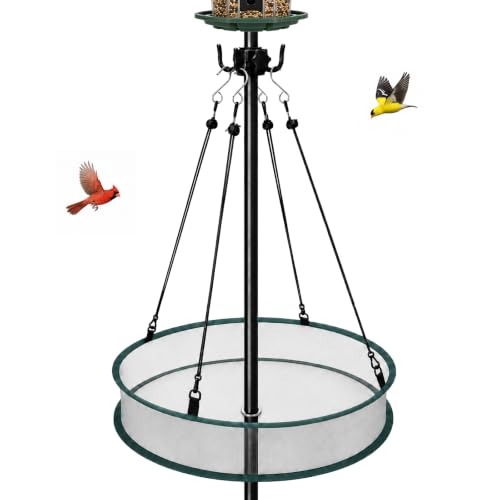 Berrihop 20 in Pole-Mount Seed Catcher TrayThe one built for a pole rather than a hook: a center hole drops it over a 1 in pole so it stays centered under the feeder instead of swinging off-line. | A pole-mounted feeder, which is most of this site | $15.99 on Amazon |
| 2 | 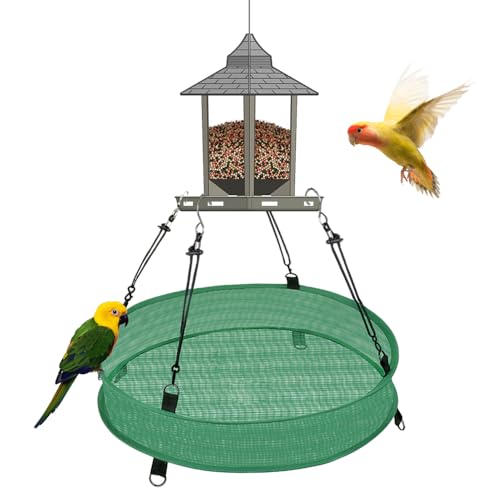 20 in Hanging Seed Catcher TrayThe wide one for a hanging feeder: same 20 in span as the pole tray, hung on hooks under whatever you already own. | A hanging feeder, at the widest catch | $16.99 on Amazon |
| 3 |  Berrihop 16 in Hanging Seed Catcher Trays, 2 packTwo 16 in hoops for roughly what one 20 in tray costs. The right buy when you are running more than one feeder, which most people with a pole system are. | Two feeders in one purchase | $17.99 on Amazon |
| 4 |  Briwooody 12.8 in Platform Seed Catcher Tray, 2 setsThe other design: a solid platform on chains instead of a fabric hoop. Rigid, easy to tip out, and it drains through holes rather than through mesh. | A rigid tray rather than a mesh hoop | $21.99 on Amazon |
| 5 |  Geelin 21 in Rigid Pole Seed Catcher TrayRigid plastic rather than mesh, on a 1 in pole, and it disassembles by hand for storage. The widest pole tray here, and the most expensive by some way. | A rigid pole tray that comes apart | $44.99 on Amazon |
| 6 |  Birds Choice 21.5 x 21.5 in Seed Catcher Open PlatformThe built-to-last option: a perforated metal screen bottom that drains and cleans easily. It is also sold as a platform feeder, and that dual purpose is the reason to think twice. | A permanent metal tray, if you accept what it also is | $116.99 on Amazon |
#ad how we are funded · price as of September 20, 2026
The picks in full
Top pick A pole-mounted feeder, which is most of this site
Berrihop 20 in Pole-Mount Seed Catcher Tray
The one built for a pole rather than a hook: a center hole drops it over a 1 in pole so it stays centered under the feeder instead of swinging off-line.
Published specifications
- Diameter
- 20 in (published)
- Depth
- 4 in mesh wall (published)
- Pole fit
- 1 in poles, center hole (published)
- Material
- Weather-resistant fiberglass mesh with a steel wire rim (published)
- Drainage
- Fine mesh bottom; air circulates and rainwater passes through (published)
- Mounting
- Pole hook plus four tray hooks, adjustable cords (published)
Trade-offs
- A center hole around the pole keeps the tray centered under the feeder, which a hanging hoop does not
- Mesh bottom drains, so seed dries instead of sitting in a puddle
- 20 in is wide enough to catch what a busy tube feeder throws
- Adjustable cords let you set the tray height without moving the feeder
- Published for 1 in poles only — measure yours, because 1.25 and 1.5 in poles are common
- Four hooks and cords is more setup than a simple hoop
- Mesh sags over time under a heavy load of husks if it is not emptied
- It still has to sit ABOVE the baffle; hung below one it hands a squirrel a platform
Who it is forAnyone running the setup this site recommends — feeder on a pole, baffle beneath — who wants the spill caught rather than left on the ground.
Skip it ifYour feeder hangs from a hook or a branch. There is no pole for the center hole, and a hanging hoop is the right shape.
#ad how we are funded · price as of September 20, 2026
Where these specifications came from
No. 2 A hanging feeder, at the widest catch
20 in Hanging Seed Catcher Tray
The wide one for a hanging feeder: same 20 in span as the pole tray, hung on hooks under whatever you already own.
Published specifications
- Diameter
- 20 in (published)
- Depth
- 4 in (published)
- Material
- Durable polyester mesh (published)
- Drainage
- Breathable mesh lets air and water pass, published as preventing mold
- Mounting
- Metal hanging hooks and mounting rings, no tools (published)
- Sway control
- Bottom attachment rings to tie down or weight (published)
Trade-offs
- Widest catch on this page for a hanging feeder
- Bottom rings to tie it down are a real answer to the thing hanging trays do worst — swinging in wind
- No tools; it goes on in a minute
- Mesh drains, which is the difference between dried husks and a mold tray
- Polyester mesh rather than fiberglass, and the listing publishes no service life
- A hanging tray moves with the feeder, so a windy site scatters some of what it catches anyway
- 20 in of tray under a small feeder looks like a lot of hardware
- Nothing about it is squirrel-rated; it catches seed, it does not exclude anything
Who it is forA hanging feeder on a hook or branch where the ground beneath is patio, deck or lawn you would rather keep clean.
Skip it ifThe feeder is on a pole. The pole-mount tray sits centered and still, and this one will swing.
#ad how we are funded · price as of September 20, 2026
Where these specifications came from
No. 3 Two feeders in one purchase
Berrihop 16 in Hanging Seed Catcher Trays, 2 pack
Two 16 in hoops for roughly what one 20 in tray costs. The right buy when you are running more than one feeder, which most people with a pole system are.
Published specifications
- Diameter
- 16 in each (published)
- Depth
- 4 in (published)
- Quantity
- 2 (published)
- Drainage
- Fine mesh bottom, drains after rain (published)
- Mounting
- Hanging hooks and adjustable cords, no tools (published)
- Cleaning
- Detach and shake out (published)
Trade-offs
- Two trays, which matches how many feeders a pole system actually carries
- 16 in is enough under a tube feeder and less visually heavy than 20 in
- Same draining mesh as the larger Berrihop tray
- Adjustable cords, so each tray can sit at a different height
- 16 in catches less than 20 in — under a feeder with a lot of throw-out, some still reaches the ground
- Hanging design, so the same sway problem as any hoop
- No pole center hole; these hang from the feeder, not the pole
- Publishes no material weight or service life
Who it is forA feeding station with two or more hanging feeders, where buying trays one at a time is the expensive way.
Skip it ifYou have one very messy feeder. Buy the 20 in and catch more of it.
#ad how we are funded · price as of September 20, 2026
Where these specifications came from
No. 4 A rigid tray rather than a mesh hoop
Briwooody 12.8 in Platform Seed Catcher Tray, 2 sets
The other design: a solid platform on chains instead of a fabric hoop. Rigid, easy to tip out, and it drains through holes rather than through mesh.
Published specifications
- Diameter
- 12.8 in / 32.5 cm each (published)
- Quantity
- 2 sets (published)
- Chains
- Four 8 in / 20 cm chains per tray (published)
- Base
- Horizontal solid base with drainage holes (published)
- Finish
- Black non-reflective chain and S hook (published)
Trade-offs
- A rigid base empties by tipping, where a mesh hoop has to be unhooked and shaken
- Drainage holes in a solid base, so it is not a water pan
- Non-reflective black chain, which is a small thoughtful detail on a feeder you watch
- Two sets, so a second feeder is covered
- 12.8 in is the narrowest catch here — a lot still gets past it
- Holes in a solid base drain more slowly than open mesh, and they block with husks
- Sold as an open platform feeder too, which is the use this site would avoid — see below
- Four short chains under a feeder is more hardware in the sight line
Who it is forSomebody who would rather tip a tray out than unhook and shake a mesh hoop, under a feeder that is not a heavy spiller.
Skip it ifYou want to catch most of the spill. Diameter is what does that, and 12.8 in is half the area of a 20 in tray.
#ad how we are funded · price as of September 20, 2026
Where these specifications came from
No. 5 A rigid pole tray that comes apart
Geelin 21 in Rigid Pole Seed Catcher Tray
Rigid plastic rather than mesh, on a 1 in pole, and it disassembles by hand for storage. The widest pole tray here, and the most expensive by some way.
Published specifications
- Diameter
- About 21 in (published)
- Pole fit
- 1 in pole; requires a single pole kit (published)
- Not for
- Hanging bird feeders (published)
- Material
- Plastic (published)
- Assembly
- Disassembles into components by hand, no tools (published)
Trade-offs
- 21 in is the widest pole-mounted catch on this page
- Rigid plastic holds its shape under a season of husks where mesh sags
- Comes apart by hand for winter storage or cleaning
- Explicit that it is not for hanging feeders, which saves a return
- Costs roughly three times the mesh pole tray that catches nearly as much
- The listing promotes using it alone as a tray feeder for ground-foraging birds — the exact thing to avoid if squirrels are your problem
- Publishes no drainage detail, and a solid plastic tray without drainage holds rain
- Requires a 1 in pole kit, so it is not a universal fit
Who it is forA permanent pole station where a rigid, wide tray is worth paying for and the tray will be emptied regularly.
Skip it ifBudget matters, or drainage does. The mesh pole tray publishes how it drains and costs far less.
#ad how we are funded · price as of September 20, 2026
Where these specifications came from
No. 6 A permanent metal tray, if you accept what it also is
Birds Choice 21.5 x 21.5 in Seed Catcher Open Platform
The built-to-last option: a perforated metal screen bottom that drains and cleans easily. It is also sold as a platform feeder, and that dual purpose is the reason to think twice.
Published specifications
- Size
- 21-1/2 x 21-1/2 in (published)
- Bottom
- Perforated metal screen, offers drainage (published)
- Mounting
- Below a feeder, or post-mounted as a feeder; pole kit sold separately (published)
- Named birds
- Cardinals, chickadees, doves, woodpeckers (published)
- Cleaning
- Published as easy to clean
Trade-offs
- A perforated metal screen is the best-draining bottom here and the easiest to scrub
- Square 21.5 in gives more catching area than any round tray on this page
- Metal rather than mesh or plastic, so it is the one most likely to still be there in five years
- An established brand with a published product line rather than an unbranded listing
- Several times the price of every other tray here
- Sold as a platform feeder as much as a catcher, and the listing names doves — a ground-feeding flock is what a seed tray is supposed to reduce
- Pole kit sold separately, so the real cost is higher than the tray
- A wide rigid square under a feeder is a substantial piece of furniture in a small yard
Who it is forA permanent station where the tray is part of the setup for years and the extra cost is amortized over that.
Skip it ifYou are buying it to reduce ground feeding. Mounted as a platform it does the opposite, and the cheaper mesh trays catch spill without inviting a crowd.
#ad how we are funded · price as of September 20, 2026
Where these specifications came from
What we would skip
Any tray you intend to use as a platform feeder
Several trays here are sold both ways, and one names doves in its listing. Filling a tray with seed for ground-feeding birds is the exact behavior a seed catcher is supposed to reduce. Catch the spill or run a platform feeder — doing both at once re-creates the problem you bought the tray to fix.
A solid tray with no published drainage
A pan that holds rain turns caught seed into wet seed within a day, and wet seed molds. Mesh bottoms and perforated screens publish how they drain. A plain plastic dish usually does not, and that silence is the answer.
A tray hung below the baffle
The baffle's position is the whole squirrel defense on a pole. A wide tray fitted underneath it is a platform at exactly the height a squirrel wants. The tray goes above the baffle, under the feeder, or it undoes the geometry.
Pole or hanging — get this right first
It is the one decision that cannot be fixed afterwards. A pole tray has a center hole that drops over the pole, so it sits centered under the feeder and stays there. A hanging tray hooks to the feeder itself and moves with it, which is fine on a still day and less fine in wind.
Since this site recommends a pole and baffle over a hook nearly everywhere, the pole tray is the default answer here. But check the pole diameter: the pole trays on this page publish 1 in, and plenty of feeder poles are 1.25 or 1.5 in. The pole roundup lists what each system publishes, and measuring takes a moment.
Where the tray goes on the pole
Under the feeder, above the baffle. That sounds obvious and it is the mistake worth naming, because a wide flat tray is exactly the kind of platform a squirrel is looking for. Fitted below the baffle it gives the animal somewhere to stand above the barrier, which is the one thing the clearance geometry exists to prevent.
Keeping the tray above the baffle also keeps the baffle's own numbers intact: top of the baffle at four to five feet, feeder above it, eight to ten feet of clear air around the whole assembly. A tray changes none of that. It just stops the overflow reaching the grass.
Drainage, and the tray people stop emptying
Every tray on this page fills with husks. The question is what happens when it rains on them. Fiberglass and polyester mesh bottoms let water straight through and let air circulate underneath, which is what the Berrihop and YPDiXDi listings publish. A perforated metal screen does the same and is easier to scrub. Drainage holes in a solid base work more slowly and block with husks.
This matters more than it sounds, because a tray of sour, moldy seed is a tray you quietly stop using — and then the spill is back on the ground and the squirrels have their buffet again. The best tray is the one you will still be emptying in March.
The trap: trays sold as platform feeders
Two of the six here are marketed as doubling as an open platform feeder, and one names cardinals, chickadees, doves and woodpeckers as the birds it will attract. As products they are fine. As a purchase made for the reason this site recommends a tray, they invert the point.
A seed catcher exists to shrink the food supply on the ground. A platform feeder exists to put food out for birds that feed low down — including doves, which feed in flocks and spill heavily themselves. Buy either, knowingly. Just do not buy the second thinking it does the first.
What a tray will not do
- Exclude anything. No tray on this page has a mechanism. The baffle and the feeder do the excluding; the clearance spec governs both.
- Catch everything. Even a 20 in tray misses seed thrown wide by an enthusiastic bird. It reduces the ground supply substantially; it does not eliminate it.
- Stay clean by itself. Every one of these needs emptying. The mesh ones shake out, the rigid ones tip out, and the metal one scrubs.
- Fix a feeder that is simply too messy. If the feeder throws out most of what goes in, the seed mix or the feeder is the problem — a tray is catching a symptom.
How we picked
- We sorted by mechanism first: weight, cage or spin. Those three exclude different animals, and the choice between them is not a quality judgment.
- We used published figures only — seed capacity, port count, dimensions, mechanism. Where a maker publishes nothing, the spec row says so.
- We checked each mechanism against the animal it is calibrated for. A weight trigger tuned for a gray squirrel does not fire for a chipmunk, and we say so rather than implying it does.
- We named at least one product to skip on every page, with the reason.
- We have not tested any of these. How we pick sets out what that does and does not cover.
Everyone in this category says they tested twenty of these. We have not tested any, and we say so. What we did instead: read the manuals, compiled the published specifications, worked out the clearance geometry, and cited every source. The full method is published.
Questions people actually ask
- What is a seed catcher tray for?
- It catches the seed and husks birds throw out of a feeder before they reach the ground. On this site the reason is not tidiness: spilled seed under a feeder is a permanent food supply that sustains the local squirrel population, and a baffle does nothing about it.
- What size seed catcher tray should I buy?
- As wide as you can live with. Catching area grows with the square of the radius, so a 20 in tray catches well over twice what a 12.8 in one does. The trays here run from 12.8 in to 21.5 in.
- Do seed catcher trays keep squirrels away?
- No, and none of these claims to. A tray has no exclusion mechanism. It reduces the food on the ground, which reduces the pressure over time; the baffle is what actually keeps squirrels off the feeder.
- Where should the tray go on a feeder pole?
- Under the feeder and above the baffle. A wide tray fitted below the baffle gives a squirrel a platform above the barrier, which defeats the geometry the baffle exists to create.
- Mesh or solid seed catcher tray?
- Mesh, in almost every case. Fiberglass and polyester mesh bottoms let rain through and air circulate so the caught seed dries; a solid pan holds water and the seed molds. A perforated metal screen drains as well as mesh and is easier to clean.
- Can I use a seed catcher tray as a bird feeder?
- Some are sold that way, and we would not. Filling a tray with seed for ground-feeding birds re-creates exactly the low food supply a seed catcher is meant to remove.
- Will a seed tray fit my pole?
- Check the diameter. The pole-mount trays here publish a 1 in fit, and many feeder poles are 1.25 or 1.5 in. A hanging tray sidesteps the question by hooking to the feeder instead.
Sources
Read next
- The best squirrel-proof bird feeder poles
Pole systems ranked on baffle height, anchoring and the ten-foot setback one maker actually publishes.
- How high should a squirrel baffle be?
Four to five feet high, eight to ten feet clear. The sourced numbers, the arithmetic, and the popular page that gets it wrong.
- Raccoon deterrents
Food management first, then a baffle that actually names raccoons, then a sprinkler on the route.
- The best squirrel-proof bird feeders
Seven feeders ranked by mechanism and published capacity, and which animal each one actually excludes.
- Squirrel-Proof Feeders
Weight-activated, caged and spinning feeders, sorted by which animal each mechanism actually keeps out.