Feeders / Comparison
Weight-activated vs caged feeders
One works because a squirrel is heavy. The other works because a squirrel is large. That single distinction decides which of them will solve your problem and which will frustrate you.
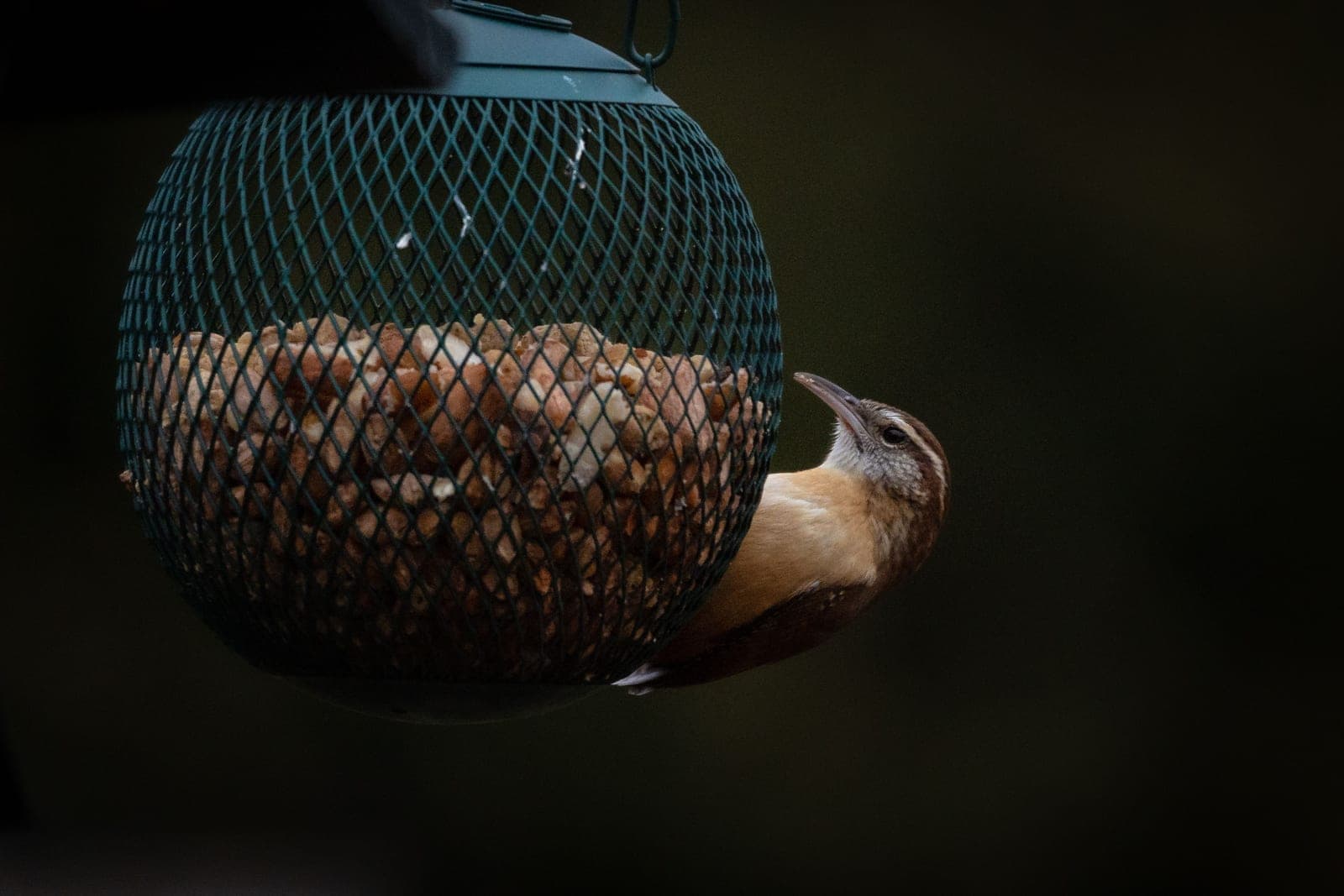
Buy weight-activated if gray squirrels are the problem and you want cardinals and jays to keep feeding. Buy caged if chipmunks, red squirrels, starlings or grackles are the problem, because a cage excludes by size and does not care how light the animal is.
| Weight-activated | Caged | |
|---|---|---|
| Excludes by | Mass on a perch or shroud | Physical geometry |
| Gray squirrels | Yes | Yes |
| Chipmunks and red squirrels | No — below the trigger weight | Yes |
| Starlings and grackles | Only if tuned for it, at a cost | Yes |
| Cardinals and jays | Yes, with a cardinal ring | Awkward — the cage is the constraint |
| Moving parts | Yes — a shroud or bar that must stay free | None |
| Maintenance | Occasional cleaning so the mechanism slides | Effectively none |
Baffleworks is funded by affiliate commission. If you buy through a link on this page we may earn a commission at no extra cost to you, and it never decides a ranking. Full disclosure · how we pick.
Quick picks
Ranked, with the trade-off named. Tap a row for the full write-up; the price button goes straight to Amazon.
| # | Product | Best for | Price |
|---|---|---|---|
| 1 |  Brome Squirrel Buster PlusThe weight-activated shroud done properly: a squirrel's weight closes the ports, and the cardinal ring means the mechanism does not cost you the big birds. | Weight-activated, most capacity | $129.25 on Amazon |
| 2 |  Woodlink WLCAGE2 Designer Caged 4-Port Tube FeederA cage around a tube, which excludes by aperture rather than by weight — so it stops the chipmunk and the red squirrel a weight trigger ignores, and stops the cardinal too. | Small songbirds only | $71.48 on Amazon |
| 3 |  Girvenith Metal Caged Seed Feeder, 4 portA steel cage around an enclosed seed compartment, sized so finches and chickadees pass and larger birds do not. The cheapest honest cage on this page. | Small songbirds in a small space | $21.59 on Amazon |
#ad how we are funded · price as of October 24, 2026
The picks in full
Top pick Weight-activated, most capacity
Brome Squirrel Buster Plus
The weight-activated shroud done properly: a squirrel's weight closes the ports, and the cardinal ring means the mechanism does not cost you the big birds.
Published specifications
- Seed capacity
- 5.1 lb (published)
- Feeding ports
- 6
- Mechanism
- Weight-activated shroud, adjustable
- Included
- Cardinal ring
- Pole mounting
- Pole-mountable; pole adaptor sold separately
Trade-offs
- 5.1 lb capacity means fewer refills through a hard winter
- Adjustable weight setting, so you can shut out grackles without shutting out cardinals
- The cardinal ring is the fix for the usual complaint about shroud feeders
- The pole adaptor is a separate purchase, which is easy to miss at checkout
- A weight mechanism is a mechanism: it needs the occasional clean to keep moving freely
Who it is forThe default first purchase if you would rather solve the problem at the feeder than at the pole. It also pairs well with a baffle rather than replacing one.
Skip it ifYour problem is chipmunks or small red squirrels. A weight-activated shroud is calibrated for something heavier, and a light animal can feed under the trigger point. A caged feeder is the better answer there.
#ad how we are funded · price as of October 24, 2026
Where these specifications came from
No. 2 Small songbirds only
Woodlink WLCAGE2 Designer Caged 4-Port Tube Feeder
A cage around a tube, which excludes by aperture rather than by weight — so it stops the chipmunk and the red squirrel a weight trigger ignores, and stops the cardinal too.
Published specifications
- Mechanism
- Fixed cage aperture
- Feeding ports
- 4 (published)
- Cage material
- Metal, bronze finish (published)
- Tube material
- Recycled plastic (published)
- Cleaning
- Published as easy to fill and clean
Trade-offs
- A fixed aperture does not care how heavy the animal is, so it excludes chipmunks and red squirrels as well as grays
- Metal cage rather than a coated wire basket
- The tube is recycled plastic, which is unusual honesty about material in this category
- Nothing to calibrate and nothing to wear out
- The cage excludes cardinals, jays and grosbeaks along with the squirrels — that is the trade, not a defect
- The listing publishes no cage aperture in inches, which is the one number that would let you predict exactly which birds get in
- No published seed capacity
- Plastic tube inside a metal cage: the cage protects it, but only while the cage is intact
Who it is forA yard where chipmunks or red squirrels are the problem and you are content with finches, chickadees and titmice.
Skip it ifYou want cardinals. A cage cannot be adjusted and this one publishes no aperture — the cardinal page covers why a weight trigger is the right mechanism instead.
#ad how we are funded · price as of October 24, 2026
Where these specifications came from
No. 3 Small songbirds in a small space
Girvenith Metal Caged Seed Feeder, 4 port
A steel cage around an enclosed seed compartment, sized so finches and chickadees pass and larger birds do not. The cheapest honest cage on this page.
Published specifications
- Mechanism
- Fixed cage aperture
- Dimensions
- 6.25" L x 6.25" W x 10.25" H (published)
- Feeding ports
- 4 (published)
- Cage
- Durable steel exterior (published)
- Weather
- Rainproof cover; all-weather metal (published)
- Named birds
- Finches and chickadees welcomed, larger birds discouraged (published)
- Filling
- Wide-opening metal top (published)
Trade-offs
- Publishes its actual cage body dimensions, which is how you predict which birds get in
- A fixed aperture ignores weight, so it stops the chipmunk and red squirrel a weight trigger lets through
- All-metal with a rainproof cover — no plastic tube to chew or craze
- Small enough to hang almost anywhere, and cheap enough to try
- The listing publishes the cage body size but not the mesh opening, which is the number that would settle exactly which birds fit
- Excludes cardinals, jays and grosbeaks along with the squirrels — the trade, not a defect
- No published seed capacity, and a 10.25 in body will not hold much
- 'Squirrel proof' in the title is doing more work than the cage alone can — placement still matters
Who it is forA small yard with chipmunks or red squirrels, where finches and chickadees are the birds you actually want.
Skip it ifYou want cardinals. A 6.25 in cage body is the mechanism working as designed, and no setting changes it — see the cardinal page.
#ad how we are funded · price as of October 24, 2026
Where these specifications came from
How the weight mechanism actually behaves
A shroud feeder like the Squirrel Buster Plus holds an outer sleeve up on a spring. Bird weight leaves it open; squirrel weight pulls it down and the ports disappear behind the sleeve. Brome makes the trigger adjustable, which is the part that matters: the same feeder can be set to exclude grackles or to let them through.
The failure modes follow from the design. It is a mechanism, so it needs to keep sliding freely — seed dust and damp are what stop these working, not squirrels. And it is calibrated, so anything below the setting feeds unimpeded. A chipmunk is not defeating the feeder; it is simply not triggering it.
How the cage actually behaves
A cage is a fixed steel grid around the tube with gaps sized for small songbirds. There is nothing to calibrate, nothing to wear out and nothing to clean beyond the feeder itself. Woodlink's caged tube publishes four ports; the Girvenith publishes 10.25 x 6.25 x 6.25 in and four ports. Neither publishes a seed capacity.
Its cost is birds. A cage sized to exclude a chipmunk is also a cage a cardinal finds awkward. That is the trade, and no amount of listing copy about cardinals changes the geometry.
Which animal do you actually have?
This is the question the whole comparison reduces to, and it is worth five minutes at a window to answer.
- Gray squirrel — large, heavy, arrives from the pole or a leap. Weight mechanism works. So does a cage.
- Red squirrel or chipmunk — small, light, often arrives from the ground or up a post. Weight mechanism does not fire. Cage works.
- Starlings or grackles in numbers — a weight setting can exclude them, at the risk of excluding cardinals too. A cage excludes them cleanly.
- Raccoon — neither feeder mechanism is the answer. That is a baffle and food-management problem.
The answer people do not expect: buy both
Two feeders on one pole, one caged and one weight-activated, is a common and sensible setup. The cage keeps the small birds fed regardless of what else turns up; the weight feeder keeps the cardinals and jays. Between them they cover the whole species range without either compromise dominating.
If you do that, put both above one baffle at four to five feet on a pole with real setback. Two feeders sharing correct geometry beats two feeders sharing a fence line.
For one group of birds this comparison has no downside on either side. Chickadees, nuthatches and titmice are too light to trip a weight mechanism and small enough to pass through a cage, so both choices are free - feeders for chickadees and nuthatches works through it.
How we picked
- We sorted by mechanism first: weight, cage or spin. Those three exclude different animals, and the choice between them is not a quality judgment.
- We used published figures only — seed capacity, port count, dimensions, mechanism. Where a maker publishes nothing, the spec row says so.
- We checked each mechanism against the animal it is calibrated for. A weight trigger tuned for a gray squirrel does not fire for a chipmunk, and we say so rather than implying it does.
- We named at least one product to skip on every page, with the reason.
- We have not tested any of these. How we pick sets out what that does and does not cover.
Everyone in this category says they tested twenty of these. We have not tested any, and we say so. What we did instead: read the manuals, compiled the published specifications, worked out the clearance geometry, and cited every source. The full method is published.
Questions people actually ask
- Do weight-activated bird feeders work?
- On gray squirrels, yes — the mechanism is mass and a gray squirrel trips it easily. On chipmunks and red squirrels, no, because they feed below the trigger weight. That is a calibration limit, not a fault.
- Are caged bird feeders better?
- More reliable and lower maintenance, because they exclude by geometry and have no moving parts. The cost is that larger birds like cardinals find them awkward.
- Which is better for a windy or wet site?
- A cage. There is no mechanism to seize, and seed dust plus damp is what stops a weight-activated shroud sliding freely.
- Can I use both?
- Yes, and it is a good setup. Caged for the small birds and the light raiders, weight-activated with a cardinal ring for the big birds. Put both over one correctly placed baffle.
Sources
Read next
- The best squirrel-proof bird feeders
Seven feeders ranked by mechanism and published capacity, and which animal each one actually excludes.
- Weight-activated feeders
How the shroud and perch-bar mechanisms work, what the adjustment is really for, and where they stop.
- Caged bird feeders
Exclusion by size rather than weight: the mechanism that beats chipmunks, red squirrels and starlings.
- How to keep squirrels off bird feeders
Seven methods ranked by reliability rather than by how often they get recommended. The best one is free.
- Squirrel-Proof Feeders
Weight-activated, caged and spinning feeders, sorted by which animal each mechanism actually keeps out.