Feeders / Bluebirds
The best bluebird feeders
A bluebird feeder is the site's usual mechanism in an unusual body: an aperture sized to admit one bird and exclude the rest.
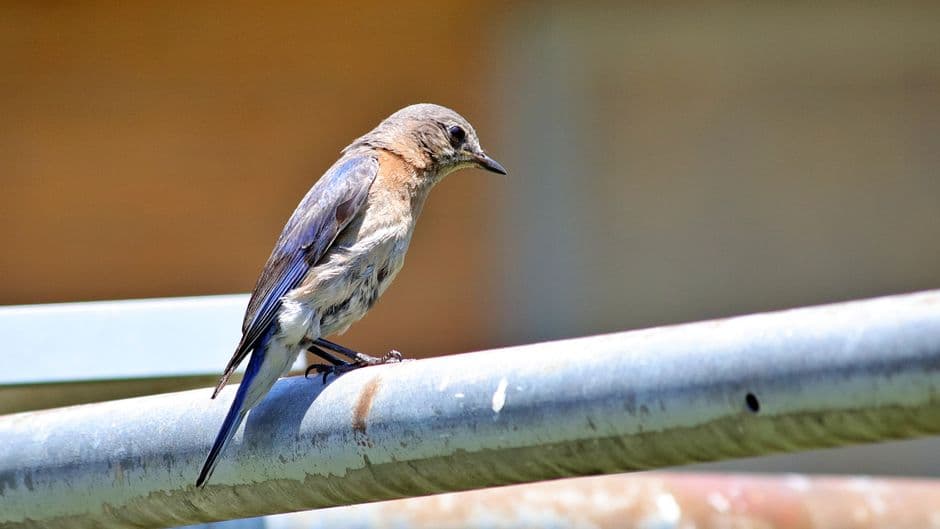
Buy the mealworms first, then a caged or enclosed feeder. Project FeederWatch notes mealworms are "one of the only food items that reliably attract bluebirds" - and because they are expensive, the feeder's job is exclusion. The mechanism is the entrance hole or cage aperture, and only one feeder here publishes that dimension: 1 1/2 in.
Everything else on this site excludes mammals. A bluebird feeder excludes birds — starlings, jays and grackles that would otherwise clear a dish of mealworms in a morning. The logic is identical to a caged seed feeder, which is why it belongs here rather than in a general bird-feeding guide.
Baffleworks is funded by affiliate commission. If you buy through a link on this page we may earn a commission at no extra cost to you, and it never decides a ranking. Full disclosure · how we pick.
Quick picks
Ranked, with the trade-off named. Tap a row for the full write-up; the price button goes straight to Amazon.
| # | Product | Best for | Price |
|---|---|---|---|
| 1 | 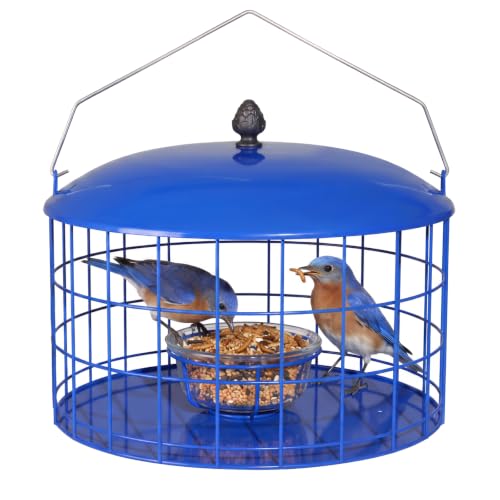 Veehoo Caged Bluebird Feeder, wide platformA cage around a wide platform: small birds in, everything bigger out, and you can still watch them. The compromise between an open dish and a sealed box. | Cage exclusion with the birds still in view | $26.99 on Amazon |
| 2 | 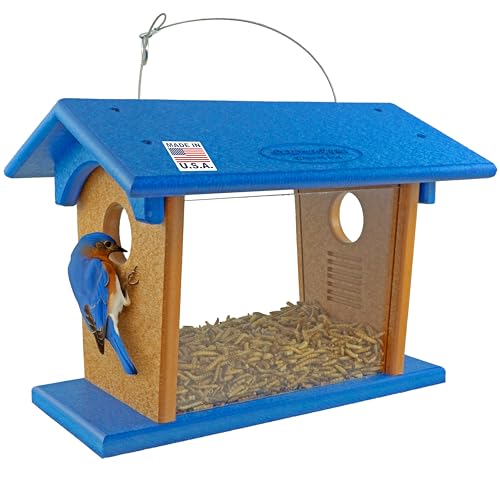 DutchCrafters Hanging Bluebird Mealworm Feeder, 1.5 in entranceAn enclosed cedar box with a **1 1/2 in entrance hole**. That hole is the whole mechanism: bluebirds go through it, starlings and jays do not, and no weight trigger is involved. | The published entrance hole that does the excluding | $84.00 on Amazon |
| 3 | 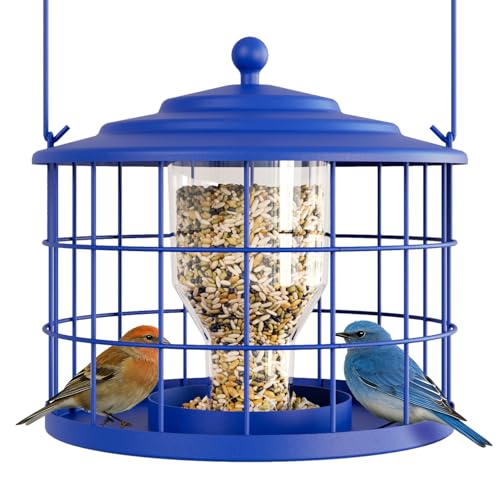 Birdream Metal Bluebird FeederA metal bluebird feeder under thirty dollars. Mealworm feeders are chewed as readily as seed feeders, and metal is the cheapest way to stop that being the failure mode. | A metal body at the low end | $24.99 on Amazon |
| 4 | 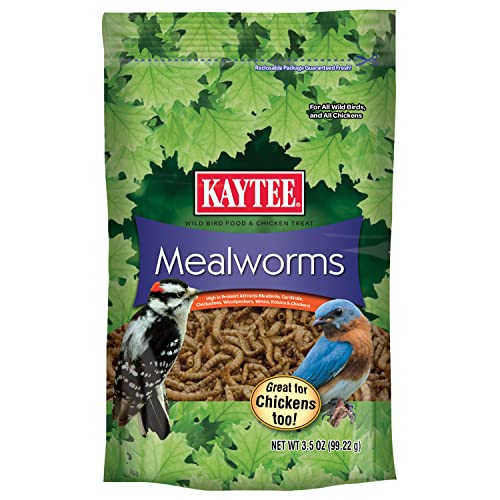 Kaytee Mealworms, 3.5 ozDried mealworms in a small tub. Buy the food before the feeder: if nothing in your yard takes mealworms off a saucer, a bluebird feeder is furniture. | The food, which you will need first | $6.49 on Amazon |
#ad how we are funded · price as of September 27, 2026
The picks in full
Top pick Cage exclusion with the birds still in view
Veehoo Caged Bluebird Feeder, wide platform
A cage around a wide platform: small birds in, everything bigger out, and you can still watch them. The compromise between an open dish and a sealed box.
Published specifications
- Type
- Caged platform mealworm feeder
- Claim
- Squirrel proof (published)
- Platform
- Wider than standard (published)
- Entrance
- Cage aperture — dimension not published
Trade-offs
- A cage is a visible, learnable barrier — bluebirds take to it far faster than an enclosed box
- The wider platform matters because bluebirds land and pause rather than clinging like a chickadee
- You can see the birds, which is the reason most people are doing this
- No published aperture dimension, so how well it excludes starlings is unverifiable until it arrives
- 'Squirrel proof' on a platform feeder is a claim about the cage, not about the mealworms staying put
- A wide platform collects rain and mealworm debris and needs emptying
Who it is forMost people. It is the middle option and it is the one most likely to actually get used.
Skip it ifStarlings are the specific problem and they are persistent. Then the published entrance hole is worth the money.
#ad how we are funded · price as of September 27, 2026
Where these specifications came from
No. 2 The published entrance hole that does the excluding
DutchCrafters Hanging Bluebird Mealworm Feeder, 1.5 in entrance
An enclosed cedar box with a **1 1/2 in entrance hole**. That hole is the whole mechanism: bluebirds go through it, starlings and jays do not, and no weight trigger is involved.
Published specifications
- Entrance hole
- 1 1/2 in (published)
- Type
- Enclosed hanging mealworm feeder
- Material
- Cedar (published)
- Origin
- Amish, USA made (published)
- Food
- Live or dried mealworms (published)
Trade-offs
- It publishes the one number that matters on this feeder — the entrance diameter — which most bluebird feeders do not
- An aperture excludes by geometry and needs no calibration, the same logic as a caged seed feeder
- Cedar and enclosed, so the mealworms stay dry and out of sight of everything patrolling overhead
- By far the most expensive feeder on this page
- An enclosed box takes bluebirds days or weeks to enter — they have to learn it, and some never do
- You cannot see the birds feeding, which is half of why people buy a feeder
Who it is forA yard with confirmed bluebirds and a starling problem, where you are prepared to wait for the birds to find the hole.
Skip it ifYou have never seen a bluebird in your yard. Start with an open dish and find out.
#ad how we are funded · price as of September 27, 2026
Where these specifications came from
No. 3 A metal body at the low end
Birdream Metal Bluebird Feeder
A metal bluebird feeder under thirty dollars. Mealworm feeders are chewed as readily as seed feeders, and metal is the cheapest way to stop that being the failure mode.
Published specifications
- Body
- Metal (published)
- Claim
- Squirrel proof (published)
- Color
- Blue (published)
- Entrance
- Dimension not published
Trade-offs
- Metal rather than plastic on a feeder holding something every mammal in the yard wants
- Cheapest route into mealworm feeding with any exclusion at all
- Blue is the convention on these and it does appear to help birds locate them
- Publishes no entrance or aperture dimension, so the exclusion claim cannot be checked before buying
- Thin metal on budget feeders dents and the powder coat chips at the folds
- No cover published, so wet mealworms are a real possibility
Who it is forTrying mealworms without committing, in a yard where something has already chewed a plastic feeder.
Skip it ifYou want a verifiable exclusion spec. Only one feeder on this page publishes its entrance hole.
#ad how we are funded · price as of September 27, 2026
Where these specifications came from
No. 4 The food, which you will need first
Kaytee Mealworms, 3.5 oz
Dried mealworms in a small tub. Buy the food before the feeder: if nothing in your yard takes mealworms off a saucer, a bluebird feeder is furniture.
Published specifications
- Weight
- 3.5 oz (published)
- Form
- Dried mealworms
- Named birds
- Bluebirds, wrens, robins, chickadees, woodpeckers, cardinals (published)
- Use
- Any dish, tray or mealworm feeder
Trade-offs
- The cheapest possible test of whether mealworm feeding will work in your yard
- The label names six species, several of which this site covers on other pages — chickadees and woodpeckers take them too
- Dried rather than live, so there is no refrigeration and no escape
- 3.5 oz disappears fast once birds find it, and the cost per pound of mealworms is high
- Dried worms are less attractive than live ones, and some bluebirds hold out for live
- Mealworms left in an open dish draw ants and go soft in rain
Who it is forAnyone about to buy a bluebird feeder. Spend six dollars first.
Skip it ifYour birds already take mealworms and you are going through them weekly. Buy a bigger bag.
#ad how we are funded · price as of September 27, 2026
Where these specifications came from
What we would skip
An open mealworm dish, in a yard with starlings
Mealworms are expensive and an open dish is a starling buffet. The entire reason bluebird feeders are boxes and cages is that the food is too costly to leave unprotected. An open tray is fine only if nothing bigger is competing for it.
A bluebird feeder bought before you know your birds take mealworms
The feeders here run from twenty-five to eighty-four dollars and a tub of mealworms costs a few. Put worms in a saucer first. If nothing comes in a fortnight, you have saved yourself the feeder.
Mealworms are the whole draw
Project FeederWatch is unusually direct about this: "Birds like chickadees, titmice, wrens, and nuthatches relish this food and mealworms are one of the only food items that reliably attract bluebirds."
Read the first half too. Mealworms pull in several of the small birds this site covers elsewhere, which is useful if you are not sure bluebirds are present — the worms will not go to waste while you find out. Feeders for chickadees and nuthatches covers the rest of that group.
Bluebirds do not eat seed in any meaningful way. That is why a bluebird feeder is a different object from every other feeder on this site, and why putting sunflower out and hoping is not a strategy.
The aperture is the mechanism
Two shapes do the excluding, and they trade the same thing against each other.
| Enclosed box | Caged platform | |
|---|---|---|
| Mechanism | Entrance hole the bird passes through | Cage bars the bird passes between |
| Excludes starlings | Yes, if the hole is sized right | Yes, if the gap is sized right |
| Bird can see the food | No | Yes |
| Learning curve | Days to weeks, and some never enter | Short |
| Published dimension here | 1 1/2 in entrance | Not published |
| Weather protection | Good — food is inside | Poor — platform collects rain |
The honest recommendation for most people is the cage, because a feeder the birds will not enter excludes bluebirds as effectively as it excludes starlings. The enclosed box is the better tool in a yard where starlings are relentless and you are prepared to wait the birds out.
Only one product here publishes its entrance diameter. That is the spec that decides everything about this feeder, and its absence from the other listings is worth knowing before you order.
Getting them to find it
This is the part that catches people out. An enclosed feeder is a hole in a box, and a bird has no reason to assume there is food inside it.
- Start with worms in an open dish on top of, or right next to, the feeder so the birds associate the location with food.
- Once they are coming, move the dish progressively closer to the entrance, then just inside it.
- Leave the entrance propped open at first if the design allows, then let it return to normal.
- Feed at the same time each day. Bluebirds learn a schedule quickly and will wait for it.
- Expect this to take a fortnight. If nothing has entered after a month, the feeder is the wrong shape for your birds.
Dried or live
Dried is the practical choice: no refrigeration, nothing escapes, and it stores. Live worms are more attractive and some bluebirds hold out for them, which is the trade.
A common middle path is dried worms briefly soaked in warm water, which softens them and makes them more obviously food. Do that in small amounts, because soaked worms spoil quickly in a dish.
What the box does not stop
Mammals. Mealworms are protein and fat, and a squirrel or raccoon that reaches the feeder will empty it or carry the whole thing off. Nothing about an entrance hole addresses that.
So the mount matters as much as it does for a seed feeder: a baffle with its top at four to five feet, and the feeder well clear of anything a squirrel can launch from. Squirrel jump clearance has the geometry and the best squirrel-proof feeder poles has the mounts.
Ants are the other visitor, because mealworms in a warm dish are exactly what ants are looking for. The moat that solves it is the same one used on nectar feeders — see protecting a hummingbird feeder.
How we picked
- We sorted by mechanism first: weight, cage or spin. Those three exclude different animals, and the choice between them is not a quality judgment.
- We used published figures only — seed capacity, port count, dimensions, mechanism. Where a maker publishes nothing, the spec row says so.
- We checked each mechanism against the animal it is calibrated for. A weight trigger tuned for a gray squirrel does not fire for a chipmunk, and we say so rather than implying it does.
- We named at least one product to skip on every page, with the reason.
- We have not tested any of these. How we pick sets out what that does and does not cover.
Everyone in this category says they tested twenty of these. We have not tested any, and we say so. What we did instead: read the manuals, compiled the published specifications, worked out the clearance geometry, and cited every source. The full method is published.
Questions people actually ask
- What do you put in a bluebird feeder?
- Mealworms. Project FeederWatch describes them as one of the only food items that reliably attract bluebirds, and notes chickadees, titmice, wrens and nuthatches take them too. Bluebirds do not eat seed in any meaningful way.
- How does a bluebird feeder keep starlings out?
- By aperture. Either an entrance hole the bluebird passes through or cage bars it passes between, sized so larger birds cannot follow. It is the same exclusion-by-geometry logic as a caged seed feeder, with no weight trigger involved.
- What size entrance hole does a bluebird feeder need?
- One feeder here publishes 1 1/2 in. The others do not publish an entrance or aperture dimension at all, which means the exclusion claim cannot be checked before it arrives — worth knowing, because this is the spec the whole feeder rests on.
- How long does it take bluebirds to use an enclosed feeder?
- Days to weeks, and some never enter one. Start with worms in an open dish beside the feeder, move it progressively to the entrance, and feed at a consistent time. If nothing has gone in after a month, the shape is wrong for your birds.
- Dried or live mealworms?
- Dried is far more practical — no refrigeration and nothing escapes. Live worms are more attractive and some birds hold out for them. Soaking dried worms briefly in warm water is the usual compromise; do it in small amounts because they spoil fast.
- Will squirrels raid a bluebird feeder?
- Yes. Mealworms are protein and fat, and an entrance hole does nothing about a mammal. Mount it above a baffle at four to five feet with real clearance, exactly as you would a seed feeder.
Sources
Read next
- The best feeders for chickadees, nuthatches and titmice
Small clinging birds are the one group a cage costs you nothing with. Short perches, why small capacity is a feature, and the three published foods that work.
- Caged bird feeders
Exclusion by size rather than weight: the mechanism that beats chipmunks, red squirrels and starlings.
- How to protect a hummingbird feeder
Ants first, bees second, rain third, squirrels a distant fourth. The water barrier you can watch working.
- The best squirrel-proof bird feeder poles
Pole systems ranked on baffle height, anchoring and the ten-foot setback one maker actually publishes.
- Squirrel-Proof Feeders
Weight-activated, caged and spinning feeders, sorted by which animal each mechanism actually keeps out.