Guides / Hummingbirds
How to protect a hummingbird feeder
Almost everyone arrives here worried about squirrels and leaves having solved an ant problem. Nectar attracts a completely different set of raiders from seed.
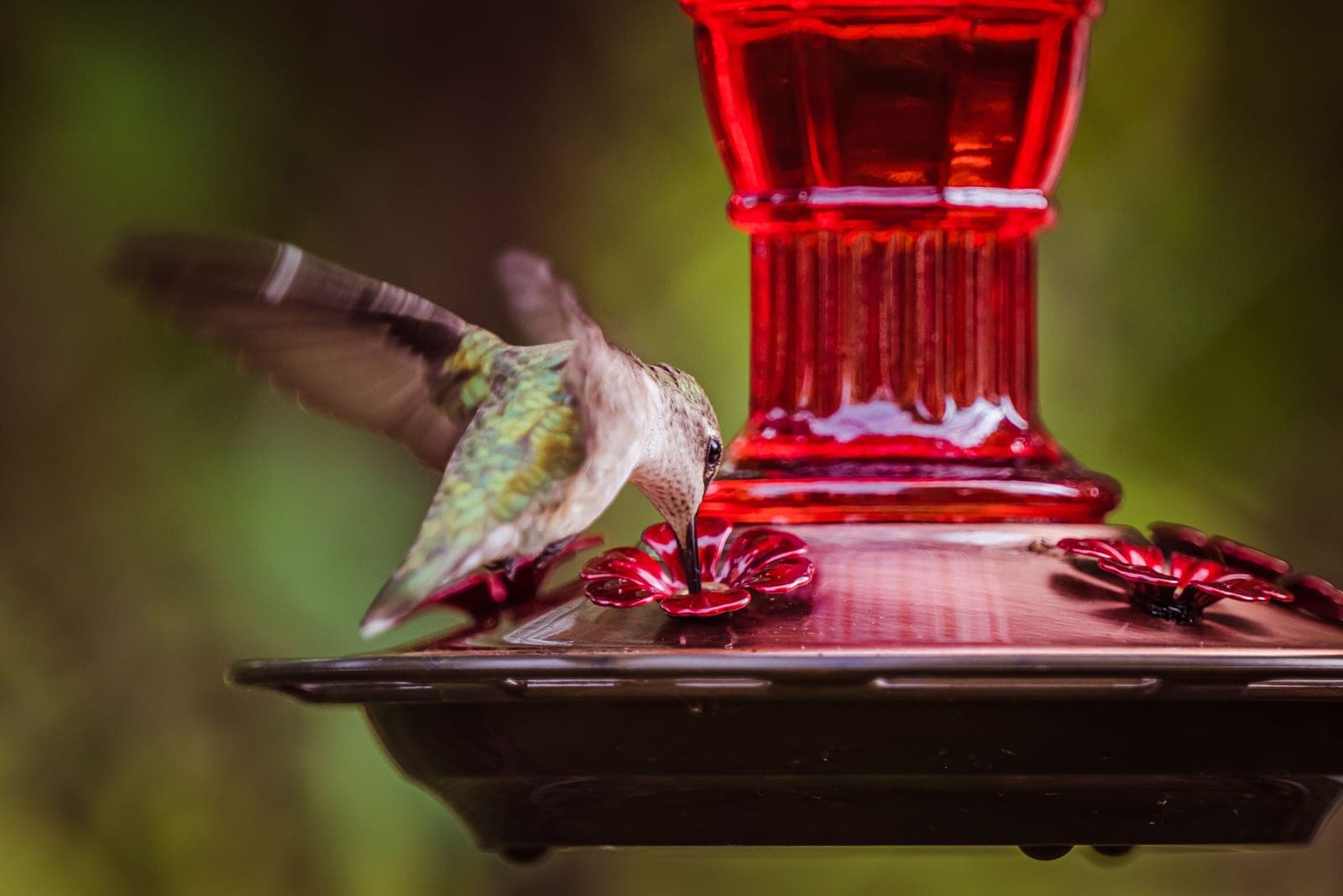
Fit an ant moat: a small cup above the feeder that you fill with plain water. Ants cannot cross it, so the barrier is complete and visible. Bees need port guards, rain needs a dome, and squirrels are rarely the actual problem on a nectar feeder.
Nectar is sugar water. That attracts a different raider list from seed, and the ranking of that list surprises people: ants first, bees and wasps second, rain third, squirrels a distant fourth.
Why squirrels are the wrong worry here
A squirrel is not especially interested in sugar water. It cannot carry it, it cannot cache it, and the reward-to-effort ratio is poor next to a tube of sunflower seed. Where squirrels do interfere with nectar feeders it is usually incidental — knocking one down, chewing a plastic port out of curiosity — rather than a sustained raid.
So the standard pole-and-baffle apparatus, which is most of this site, is largely beside the point on a hummingbird feeder. If yours is on a pole that also carries seed feeders, the baffle you already need covers it. If it hangs on its own, ants are your problem.
Ants: the one deterrent whose mechanism you can watch
An ant moat is a cup that hangs between the hook and the feeder. You fill it with plain water. Ants walking down the hanger reach the water and stop, because they will not cross it. That is the entire mechanism.
It is worth pausing on how unusual that is. Most of the deterrent category asks you to take an unverifiable claim on trust. An ant moat is a physical barrier you can stand and watch working, and the active ingredient is tap water. Nothing toxic goes anywhere near the nectar or the birds.
- Retrofit or built in. A standalone moat publishes 4.2 oz and metal construction and fits nearly any hanging feeder. Feeders like the FEED GARDEN 16 oz publish a moat as standard.
- It only works while it holds water. In real heat that can be every couple of days. A dry moat is a bridge.
- Never put oil in it. Cooking oil or petroleum jelly in a moat, or smeared on the hanger, transfers to feathers and destroys waterproofing — the same reason greasing a feeder pole is off the table. Water is the whole point.
Baffleworks is funded by affiliate commission. If you buy through a link on this page we may earn a commission at no extra cost to you, and it never decides a ranking. Full disclosure · how we pick.
Quick picks
Ranked, with the trade-off named. Tap a row for the full write-up; the price button goes straight to Amazon.
| # | Product | Best for | Price |
|---|---|---|---|
| 1 |  Standalone Ant Moat, 4.2 ozA water-filled cup that hangs above the feeder. Ants cannot cross water, so the barrier is complete and you can watch it working. | Retrofitting a feeder you already own | $5.99 on Amazon |
| 2 |  FEED GARDEN Glass Hummingbird Feeder, 16 oz, 2 packThe feeder that arrives with the ant moat already built in, which is the part most hummingbird feeders leave you to buy separately after the first invasion. | Ant moat and bee guards included | $27.99 on Amazon |
| 3 |  iBorn 10.6 in Hummingbird Feeder Rain Cover with Integrated Ant MoatTwo jobs on one hanger: a dome that keeps rain out of the nectar and an integrated moat that stops ants reaching it, retrofitted to a feeder you already own. | Rain plus ants on one hanger | $17.99 on Amazon |
| 4 |  Erva SB6 Pole-Mount Disk Baffle, 22.5 inThe widest disk we found with a published diameter, which is the whole mechanism: a squirrel on the pole below has to reach past 22.5 inches of steel to get anything. | Round poles, maximum overhang | $39.99 on Amazon |
#ad how we are funded · price as of October 24, 2026
The picks in full
Top pick Retrofitting a feeder you already own
Standalone Ant Moat, 4.2 oz
A water-filled cup that hangs above the feeder. Ants cannot cross water, so the barrier is complete and you can watch it working.
Published specifications
- Capacity
- 4.2 oz (published)
- Material
- Metal (published)
- Fitting
- Hangs between the hook and the feeder
- Mechanism
- Water barrier — plain water, no chemicals
Trade-offs
- Works on nearly any hanging nectar feeder, so it rescues a feeder you already like
- Plain water is the whole active ingredient: nothing toxic near the nectar or the birds
- The mechanism is visible and checkable, which almost nothing in the deterrent aisle can claim
- Metal rather than plastic, so it survives being left out
- Only works while it holds water — in real heat that can mean topping it up every couple of days
- Adds height to the hang, which matters if your hook is already short
- Does nothing about bees, which need port guards instead
Who it is forThe cheapest fix for ants in nectar, and the right first purchase if your current feeder is otherwise fine.
Skip it ifYou keep forgetting to refill it. A dry moat is a bridge, and at that point a feeder with the moat built in is the more honest choice.
#ad how we are funded · price as of October 24, 2026
Where these specifications came from
No. 2 Ant moat and bee guards included
FEED GARDEN Glass Hummingbird Feeder, 16 oz, 2 pack
The feeder that arrives with the ant moat already built in, which is the part most hummingbird feeders leave you to buy separately after the first invasion.
Published specifications
- Capacity
- 16 oz (published)
- Quantity
- 2 (published)
- Ports
- 4 metal flower feeding ports (published)
- Ant protection
- Built-in ant moat (published)
- Bee protection
- Bee guards (published)
- Perch
- 360 degree metal perch (published)
- Bottle
- Wide-mouth glass, leak-proof gasket (published)
Trade-offs
- Ant moat built in rather than bolted on — the moat is the only ant measure that works without chemicals
- Metal ports and metal perch rather than plastic, which is what fails first on cheap nectar feeders
- Wide-mouth glass actually cleans, and nectar feeders need cleaning far more often than seed feeders
- Two in the pack, so one can be in the sink while the other is out
- Publishes no moat capacity, so how often it needs topping up in heat is unknown
- Glass is heavier than plastic and will break if it is knocked off a hook
- Hand wash only per the listing, which is a chore on a feeder that needs cleaning every few days
- Bee guards reduce but do not eliminate wasp interest at the ports
Who it is forAnyone starting with hummingbirds who would rather not learn about ants the hard way.
Skip it ifYou already own a feeder you like. A standalone moat or a dome baffle retrofits ant and rain protection for far less.
#ad how we are funded · price as of October 24, 2026
Where these specifications came from
No. 3 Rain plus ants on one hanger
iBorn 10.6 in Hummingbird Feeder Rain Cover with Integrated Ant Moat
Two jobs on one hanger: a dome that keeps rain out of the nectar and an integrated moat that stops ants reaching it, retrofitted to a feeder you already own.
Fits: Hanging · Shepherd's hook
Published specifications
- Diameter
- 10.6 in (published)
- Functions
- Rain cover with integrated ant moat (published)
- Quantity
- Pack of 1 (published)
- Color
- Red (published)
- Fitting
- Hangs above an existing hummingbird feeder
Trade-offs
- Solves ants and rain in one purchase, and diluted nectar after rain is the complaint people do not expect
- 10.6 in of published diameter shelters more of the feeder than the 8 in domes that dominate this category
- Retrofits any hanging feeder, so it rescues a feeder you already like
- Also keeps droppings off the feeder from birds perching above
- Publishes no moat capacity, so in heat it may need topping up more often than you check it
- Still not a squirrel baffle — 10.6 in is nowhere near the overhang that job needs
- No published material or hanger-length spec
Who it is forAn existing hummingbird feeder with an ant trail on the hanger or diluted nectar after every shower.
Skip it ifYou are still buying the feeder. Get one with the moat built in and skip the retrofit entirely.
#ad how we are funded · price as of October 24, 2026
Where these specifications came from
No. 4 Round poles, maximum overhang
Erva SB6 Pole-Mount Disk Baffle, 22.5 in
The widest disk we found with a published diameter, which is the whole mechanism: a squirrel on the pole below has to reach past 22.5 inches of steel to get anything.
Fits: Round pole
Published specifications
- Diameter
- 22.5 in (published)
- Type
- Disk, pole-mount
- Material
- Powder-coated galvanized steel, solid steel collars
- Origin
- Made in USA
Trade-offs
- 22.5 in is the largest published disk diameter in this set, so it gives the most overhang past the pole
- Steel collars rather than plastic clamps, which is what usually fails first on a baffle
- Powder coat over galvanized steel, so it is not a chew or corrosion target
- Pole-mount, so it has to come off the pole to install unless your feeder arm lifts clear
- A 22.5 in disk is visually large; on a small deck or patio it dominates
Who it is forA standard round feeder pole where you want the mechanism doing the work rather than luck. Mount the top of the disk at four to five feet and give it the clearance the geometry actually needs.
Skip it ifYour feeder is on a 4x4 wooden post — this is a round-pole fitting. Use the 4x4 post baffles instead.
#ad how we are funded · price as of October 24, 2026
Where these specifications came from
Bees and wasps: guards, not poison
Bee guards are small cages over the feeding ports. A hummingbird's tongue reaches through them; a bee's mouthparts cannot reach the nectar behind. The FEED GARDEN feeder publishes bee guards alongside its moat, which is why it ranks where it does.
Two things that help without buying anything. Red feeders without yellow parts attract fewer wasps — yellow is the color that draws them, and many feeders use it on the flower ports for no functional reason. And keeping the outside clean matters more than any accessory, because a feeder that has dripped is a feeder wasps have found.
Never use insecticide on or near a nectar feeder. It is the one intervention that could actually harm the birds you put the feeder up for.
Rain: the problem nobody plans for
Rain running down the hanger dilutes the nectar, and diluted nectar both spoils faster and gives the birds less than they came for. A small dome above the feeder solves it, and the iBorn unit publishes a 10.6 in diameter combining a rain guard with an integrated ant moat.
Worth being clear about what that 10.6 in dome is not: it is a weather and ant guard, not a squirrel baffle. At a shade over ten inches it does not have the overhang for that job, and a real pole baffle publishes 22.5 in for comparison.
The nectar itself
- Four parts water to one part plain white sugar. That is the standard ratio and it approximates natural nectar concentration.
- No red dye. The feeder is already red; the nectar does not need to be, and dye is an unnecessary additive in a bird's entire diet.
- No honey, no brown sugar, no artificial sweetener. Honey ferments and promotes mold; the others do not give the birds what they need.
- Change it before it goes cloudy. In hot weather that can be every two days. This is the real maintenance burden of a nectar feeder and it is why a 16 oz reservoir is often better than a larger one.
That last point runs against the usual instinct to buy the biggest feeder available. With nectar, capacity you cannot use before it spoils is capacity you will be pouring away.
If squirrels genuinely are the problem
It happens — usually a feeder hung somewhere a squirrel passes anyway, and usually it is knocked down rather than drained. The fix is the same geometry as everything else on this site: about ten feet of clear air from anything solid, per Audubon and Cornell, and a baffle if it is on a pole.
The clearance guide has the numbers. Nothing about nectar changes them.
Orioles take a weaker nectar mix than hummingbirds and add jelly and fruit to the list, which makes the ant problem on this page their problem too. The best oriole feeders covers the moats, the covered jelly dishes and the hygiene that sugar feeding actually needs.
Questions people actually ask
- How do I keep ants out of a hummingbird feeder?
- An ant moat — a cup above the feeder filled with plain water. Ants will not cross water, so the barrier is complete. Standalone moats retrofit almost any hanging feeder, and some feeders include one.
- Can I put oil in an ant moat?
- No. Oil and petroleum jelly transfer to feathers and destroy waterproofing, which is dangerous for the birds. Plain water is the whole mechanism and it works better anyway.
- How do I stop bees at a hummingbird feeder?
- Bee guards over the ports — small cages a hummingbird's tongue reaches through and a bee cannot. Choosing a feeder without yellow parts and keeping the outside clean of drips both help at no cost.
- Do squirrels bother hummingbird feeders?
- Rarely in a sustained way. Sugar water is a poor reward for a squirrel — it cannot carry or cache it. Damage is usually incidental. Ants are the far more common problem.
- What is the right nectar recipe?
- Four parts water to one part plain white sugar. No red dye, no honey, no brown sugar and no artificial sweeteners. Change it before it clouds, which in hot weather can be every two days.
- Does a dome above the feeder stop squirrels?
- A 10.6 in nectar dome is a rain and ant guard, not a squirrel baffle. For comparison, a pole baffle built for squirrels publishes 22.5 in. Do not buy the small dome expecting it to do that job.
Sources
Read next
- The best squirrel-proof bird feeders
Seven feeders ranked by mechanism and published capacity, and which animal each one actually excludes.
- How to keep squirrels off bird feeders
Seven methods ranked by reliability rather than by how often they get recommended. The best one is free.
- Baffles for hanging feeders
A dome above a feeder blocks a drop and nothing else. How to tell whether that is your problem.
- How high should a squirrel baffle be?
Four to five feet high, eight to ten feet clear. The sourced numbers, the arithmetic, and the popular page that gets it wrong.
- Squirrel-Proof Feeders
Weight-activated, caged and spinning feeders, sorted by which animal each mechanism actually keeps out.