Feeders / Small clinging birds
The best feeders for chickadees, nuthatches and titmice
These three are the easiest birds on this site to feed selectively, because every mechanism that excludes something bigger leaves them untouched.
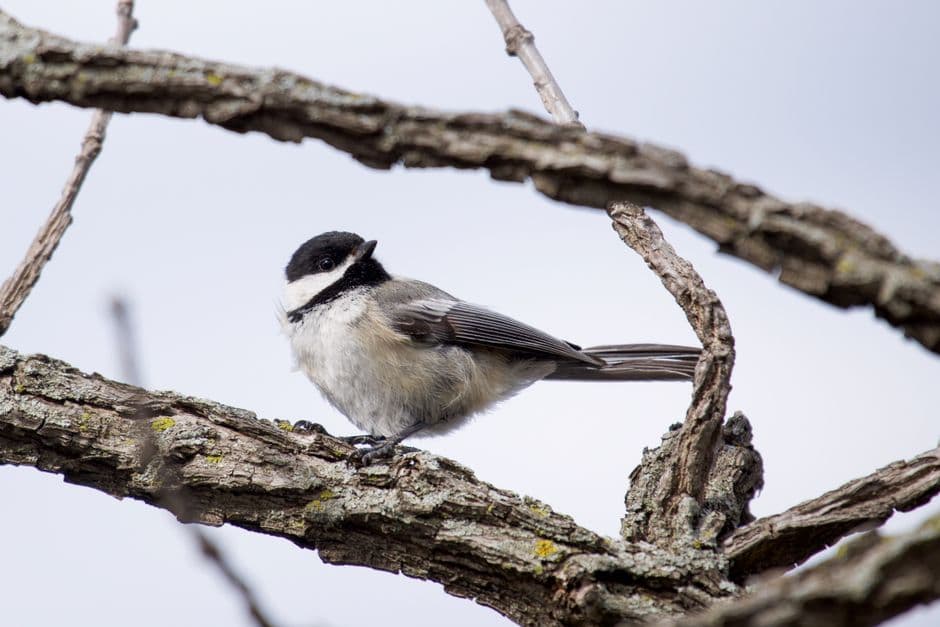
A caged feeder, or a small weight-activated one. Project FeederWatch notes that "Feeders with short perches accommodate small birds such as finches but exclude larger birds such as grackles and jays" - and a cage extends that logic. Chickadees, nuthatches and titmice take one seed and leave, so a small capacity that turns over quickly beats a large one that goes stale.
This is the happiest group on the site. Almost everything that makes a feeder squirrel-resistant or big-bird-resistant is neutral or actively helpful for a bird that weighs a third of an ounce.
Baffleworks is funded by affiliate commission. If you buy through a link on this page we may earn a commission at no extra cost to you, and it never decides a ranking. Full disclosure · how we pick.
Quick picks
Ranked, with the trade-off named. Tap a row for the full write-up; the price button goes straight to Amazon.
| # | Product | Best for | Price |
|---|---|---|---|
| 1 | 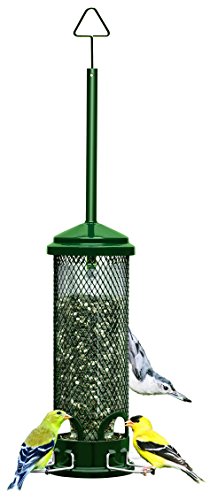 Brome Squirrel Buster Mini, 1 lbThe Squirrel Buster shroud in a 1 lb body with four metal perches. A small feeder is the right feeder for small birds, because seed turns over before it goes stale. | The weight mechanism at chickadee scale | $37.36 on Amazon |
| 2 |  Girvenith Metal Caged Seed Feeder, 4 portA steel cage around an enclosed seed compartment, sized so finches and chickadees pass and larger birds do not. The cheapest honest cage on this page. | Small songbirds in a small space | $21.59 on Amazon |
| 3 |  Woodlink WLCAGE2 Designer Caged 4-Port Tube FeederA cage around a tube, which excludes by aperture rather than by weight — so it stops the chipmunk and the red squirrel a weight trigger ignores, and stops the cardinal too. | Small songbirds only | $71.48 on Amazon |
| 4 |  Crinature Caged Mesh Peanut FeederAn outer cage around a mesh peanut tube. The cage is the mechanism: chickadees, titmice and nuthatches pass through, jays and squirrels do not. | Small birds only, everything else locked out | $20.99 on Amazon |
| 5 | 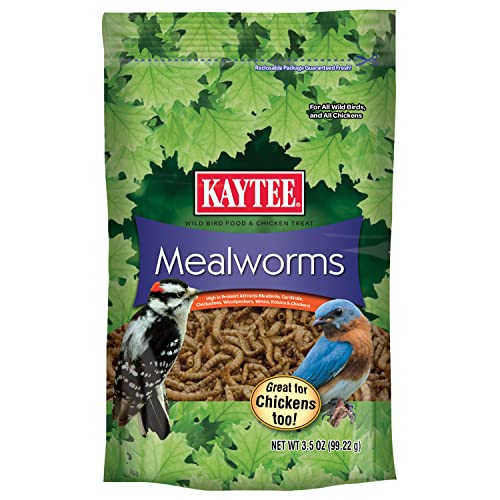 Kaytee Mealworms, 3.5 ozDried mealworms in a small tub. Buy the food before the feeder: if nothing in your yard takes mealworms off a saucer, a bluebird feeder is furniture. | The food, which you will need first | $6.49 on Amazon |
#ad how we are funded · price as of September 27, 2026
The picks in full
Top pick The weight mechanism at chickadee scale
Brome Squirrel Buster Mini, 1 lb
The Squirrel Buster shroud in a 1 lb body with four metal perches. A small feeder is the right feeder for small birds, because seed turns over before it goes stale.
Published specifications
- Seed capacity
- 1 lb (published)
- Perches
- 4 metal (published)
- Build
- Chew-proof design (published)
- Support
- Lifetime care (published)
- Mechanism
- Weight-activated shroud
Trade-offs
- A pound of seed is what a chickadee flock actually gets through before it needs replacing
- Same mechanism and same lifetime-care policy as the expensive models in the line, at a third of the price
- Four metal perches, so the usual chew failure is off the table
- 1 lb means frequent refills in a busy yard — that is the trade for fresh seed
- The weight shroud is calibrated for a gray squirrel and will not close for a chipmunk or a red squirrel
- Small feeders empty fast when jays find them, and nothing here stops a jay
Who it is forChickadees, nuthatches and titmice, on a properly baffled pole, where you would rather refill often than store seed in the feeder.
Skip it ifRefilling is the thing you are trying to avoid. That is the opposite end of this page.
#ad how we are funded · price as of September 27, 2026
Where these specifications came from
No. 2 Small songbirds in a small space
Girvenith Metal Caged Seed Feeder, 4 port
A steel cage around an enclosed seed compartment, sized so finches and chickadees pass and larger birds do not. The cheapest honest cage on this page.
Published specifications
- Mechanism
- Fixed cage aperture
- Dimensions
- 6.25" L x 6.25" W x 10.25" H (published)
- Feeding ports
- 4 (published)
- Cage
- Durable steel exterior (published)
- Weather
- Rainproof cover; all-weather metal (published)
- Named birds
- Finches and chickadees welcomed, larger birds discouraged (published)
- Filling
- Wide-opening metal top (published)
Trade-offs
- Publishes its actual cage body dimensions, which is how you predict which birds get in
- A fixed aperture ignores weight, so it stops the chipmunk and red squirrel a weight trigger lets through
- All-metal with a rainproof cover — no plastic tube to chew or craze
- Small enough to hang almost anywhere, and cheap enough to try
- The listing publishes the cage body size but not the mesh opening, which is the number that would settle exactly which birds fit
- Excludes cardinals, jays and grosbeaks along with the squirrels — the trade, not a defect
- No published seed capacity, and a 10.25 in body will not hold much
- 'Squirrel proof' in the title is doing more work than the cage alone can — placement still matters
Who it is forA small yard with chipmunks or red squirrels, where finches and chickadees are the birds you actually want.
Skip it ifYou want cardinals. A 6.25 in cage body is the mechanism working as designed, and no setting changes it — see the cardinal page.
#ad how we are funded · price as of September 27, 2026
Where these specifications came from
No. 3 Small songbirds only
Woodlink WLCAGE2 Designer Caged 4-Port Tube Feeder
A cage around a tube, which excludes by aperture rather than by weight — so it stops the chipmunk and the red squirrel a weight trigger ignores, and stops the cardinal too.
Published specifications
- Mechanism
- Fixed cage aperture
- Feeding ports
- 4 (published)
- Cage material
- Metal, bronze finish (published)
- Tube material
- Recycled plastic (published)
- Cleaning
- Published as easy to fill and clean
Trade-offs
- A fixed aperture does not care how heavy the animal is, so it excludes chipmunks and red squirrels as well as grays
- Metal cage rather than a coated wire basket
- The tube is recycled plastic, which is unusual honesty about material in this category
- Nothing to calibrate and nothing to wear out
- The cage excludes cardinals, jays and grosbeaks along with the squirrels — that is the trade, not a defect
- The listing publishes no cage aperture in inches, which is the one number that would let you predict exactly which birds get in
- No published seed capacity
- Plastic tube inside a metal cage: the cage protects it, but only while the cage is intact
Who it is forA yard where chipmunks or red squirrels are the problem and you are content with finches, chickadees and titmice.
Skip it ifYou want cardinals. A cage cannot be adjusted and this one publishes no aperture — the cardinal page covers why a weight trigger is the right mechanism instead.
#ad how we are funded · price as of September 27, 2026
Where these specifications came from
No. 4 Small birds only, everything else locked out
Crinature Caged Mesh Peanut Feeder
An outer cage around a mesh peanut tube. The cage is the mechanism: chickadees, titmice and nuthatches pass through, jays and squirrels do not.
Published specifications
- Type
- Caged mesh peanut tube
- Build
- Chew-resistant, weatherproof (published)
- Target birds
- Small wild birds (published)
- Dimensions
- Not published in the listing
Trade-offs
- A cage excludes by geometry, which needs no calibration and cannot be learned around
- Peanuts inside a cage stops the single worst raid pattern — a jay or squirrel taking whole nuts in bulk
- Cheapest route to genuine exclusion on peanuts
- It excludes the big birds many people put peanuts out FOR — jays and larger woodpeckers cannot get in
- No published dimensions, so cage gap size has to be checked on arrival
Who it is forA yard where the small birds are the point and the jays have taken over the peanut feeder.
Skip it ifYou are feeding peanuts specifically for jays or woodpeckers. Use the weight-adjustable feeder instead — it can be tuned to let them in.
#ad how we are funded · price as of September 27, 2026
Where these specifications came from
No. 5 The food, which you will need first
Kaytee Mealworms, 3.5 oz
Dried mealworms in a small tub. Buy the food before the feeder: if nothing in your yard takes mealworms off a saucer, a bluebird feeder is furniture.
Published specifications
- Weight
- 3.5 oz (published)
- Form
- Dried mealworms
- Named birds
- Bluebirds, wrens, robins, chickadees, woodpeckers, cardinals (published)
- Use
- Any dish, tray or mealworm feeder
Trade-offs
- The cheapest possible test of whether mealworm feeding will work in your yard
- The label names six species, several of which this site covers on other pages — chickadees and woodpeckers take them too
- Dried rather than live, so there is no refrigeration and no escape
- 3.5 oz disappears fast once birds find it, and the cost per pound of mealworms is high
- Dried worms are less attractive than live ones, and some bluebirds hold out for live
- Mealworms left in an open dish draw ants and go soft in rain
Who it is forAnyone about to buy a bluebird feeder. Spend six dollars first.
Skip it ifYour birds already take mealworms and you are going through them weekly. Buy a bigger bag.
#ad how we are funded · price as of September 27, 2026
Where these specifications came from
What we would skip
A large hopper, if these are the birds you want
Project FeederWatch is explicit about the trade: "Large hoppers attract most species of feeder birds and will allow larger species, like doves and grackles to feed." Volume buys you crowds, not chickadees. A small feeder with short perches is the selective choice.
A tube feeder with long perches and wide ports
It works, and it also seats every jay and grackle in the neighborhood. Short perches are a published exclusion feature and long ones are the absence of it.
These three feed differently from everything else
Cardinals sit and eat. Chickadees, nuthatches and titmice do not. They arrive, take a single seed, carry it to a branch, open it there, and come back. A nuthatch will do the same thing while facing down the trunk.
Two consequences follow, and they drive the whole page. First, they need somewhere to land briefly rather than a comfortable perch — which is why short perches and cage bars suit them. Second, they visit constantly but consume slowly, so seed sits in the feeder longer than the traffic suggests.
That is the argument for a small feeder. A one-pound body refilled often holds fresher seed than a ten-pound body visited by the same birds. Large-capacity feeders is the opposite end of that trade, and it is a different buyer.
Why a cage is the right mechanism here
A cage excludes by fixed aperture: small birds pass between the bars, anything broader does not. There is nothing to calibrate, nothing that wears out and nothing an animal can learn around.
For most feeders on this site a cage is a compromise, because it also excludes cardinals, jays and woodpeckers that the owner wanted. For chickadees and nuthatches there is no compromise at all — the cage removes the competition and leaves the target birds unaffected. Caged bird feeders covers the mechanism in general and weight-activated versus caged covers the choice.
| Mechanism | Effect on chickadees | Effect on jays and grackles | Effect on squirrels |
|---|---|---|---|
| Cage around a tube | None — they pass through | Excluded | Excluded |
| Weight-activated shroud | None — far too light to trip it | Trips for the heaviest | Excluded at gray-squirrel weight |
| Short perches, no cage | None | Excluded from perching | No effect |
| Large hopper, wide tray | None | Fully admitted | No effect |
Short-perch and hopper rows quoted in effect from Project FeederWatch's feeder-type descriptions. The squirrel column is this site's usual mechanism analysis.
The foods that actually work
Sunflower is the staple and two other foods are worth knowing about, both with published support.
Shelled peanuts. Project FeederWatch: "Smaller birds like chickadees, nuthatches, and titmice will have more success feeding on shelled peanuts." Whole in-shell peanuts are a jay food; shelled pieces in a mesh or caged feeder are a chickadee food. Squirrel-proof peanut feeders covers the formats.
Mealworms. Also published: "Birds like chickadees, titmice, wrens, and nuthatches relish this food." Most people associate mealworms with bluebirds, and this group takes them just as readily — see feeders for bluebirds for the dish and box options.
Suet. All three work a suet cage, and the upside-down format suits them as well as it suits woodpeckers — the same FeederWatch line names chickadees and nuthatches alongside woodpeckers as birds that feed clinging upside down. Feeders for woodpeckers covers those holders.
Small capacity is a feature, not a limitation
- Fresh seed. A pound turned over weekly never has time to cake or go stale.
- Cheaper mistakes. If a mix turns out to be wrong for your birds, you have wasted a pound and not ten.
- Lighter load. A small feeder full is light enough to hang from a thin shepherd's hook without bending it.
- Easier cleaning. Small bodies come apart and dry quickly, and a feeder that is easy to wash gets washed.
- The cost is refill frequency, and that is the entire trade. Decide which one annoys you more.
Placement still applies
None of this changes the geometry. A cage stops a squirrel reaching through it and does nothing about one sitting on top of the feeder emptying the tray, and a chickadee-scale weight mechanism is calibrated for a gray squirrel rather than a chipmunk or a red squirrel.
One genuine advantage: chickadees are happy on a feeder placed well away from cover, which is exactly where the clearance rules want it. Timid ground feeders often need a bush nearby; these birds will cross open space without hesitating, so the well-sited pole is not a compromise for them. Squirrel jump clearance has the numbers.
How we picked
- We sorted by mechanism first: weight, cage or spin. Those three exclude different animals, and the choice between them is not a quality judgment.
- We used published figures only — seed capacity, port count, dimensions, mechanism. Where a maker publishes nothing, the spec row says so.
- We checked each mechanism against the animal it is calibrated for. A weight trigger tuned for a gray squirrel does not fire for a chipmunk, and we say so rather than implying it does.
- We named at least one product to skip on every page, with the reason.
- We have not tested any of these. How we pick sets out what that does and does not cover.
Everyone in this category says they tested twenty of these. We have not tested any, and we say so. What we did instead: read the manuals, compiled the published specifications, worked out the clearance geometry, and cited every source. The full method is published.
Questions people actually ask
- What is the best feeder for chickadees?
- A caged feeder or a small weight-activated one. Project FeederWatch notes that feeders with short perches accommodate small birds but exclude larger ones like grackles and jays, and a cage extends that. Chickadees are unaffected by every mechanism that excludes something bigger.
- Do nuthatches and titmice use the same feeder?
- Yes. All three feed the same way — take one seed, carry it off, return — and all three pass through cage bars and ignore weight mechanisms. Project FeederWatch groups them together for shelled peanuts and for mealworms.
- What food attracts chickadees and nuthatches?
- Sunflower is the staple. Project FeederWatch also names shelled peanuts, noting smaller birds like chickadees, nuthatches and titmice have more success with them, and mealworms, which it says these birds relish. All three species work a suet cage too.
- Should I buy a big feeder for small birds?
- No. Project FeederWatch notes large hoppers admit larger species like doves and grackles, while small hoppers attract smaller birds and stop bigger ones perching comfortably. Small capacity also keeps the seed fresher, because these birds consume slowly even when they visit constantly.
- Will a cage keep squirrels off as well?
- From the seed inside, yes — that is the same aperture doing both jobs. It does not stop an animal sitting on the feeder or emptying a tray, so the mount still needs a baffle at four to five feet with real clearance.
- Why do chickadees only take one seed at a time?
- They carry it away to open it, and often to cache it. It means feeder traffic looks much heavier than actual consumption, which is why a small feeder refilled often is the better buy than a large one.
Sources
Read next
- Caged bird feeders
Exclusion by size rather than weight: the mechanism that beats chipmunks, red squirrels and starlings.
- The best bluebird feeders
A bluebird feeder is an exclusion box: the entrance hole keeps starlings and jays off expensive mealworms. Which feeders publish that dimension, and how to get the birds to use one.
- The best woodpecker feeders
Suet reached only from below is starling-resistant and woodpeckers use it without hesitating. The upside-down holders, peanuts for the warm months, and why a perch is beside the point.
- The best squirrel-proof peanut feeders
Peanuts are the food a squirrel will work hardest for. Weight-adjustable versus caged versus plain mesh, matched to whether you want jays or chickadees.
- Squirrel-Proof Feeders
Weight-activated, caged and spinning feeders, sorted by which animal each mechanism actually keeps out.