Guides / Deer
Do deer eat arborvitae? How to protect it
Deer eat arborvitae, and they do it in the one season when most protection is hardest to maintain. The answer also depends on which arborvitae you planted — the extension ratings for the two main species are not the same.
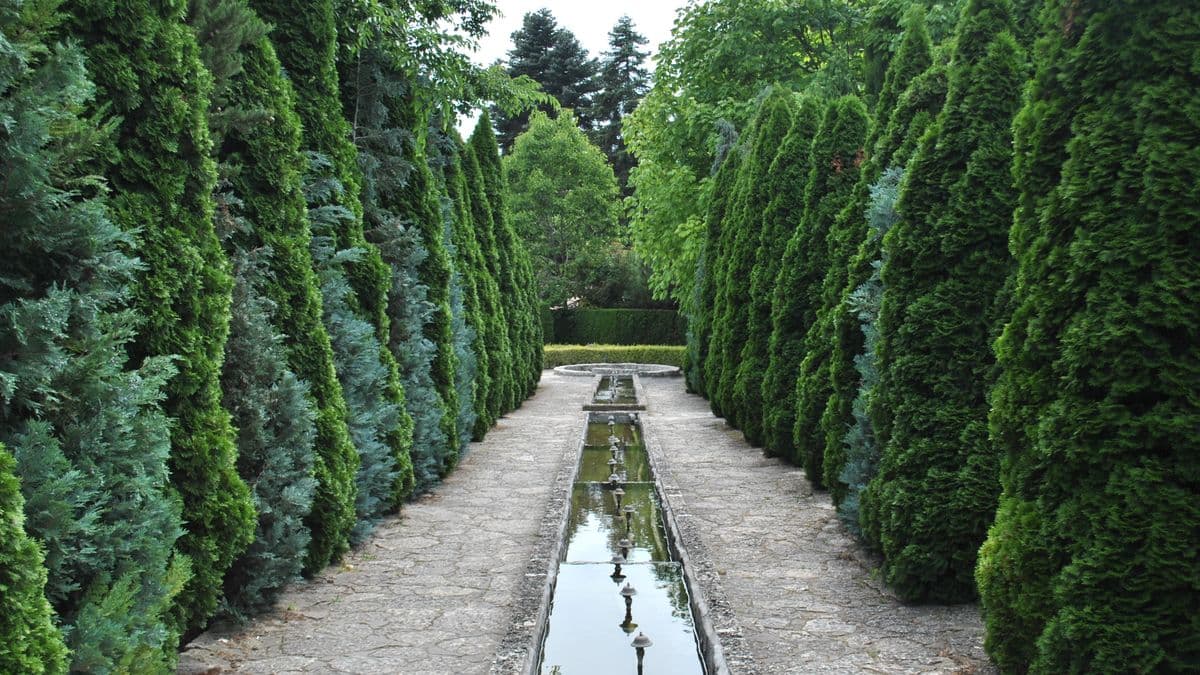
Yes. Iowa State University Extension names arborvitae among the plants most susceptible to deer browsing in winter, and Rutgers rates American arborvitae — the species Emerald Green belongs to — as frequently severely damaged. Protect it with a physical barrier at least 6 ft tall, and apply a long-lasting repellent before the ground freezes, because reapplying in freezing weather is where repellents fail.
Do deer eat arborvitae?
They do, and the extension sources are unusually direct about it. Iowa State University Extension states that arborvitae and yews are most susceptible to browsing by deer in winter, and that deer may devour the foliage on the lower branches of arborvitae, pines, and other evergreens.
The timing is the whole story. The same source puts the damage at its worst when food is scarce during prolonged periods of snow cover. An arborvitae hedge that looks untouched all summer can be stripped bare to head height by March, and people who planted it in spring often have no idea it was ever at risk until the first hard winter.
Which arborvitae resists deer — the species matters
This is the question most pages skip, and it decides how much protection you need. Rutgers Cooperative Extension publishes *Landscape Plants Rated by Deer Resistance*, on a four-letter scale from A, rarely damaged to D, frequently severely damaged. The two arborvitae species that matter are rated differently:
| Species | Rutgers rating | What you usually buy |
|---|---|---|
| American arborvitae — *Thuja occidentalis* | D — Frequently Severely Damaged | Emerald Green is a cultivar of this species |
| Western arborvitae — *Thuja plicata* | C — Occasionally Severely Damaged | One of the published parents of the Green Giant hybrid |
Green Giant is a hybrid, Thuja standishii x plicata, and is not itself on the Rutgers list. We report the rating for its Western arborvitae parent and do not extend it to the hybrid.
So the honest answer to 'are arborvitae deer resistant' is: American arborvitae is not, and Emerald Green is American arborvitae. Western arborvitae does better on the same scale — C rather than D — which is still 'occasionally severely damaged', not safe.
Green Giant is widely sold as deer resistant, and those claims mostly come from nurseries selling it. Rutgers does not rate the hybrid. What we can say from the extension data is that one of its parents is rated a grade better than American arborvitae, and that a C rating still means occasional severe damage. Plant a Green Giant expecting less browsing than an Emerald Green, not no browsing.
The 6 ft rule, and why height is the specification
Deer browse from the ground up to roughly the reach of a standing adult. Iowa State University Extension sets the practical figure for individual tree and shrub barriers: tubes, wraps, wire fencing and wire cylinders should be at least six feet tall. The same source adds that wire cylinders can be shorter for smaller plants if they are closed on top.
That is why a barrier that covers the bottom four feet of a mature arborvitae achieves very little. The deer simply browse the band above it. A netting bag over a young plant, closed at the top, works at any height. On a mature hedge the barrier has to reach six feet or the upper foliage is the new lower foliage.
For a whole planted area, the figure changes. Iowa State puts perimeter fencing at at least 8 feet tall, with an exception: an area smaller than 8 feet by 16 feet can use a shorter 50 inch fence, because a deer will not jump into a space too small to land in. A short screen of three or four arborvitae in a tight corner can sometimes use that rule; a long privacy hedge cannot.
Why repellents fail on arborvitae, and how to make them work
This is the part that trips people up. Iowa State University Extension is plain about it: over the winter months, repellents have limited success at preventing deer browsing because reapplication can be difficult in freezing temperatures. It also advises applying repellents when conditions are dry and temperatures are above freezing.
Arborvitae is a winter problem, and winter is when you cannot reapply. That combination means most repellent schedules — spray every week or two — simply stop working in December, exactly when the deer arrive. The fix is not a better spray. It is choosing a product whose published duration carries it through the freeze from one application in late fall.
Plantskydd is the product on this site that publishes a figure for that: the maker states up to 6 months over winter. Applied on a dry day above freezing before the ground locks up, one application is designed to cover the season. Bobbex publishes a shorter dormant-season figure — up to two months — and Liquid Fence publishes a monthly schedule, which a freeze interrupts. Bobbex vs Liquid Fence vs Plantskydd sets the three side by side.
Two application notes from the same extension source that matter on a tall evergreen: apply sprays from a height of 6 feet down, since deer typically browse from the top down, and change the scents and types of repellents on a regular basis so the deer do not learn to ignore one.
Baffleworks is funded by affiliate commission. If you buy through a link on this page we may earn a commission at no extra cost to you, and it never decides a ranking. Full disclosure · how we pick.
Quick picks
Ranked, with the trade-off named. Tap a row for the full write-up; the price button goes straight to Amazon.
| # | Product | Best for | Price |
|---|---|---|---|
| 1 |  Plantskydd Powder Concentrate, 2.2 lb2.2 lb of powder makes 2.5 gallons, which is the format that makes a repellent program affordable instead of theoretical. | Best cost per treated area | $64.95 on Amazon |
| 2 |  ShrubGuard 1/2 in Mesh Shrub Netting BagA mesh bag made for exactly this job — its listing names arborvitae — that keeps deer off the foliage and holds the branches together under snow load. | Individual arborvitae through winter | $19.99 on Amazon |
| 3 |  Tenax Deer Netting, 7 ft x 100 ftNetting rather than fence: lighter, easier to drape over a shrub or a bed, and not pretending to be a perimeter barrier. | Draping and small enclosures | $65.94 on Amazon |
| 4 |  codree Deer Netting for Shrubs, 7.8 x 7.8 ft, 3 packLarge drawstring covers sized for a tall shrub. The size is the reason to buy them; the material is the reason to check them after every storm. | Taller evergreens, three at a time | $24.99 on Amazon |
| 5 |  Bobbex Concentrated Deer Repellent, 32 ozA concentrate rather than a ready-to-use bottle, which is the right format if you are going to spray often enough for a repellent to work at all. | Rotation partner, concentrate | $22.75 on Amazon |
| 6 |  Liquid Fence Deer & Rabbit Repellent Ready-To-Use, 1 galThe gallon refill, which is the only Liquid Fence size that publishes a coverage area: up to 2,000 sq ft. Buy this and refill the trigger bottle. | The same formula at a published coverage figure | $23.47 on Amazon |
#ad how we are funded · price as of September 17, 2026
The picks in full
Top pick Best cost per treated area
Plantskydd Powder Concentrate, 2.2 lb
2.2 lb of powder makes 2.5 gallons, which is the format that makes a repellent program affordable instead of theoretical.
Published specifications
- Size
- 2.2 lb powder concentrate (published)
- Yield
- Makes 2.5 gal of liquid (published)
- Targets
- Deer, rabbit, voles
- Active base
- Dried blood meal
- Part number
- PSP-R2
Trade-offs
- Published yield, so cost per gallon is arithmetic rather than a guess
- Powder stores far better than mixed liquid between seasons
- The cheapest way here to cover a large garden repeatedly
- You have to mix it, and mixing is the step people skip
- Blood meal has a smell on application; downwind of a patio it is noticeable
Who it is forA large garden on a real reapplication schedule, especially through the spring browse season.
Skip it ifYou will not mix it. An unmixed concentrate protects nothing, and the ready-to-use is better value than a bag in the shed.
#ad how we are funded · price as of September 17, 2026
Where these specifications came from
No. 2 Individual arborvitae through winter
ShrubGuard 1/2 in Mesh Shrub Netting Bag
A mesh bag made for exactly this job — its listing names arborvitae — that keeps deer off the foliage and holds the branches together under snow load.
Published specifications
- Mesh
- 1/2 in (published)
- Material
- Multi-strand UV-stabilized HDPE (published)
- Format
- Bag, placed over the plant (published)
- Named use
- Arborvitae, evergreens and trees in winter (published)
- Stated protection
- Deer, rabbits, birds; snow and ice damage (published)
- Service life
- Published as multiyear; no figure given
Trade-offs
- Names arborvitae in the listing, so it is built for the shape and the season rather than repurposed from bird netting
- Does two winter jobs at once — keeps deer off and stops snow splaying the branches open
- UV-stabilized HDPE is the material that survives a season outdoors; plain poly netting goes brittle
- A physical barrier does not wear off, which a repellent in freezing weather does
- Publishes no bag dimensions in the listing we cite, so confirm the size against your tallest plant before ordering
- One bag per plant: a long hedge row is many bags, and netting on a roll becomes cheaper
- A bag has to come off in spring before new growth pushes through the mesh
- It is visible. A netted hedge is a netted hedge, which some yards will not tolerate out front
Who it is forA handful of specimen arborvitae — a corner planting or a short screen — that deer strip every winter.
Skip it ifYou are protecting a long hedge row. Buy 7 ft deer netting on a roll and run it along the line instead of bagging plants one at a time.
#ad how we are funded · price as of September 17, 2026
Where these specifications came from
No. 3 Draping and small enclosures
Tenax Deer Netting, 7 ft x 100 ft
Netting rather than fence: lighter, easier to drape over a shrub or a bed, and not pretending to be a perimeter barrier.
Published specifications
- Height
- 7 ft (published)
- Length
- 100 ft
- Material
- Black polypropylene
- Structure
- Quadrangular mesh (published)
Trade-offs
- Light enough to throw over a shrub or a fruit cage without a post system
- Cheap enough per foot to protect a lot of individual plants
- Not a perimeter fence, and treating it as one is how people conclude that deer fencing does not work
- Loose netting can entangle wildlife if it is left slack and unpegged
Who it is forIndividual shrubs, small beds and winter protection on ornamentals, rather than a garden boundary.
Skip it ifYou want a perimeter. Buy the fence, set posts, and tension it — the height guide explains why the two are not interchangeable.
#ad how we are funded · price as of September 17, 2026
Where these specifications came from
No. 4 Taller evergreens, three at a time
codree Deer Netting for Shrubs, 7.8 x 7.8 ft, 3 pack
Large drawstring covers sized for a tall shrub. The size is the reason to buy them; the material is the reason to check them after every storm.
Published specifications
- Size
- 7.8 x 7.8 ft each (published)
- Quantity
- 3 (published)
- Closure
- Drawstring (published)
- Material
- Non-woven fabric, breathable (published)
- Stated protection
- Cold air, snow, birds, deer (published)
Trade-offs
- 7.8 ft covers reach the height a standing deer browses to, which small shrub bags do not
- Drawstring closure at the base, so the cover does not blow off or ride up
- Three in a pack covers a short screen of arborvitae in one purchase
- Breathable fabric lets light and air through, so the plant is not sealed in for the winter
- Non-woven fabric, not a mesh net — it is closer to frost cloth than to deer netting, and a determined deer can tear it
- Publishes no fabric weight or UV rating, so it may not survive more than a season
- A solid fabric cover catches wind far more than an open mesh does
- Fabric over a wet evergreen can hold moisture against the foliage; check it after thaws
Who it is forTall, young arborvitae where the height matters more than the durability, and somebody who will check the covers through the winter.
Skip it ifDeer pressure is heavy. A mesh bag or netting resists tearing far better than non-woven fabric, and this listing does not claim otherwise.
#ad how we are funded · price as of September 17, 2026
Where these specifications came from
No. 5 Rotation partner, concentrate
Bobbex Concentrated Deer Repellent, 32 oz
A concentrate rather than a ready-to-use bottle, which is the right format if you are going to spray often enough for a repellent to work at all.
Published specifications
- Size
- 32 oz concentrate (published)
- Targets
- Deer, elk, moose
- Form
- Dilute and spray
- Part number
- B550100
Trade-offs
- Concentrate is far cheaper per treated square foot than ready-to-use
- A different active profile from Plantskydd, which is what makes rotation possible
- Repellents are a reapplication commitment: rain, new growth and habituation all reset them
- Mixing and spraying is a job, and the ones that stop working are usually the ones that stopped being sprayed
Who it is forOrnamental beds and shrubs where fencing is not acceptable, used on a schedule rather than in a panic.
Skip it ifYou want to solve this once. Extension services are consistent that a fence is the exclusion method and a repellent is a mitigation. Read what actually keeps deer out before you buy a spray instead of a fence.
#ad how we are funded · price as of September 17, 2026
Where these specifications came from
No. 6 The same formula at a published coverage figure
Liquid Fence Deer & Rabbit Repellent Ready-To-Use, 1 gal
The gallon refill, which is the only Liquid Fence size that publishes a coverage area: up to 2,000 sq ft. Buy this and refill the trigger bottle.
Published specifications
- Size
- 1 gal ready-to-use (published)
- Coverage
- Up to 2,000 sq ft (published)
- Active ingredients
- Putrescent whole egg solids, garlic (published)
- Mechanism
- Scent (published)
- Schedule
- Apply, repeat one week later, then approximately once per month (published)
- Rain
- Rain resistant (published)
Trade-offs
- Publishes a coverage figure, which most repellents in this category do not
- Refills the 32 oz sprayer four times, which is the sensible way to run this product
- Same schedule and chemistry as the smaller bottle
- Year-round application is published, so it is a winter option as well
- Still ready-to-use, so you are paying to ship water — Plantskydd's powder concentrate publishes a better yield per pound
- The 'no rotation needed' claim is on this label too, and it is the claim this site disagrees with
- A gallon jug is not a sprayer; you need the trigger bottle or a pump sprayer as well
- Squirrels are not on the label
Who it is forAnyone who has decided on the egg-and-garlic base and is treating more than a handful of plants.
Skip it ifYou want the cheapest cost per treated area. That is a powder concentrate, not a ready-to-use gallon, and the difference compounds over a season.
#ad how we are funded · price as of September 17, 2026
Which protection, for which planting
| Planting | Best protection | Why |
|---|---|---|
| One to five young arborvitae | Netting bag over each plant, closed at the top | Closed on top, a short barrier works at any height — and a bag also holds branches together under snow |
| A long privacy hedge | Deer netting on a roll, run along the row to 6 ft or more | Bagging dozens of plants is slow and costly; a continuous run is not |
| A mature hedge you cannot net | A long-duration repellent applied before the freeze, from 6 ft down | The only practical option at that scale, and it must be applied before reapplication becomes impossible |
| The whole yard, heavy deer pressure | A perimeter fence at least 8 ft tall | The only method that does not decay or need reapplying — see deer fencing |
If the damage has already happened
Arborvitae browsed bare on the lower branches is a common sight, and it is worth being honest about what comes back. University of Maryland Extension, answering a pruning question, notes a risk of the shrub not regrowing foliage in any area where branches are cut back to old wood. Browse that strips a branch down to bare wood leaves it in exactly that state. A hedge eaten hard to the wood may not fill in at the base at all, which is the strongest argument for protecting a young hedge early rather than a mature one after the fact.
If you are still choosing what to plant, the extension data points the same way. American arborvitae carries the worst rating on the Rutgers scale. Deer-resistant plants covers how to read those ratings — and the caveat that resistant means less-preferred, never deer-proof.
What we would not do
- Rely on a weekly spray through winter. The extension source is explicit that freezing temperatures make reapplication difficult. Plan for one long-duration application before the freeze instead.
- Net the bottom half of a mature hedge. Deer browse to about six feet. A barrier that stops at four just moves the damage upward.
- Assume Green Giant needs no protection. The resistance claims are largely commercial, Rutgers does not rate the hybrid, and its rated parent is still 'occasionally severely damaged'.
- Use one repellent all winter, every winter. Iowa State advises rotating scents and types so the deer do not habituate.
- Leave a bag or cover on into spring. New growth pushes into the mesh. Take it off once the ground thaws and browse pressure eases.
Questions people actually ask
- Do deer eat arborvitae?
- Yes. Iowa State University Extension names arborvitae among the plants most susceptible to deer browsing in winter, and Rutgers rates American arborvitae — the species Emerald Green belongs to — D, frequently severely damaged.
- Are arborvitae deer resistant?
- American arborvitae is not; Rutgers rates it D. Western arborvitae does better at C, occasionally severely damaged, which is still not safe. Emerald Green is a cultivar of American arborvitae.
- Is Green Giant arborvitae deer resistant?
- Rutgers does not rate the Green Giant hybrid. It rates one of its parents, Western arborvitae, C — occasionally severely damaged. Expect less browsing than an Emerald Green, not none. Most resistance claims come from nurseries selling it.
- How do I protect arborvitae from deer in winter?
- Use a physical barrier at least 6 ft tall, per Iowa State University Extension, or a netting bag closed on top for smaller plants. If you use a repellent, apply a long-lasting one on a dry day above freezing before winter, because reapplying in freezing weather is difficult.
- What is the best deer repellent for arborvitae?
- One that lasts through winter from a single fall application, since reapplication in freezing weather is where repellents fail. Plantskydd publishes up to 6 months over winter. Apply from 6 ft down, and rotate scents between seasons.
- How tall should deer netting be for arborvitae?
- At least 6 ft, which is Iowa State University Extension's figure for tree and shrub barriers. Shorter works only if the barrier is closed on top. For a whole enclosed area the extension figure rises to 8 ft.
- Will browsed arborvitae grow back?
- Possibly not where it is stripped to bare wood. University of Maryland Extension notes a risk of arborvitae not regrowing foliage where branches are cut back to old wood, and heavy browse leaves branches the same way. Protecting it young is far easier than waiting for a thin base to fill.
Sources
- Iowa State University Extension, How to Protect Trees and Shrubs from Animal Damage Over Winter
- Iowa State University Extension, How can I prevent deer browsing during the winter months?
- Rutgers Cooperative Extension, Landscape Plants Rated by Deer Resistance
- University of Maryland Extension (HGIC), Pruning/Trimming Arborvitae, via Ask Extension
- Plantskydd, Plantskydd Repellent (manufacturer page)
- Bobbex, When and How to Apply Bobbex Repellents (manufacturer page)
- Liquid Fence, Deer & Rabbit Repellent Ready-To-Use (manufacturer page)
Read next
- The best deer repellent for hostas
Rutgers rates hosta D and says plant it only with protection. The repellent calendar, the rotation, and the cage that works because a hosta is low.
- Bobbex vs Liquid Fence vs Plantskydd
Blood, egg-and-garlic, and a fish-oil sticker: three bases, three published schedules, and one maker's rotation claim we disagree with.
- The best deer fencing
Every mesh deer fence sold online is 7.5 ft; extension services say 8 to 10. What that compromise buys.
- Deer-resistant plants
Resistant means less-preferred, not inedible. What planting actually buys, and where to get a list that applies to your region.
- Deer Deterrence
Fencing at the height extension services publish, plus the repellents that fill the gaps around it.