Guides / Deer
Deer-resistant plants
Planting is the only deer measure that costs nothing to maintain and never wears off. It is also the one most oversold, so it is worth being precise about what it actually delivers.
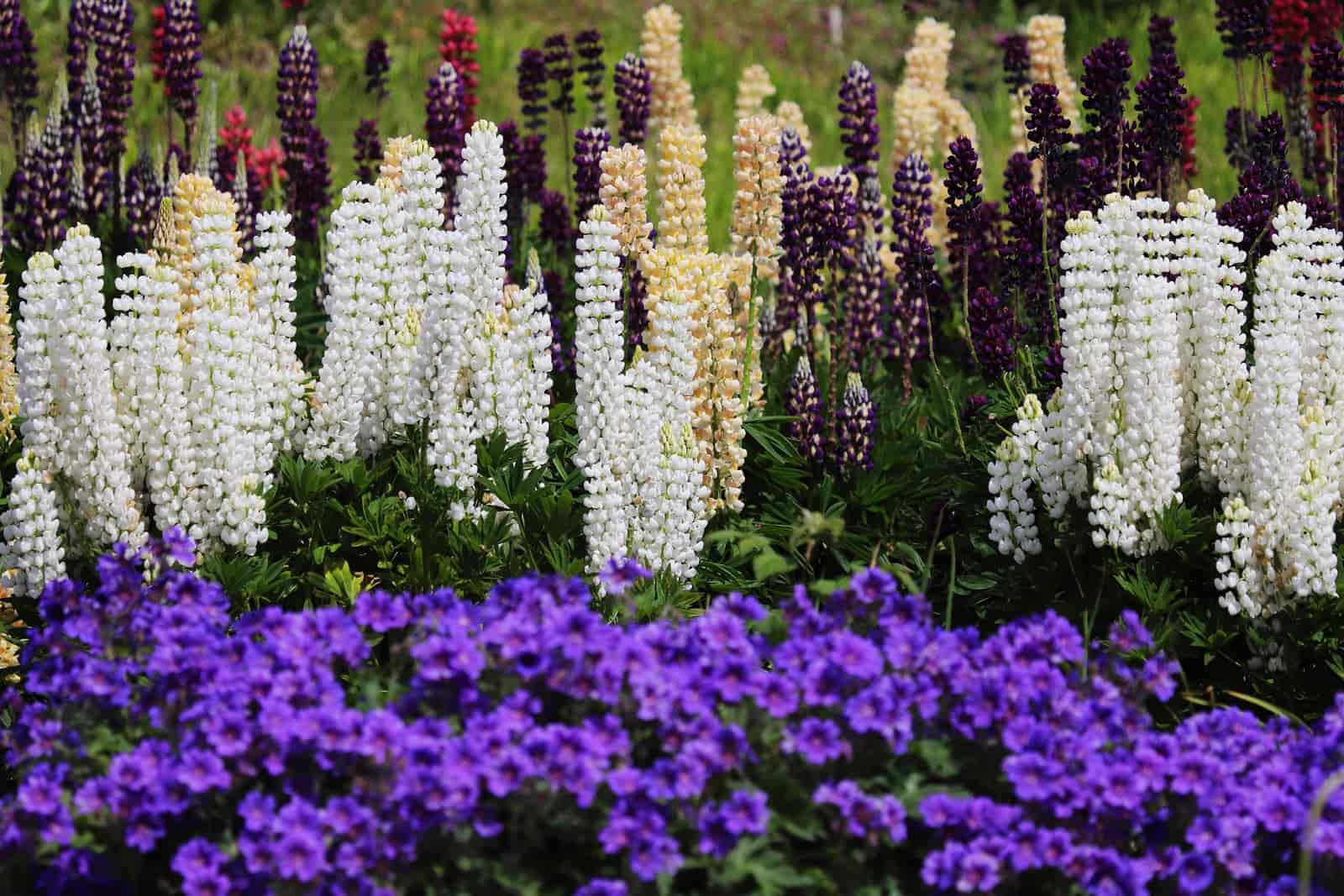
Deer-resistant means less-preferred, not inedible. Under enough pressure deer eat almost anything, so planting is a layer that reduces damage rather than a barrier that prevents it. Use extension-service lists for your region, and put less-preferred species on the boundary where pressure lands first.
Every source that publishes a resistant-plant list attaches the same caveat, and it is worth taking seriously rather than treating as legal boilerplate: nothing is deer-proof under enough pressure. A hard winter with deep snow will get you browsed on plants that were untouched for five years.
What resistance actually buys
Not immunity. What it buys is a change in the order deer eat things in your garden, which matters more than it sounds:
- It lowers the reward for visiting at all. A garden of less-preferred plants is a poorer feeding stop, and deer are efficient about where they spend time.
- It buys time for every other measure. A repellent that is a week overdue matters less on a plant deer were not keen on anyway.
- It costs nothing to maintain. Unlike a repellent, planting does not wash off. This is the only measure on this site with no ongoing cost, and it is why it belongs in the plan even though it is not sufficient alone.
- It concentrates the damage where you can accept it. If something is going to get browsed, better it is the boundary hedge than the specimen you planted for the front garden.
Get the list from an extension service, not from us
We are not going to publish a plant list. Deer preference varies by region, by season, by local population density and by what else is available, and a generic list written for a national audience is exactly the kind of unsourced content this site exists to avoid.
Cooperative extension services publish lists for their own regions, which is the level at which the question is answerable. Colorado State University Extension publishes one covering rabbit, ground squirrel and deer-resistant plants. Your own state's extension service will have the equivalent, and that is the one to use — it is written for your climate and your deer.
Where planting sits in the plan
It is the fourth layer, not the first. Michigan State University Extension puts effective deer perimeters at 8 to 10 ft, and a fence is still the only method whose effectiveness does not decay. Planting supports that; it does not replace it.
| Layer | What it does | Ongoing cost |
|---|---|---|
| Fence at 8 to 10 ft | Excludes. The only method that does not decay | None once built |
| Repellent on a schedule | Reduces browse on treated foliage | Continuous — reapply after rain and new growth |
| Motion sprinkler on a route | Startles on a defined approach, frost-free months only | Water |
| Planting choice | Lowers the reward for visiting at all | None — it never wears off |
Full comparison in spray vs fence vs device.
Baffleworks is funded by affiliate commission. If you buy through a link on this page we may earn a commission at no extra cost to you, and it never decides a ranking. Full disclosure · how we pick.
Quick picks
Ranked, with the trade-off named. Tap a row for the full write-up; the price button goes straight to Amazon.
| # | Product | Best for | Price |
|---|---|---|---|
| 1 |  Plantskydd Powder Concentrate, 2.2 lb2.2 lb of powder makes 2.5 gallons, which is the format that makes a repellent program affordable instead of theoretical. | Best cost per treated area | $65.47 on Amazon |
| 2 |  Bobbex Concentrated Deer Repellent, 32 ozA concentrate rather than a ready-to-use bottle, which is the right format if you are going to spray often enough for a repellent to work at all. | Rotation partner, concentrate | $25.60 on Amazon |
| 3 |  Tenax Select Deer Fence, 7.5 ft x 100 ftPolypropylene mesh at 7.5 ft with a published breaking load, which is the only spec on a deer fence that actually predicts whether it survives a deer hitting it. | The full-height barrier | $133.93 on Amazon |
| 4 |  A.M. Leonard Vinyl Spiral Tree Guards, 36 in, 5 packThirty-six inches of vinyl spiral, which is the height that actually covers the zone a buck rubs rather than just the base of the trunk. | Buck rub on young trunks | $25.90 on Amazon |
#ad how we are funded · price as of October 24, 2026
The picks in full
Top pick Best cost per treated area
Plantskydd Powder Concentrate, 2.2 lb
2.2 lb of powder makes 2.5 gallons, which is the format that makes a repellent program affordable instead of theoretical.
Published specifications
- Size
- 2.2 lb powder concentrate (published)
- Yield
- Makes 2.5 gal of liquid (published)
- Targets
- Deer, rabbit, voles
- Active base
- Dried blood meal
- Part number
- PSP-R2
Trade-offs
- Published yield, so cost per gallon is arithmetic rather than a guess
- Powder stores far better than mixed liquid between seasons
- The cheapest way here to cover a large garden repeatedly
- You have to mix it, and mixing is the step people skip
- Blood meal has a smell on application; downwind of a patio it is noticeable
Who it is forA large garden on a real reapplication schedule, especially through the spring browse season.
Skip it ifYou will not mix it. An unmixed concentrate protects nothing, and the ready-to-use is better value than a bag in the shed.
#ad how we are funded · price as of October 24, 2026
Where these specifications came from
No. 2 Rotation partner, concentrate
Bobbex Concentrated Deer Repellent, 32 oz
A concentrate rather than a ready-to-use bottle, which is the right format if you are going to spray often enough for a repellent to work at all.
Published specifications
- Size
- 32 oz concentrate (published)
- Targets
- Deer, elk, moose
- Form
- Dilute and spray
- Part number
- B550100
Trade-offs
- Concentrate is far cheaper per treated square foot than ready-to-use
- A different active profile from Plantskydd, which is what makes rotation possible
- Repellents are a reapplication commitment: rain, new growth and habituation all reset them
- Mixing and spraying is a job, and the ones that stop working are usually the ones that stopped being sprayed
Who it is forOrnamental beds and shrubs where fencing is not acceptable, used on a schedule rather than in a panic.
Skip it ifYou want to solve this once. Extension services are consistent that a fence is the exclusion method and a repellent is a mitigation. Read what actually keeps deer out before you buy a spray instead of a fence.
#ad how we are funded · price as of October 24, 2026
Where these specifications came from
No. 3 The full-height barrier
Tenax Select Deer Fence, 7.5 ft x 100 ft
Polypropylene mesh at 7.5 ft with a published breaking load, which is the only spec on a deer fence that actually predicts whether it survives a deer hitting it.
Published specifications
- Height
- 7.5 ft (published)
- Length
- 100 ft
- Material
- UV-stabilized polypropylene
- Breaking load
- Certified 600 to 650 lb (published)
- Life expectancy
- 10 to 15 years (published)
- Origin
- Made in USA
Trade-offs
- A certified breaking load is a real, checkable spec in a category full of adjectives
- UV-stabilized with a stated 10 to 15 year life, so it is not an annual replacement
- Black mesh disappears at a distance far better than wire
- 7.5 ft is below the 8 to 10 ft that extension services recommend for a flat-ground perimeter
- Polypropylene will not stop a determined animal the way woven wire does
Who it is forA garden perimeter where you want the fence to vanish visually. Read how high a deer fence has to be first — the height is the whole decision.
Skip it ifYou are fencing flat, open ground with heavy browse pressure. Michigan State Extension puts the perimeter figure at 8 to 10 ft, and 7.5 ft is a deliberate compromise you should make knowingly.
#ad how we are funded · price as of October 24, 2026
No. 4 Buck rub on young trunks
A.M. Leonard Vinyl Spiral Tree Guards, 36 in, 5 pack
Thirty-six inches of vinyl spiral, which is the height that actually covers the zone a buck rubs rather than just the base of the trunk.
Published specifications
- Height
- 36 in (published)
- Quantity
- 5 per pack (published)
- Material
- Vinyl (published)
- Fitting
- Spiral — stretches open and wraps around the trunk
Trade-offs
- 36 in covers the rub zone rather than only the lowest foot of trunk, which is where shorter guards stop
- Spiral fitting means no tools and no removing anything already planted
- Five per pack covers a small orchard row or a run of young ornamentals
- A spiral expands as the trunk grows rather than girdling it, which is what separates the form from a fixed sleeve
- Vinyl is visible on an ornamental tree in a front garden in a way netting is not
- A spiral is not a browse barrier — it protects bark, not the foliage above it
- Needs checking each spring; a guard left on too long traps moisture against the bark
- The listing publishes height, count and material and little else — no weather rating and no trunk diameter range
Who it is forYoung or thin-barked trees where buck rub in autumn is the actual damage. Bark damage is what kills a sapling, and a rubbed trunk rarely recovers.
Skip it ifThe damage is to leaves and shoots rather than bark. That is browsing, and it needs a fence or a repellent rather than a trunk guard.
#ad how we are funded · price as of October 24, 2026
Where these specifications came from
Two practical rules that are not about species
Protect new plantings regardless of the list. Anything just planted is more attractive and more vulnerable than the same species established, and a browsed sapling may not recover. New plants get a guard or netting for the first season whatever the tier says.
Watch what happens rather than trusting the label. Local deer populations have local habits. A plant listed as rarely damaged that is being eaten in your garden is being eaten in your garden, and the list does not overrule the evidence in front of you.
Trees are a separate problem
Plant choice does nothing about buck rub, because rubbing is territorial rather than feeding — a deer stripping bark from a sapling is not tasting it. No amount of resistant planting protects a trunk. That needs a physical guard, and protecting trees from deer covers it properly.
For everything else, keeping deer out of the garden puts the whole sequence together.
The plant at the bottom of every resistance list is the hosta — Rutgers rates it D, frequently severely damaged — and protecting hostas from deer covers what that rating obliges you to do.
Arborvitae is the common privacy hedge that surprises people most here. Rutgers rates American arborvitae — the species Emerald Green belongs to — D, frequently severely damaged, while Western arborvitae rates C. Protecting arborvitae from deer covers what those two ratings mean for the hedge you planted.
Roses are the plant people most often assume are protected by their own thorns. They are not - the prickliest rose on the Rutgers list still only rates a C. Protecting roses from deer covers what that means and what to do instead.
Questions people actually ask
- Are any plants truly deer-proof?
- No. Every extension service that publishes a resistant list attaches the same caveat: under enough pressure deer eat almost anything. Resistance means less-preferred, not inedible.
- Where do I find a deer-resistant plant list for my area?
- Your state's cooperative extension service. Deer preference varies by region and season, so a regional list is the only kind worth using. Colorado State University Extension publishes one covering deer, rabbits and ground squirrels together.
- Do deer-resistant plants mean I can skip the fence?
- No. Michigan State University Extension puts effective perimeters at 8 to 10 ft, and fencing is still the only method whose effectiveness does not decay. Planting is a layer that reduces pressure, not a barrier.
- Will resistant planting protect my trees?
- Not from buck rub. Rubbing is territorial behavior rather than feeding, so plant preference is irrelevant to it. Trunks need a physical guard.
- Do new plants need extra protection?
- Yes, whatever the list says. New plantings are more attractive and more vulnerable than established ones, and a browsed sapling may not recover. Guard or net them for the first season.
Sources
- Colorado State University Extension, Preventing Deer Damage
- Michigan State University Extension, Deer Barriers: Fencing, Repellents, Dog Restraint Systems
- Penn State Extension Master Gardener, Critter Control
- Michigan State University Extension, How to protect your yard and garden from deer and rabbits
Read next
- How to keep deer out of the garden
Fence, repel, deter, replant — in that order, with the published height that decides step one.
- Protecting trees from deer
Buck rub and browse are different problems with no shared fix. Trunk guards by height, netting held clear, and where sprays actually help.
- The best deer repellents
Ranked on published yield and format, with an honest account of why repellents fail: reapplication, not chemistry.
- How to protect hydrangeas from deer
The buds in late winter are the expensive loss, not the summer leaves. Netting held clear, or repellent on a calendar.
- Deer Deterrence
Fencing at the height extension services publish, plus the repellents that fill the gaps around it.