Guides / Deer
How to protect roses from deer
The prickles are not a defense. Deer strip rose canes to the stem, and they do it hardest in the season when the plant can least afford it.
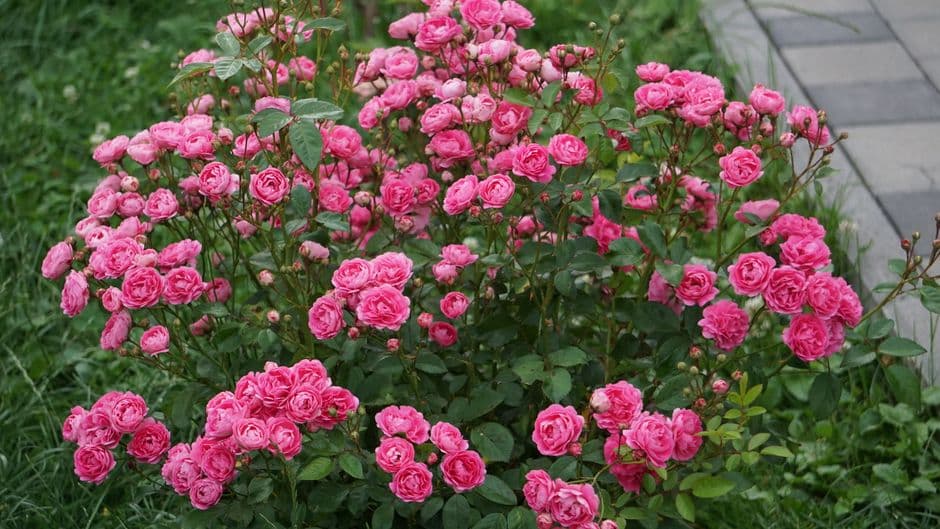
Physically exclude them or accept losses. A mesh cage or shrub netting over the bush is the only thing that works every night; a repellent rotated on schedule reduces damage but does not stop a hungry deer. Thorns are not a deterrent - even Rugosa Rose, the prickliest rose most people plant, only rates a C on Rutgers' deer-resistance scale.
Roses sit in an awkward place. They are among the most-loved plants in a garden and among the easiest for a deer to browse: soft new growth at exactly the right height, on a plant that keeps producing more of it all season.
What the rating actually says
Rutgers Cooperative Extension rates landscape plants on a four-letter scale: A = Rarely Damaged, B = Seldom Severely Damaged, C = Occasionally Severely Damaged, D = Frequently Severely Damaged.
Rugosa Rose (Rosa rugosa) is rated C - Occasionally Severely Damaged. That is the rose with the thickest, most aggressive prickles and the toughest constitution of the roses commonly planted in gardens, and it still does not reach B.
The conclusion is not subtle. If the prickliest rose in the catalog is only C, choosing a different rose is not a strategy. Rutgers also notes the general caveat that applies to every list of this kind: no plant is deer proof, and preference shifts with how hungry the local herd is.
The three options, honestly ranked
| Approach | Works | Effort | Best for |
|---|---|---|---|
| Fence the whole garden | Yes, permanently | High up front, none after | Multiple beds, ongoing pressure |
| Cage or net the individual bush | Yes, while it is on | Moderate, seasonal | Two or three prized roses |
| Repellent, rotated | Reduces damage | Continuous | Low to moderate pressure, or as a bridge |
| Choosing a resistant variety | No | None | Nothing - even rugosa only rates C |
Most rose growers end up on the middle row. A full deer fence is the real answer for a whole garden, but few people build one for three shrubs - and netting one bush costs a fraction of it. Deer fencing and how high a deer fence needs to be cover the permanent route.
Baffleworks is funded by affiliate commission. If you buy through a link on this page we may earn a commission at no extra cost to you, and it never decides a ranking. Full disclosure · how we pick.
Quick picks
Ranked, with the trade-off named. Tap a row for the full write-up; the price button goes straight to Amazon.
| # | Product | Best for | Price |
|---|---|---|---|
| 1 |  Bobbex Concentrated Deer Repellent, 32 ozA concentrate rather than a ready-to-use bottle, which is the right format if you are going to spray often enough for a repellent to work at all. | Rotation partner, concentrate | $22.75 on Amazon |
| 2 |  Plantskydd Ready-to-Use Liquid, 1.3 galReady-to-use and covering the widest published species list here: deer, rabbits, elk, moose, voles, squirrels and chipmunks from one bottle. | No mixing, widest species list | $79.95 on Amazon |
| 3 | 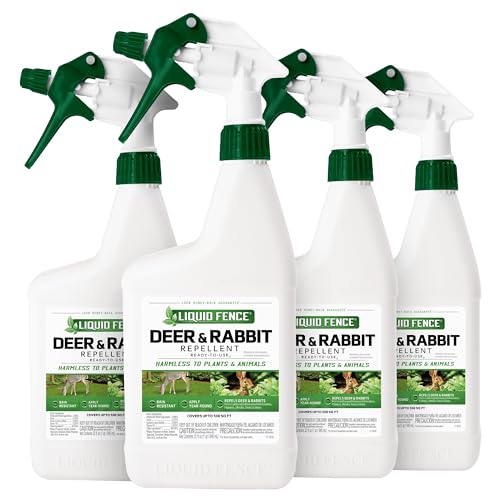 Liquid Fence Deer & Rabbit Repellent Ready-To-Use, 32 oz, 4 packPutrescent egg solids and garlic, scent-based, on a published once-then-monthly schedule. A genuinely different chemistry from Plantskydd, which is the whole reason to own it. | A third base to rotate against blood meal | $39.88 on Amazon |
| 4 |  ShrubGuard 1/2 in Mesh Shrub Netting BagA mesh bag made for exactly this job — its listing names arborvitae — that keeps deer off the foliage and holds the branches together under snow load. | Individual arborvitae through winter | $19.99 on Amazon |
| 5 |  codree Deer Netting for Shrubs, 7.8 x 7.8 ft, 3 packLarge drawstring covers sized for a tall shrub. The size is the reason to buy them; the material is the reason to check them after every storm. | Taller evergreens, three at a time | $25.99 on Amazon |
#ad how we are funded · price as of September 21, 2026
The picks in full
Top pick Rotation partner, concentrate
Bobbex Concentrated Deer Repellent, 32 oz
A concentrate rather than a ready-to-use bottle, which is the right format if you are going to spray often enough for a repellent to work at all.
Published specifications
- Size
- 32 oz concentrate (published)
- Targets
- Deer, elk, moose
- Form
- Dilute and spray
- Part number
- B550100
Trade-offs
- Concentrate is far cheaper per treated square foot than ready-to-use
- A different active profile from Plantskydd, which is what makes rotation possible
- Repellents are a reapplication commitment: rain, new growth and habituation all reset them
- Mixing and spraying is a job, and the ones that stop working are usually the ones that stopped being sprayed
Who it is forOrnamental beds and shrubs where fencing is not acceptable, used on a schedule rather than in a panic.
Skip it ifYou want to solve this once. Extension services are consistent that a fence is the exclusion method and a repellent is a mitigation. Read what actually keeps deer out before you buy a spray instead of a fence.
#ad how we are funded · price as of September 21, 2026
Where these specifications came from
No. 2 No mixing, widest species list
Plantskydd Ready-to-Use Liquid, 1.3 gal
Ready-to-use and covering the widest published species list here: deer, rabbits, elk, moose, voles, squirrels and chipmunks from one bottle.
Published specifications
- Size
- 1.3 gal ready-to-use (published)
- Targets
- Deer, rabbit, elk, moose, voles, squirrels, chipmunks
- Form
- Ready-to-use liquid
- Part number
- PS-5L
Trade-offs
- No mixing, so it is the one people actually reapply on schedule
- The species list covers the garden raiders as well as the browse animals
- 1.3 gal is enough to treat a real garden rather than a planter
- Ready-to-use costs considerably more per treated area than concentrate
- It is a blood-meal-based product and it smells like one for a day or so
Who it is forA mixed garden problem — deer on the shrubs, rabbits on the greens, chipmunks in the bulbs — where you want one bottle rather than three.
Skip it ifYou are treating a large area regularly. Buy the powder concentrate and mix it; the ready-to-use maths stops working quickly at scale.
#ad how we are funded · price as of September 21, 2026
Where these specifications came from
No. 3 A third base to rotate against blood meal
Liquid Fence Deer & Rabbit Repellent Ready-To-Use, 32 oz, 4 pack
Putrescent egg solids and garlic, scent-based, on a published once-then-monthly schedule. A genuinely different chemistry from Plantskydd, which is the whole reason to own it.
Published specifications
- Size
- 32 oz ready-to-use spray, 4 pack (published)
- Active ingredients
- Putrescent whole egg solids, garlic (published)
- Mechanism
- Scent — animals do not have to bite to be repelled (published)
- Schedule
- Apply, repeat one week later, then approximately once per month (published)
- Rain
- Rain resistant (published)
- Targets
- Deer and rabbits (published)
Trade-offs
- A different active base from Plantskydd and from Bobbex, so a rotation with either is a real rotation
- Publishes an actual schedule — once, again a week later, then monthly — rather than 'as needed'
- Scent-based, so it acts before the first bite rather than after it
- Four bottles covers a season without a reorder mid-summer
- The maker states rotation is never needed because aversion 'will never diminish' — extension services say deer habituate, and this site sides with the extension services
- Ready-to-use is the most expensive way to buy any repellent per treated area, and a 4 pack is four times that
- Putrescent egg is exactly as pleasant as it sounds for the first day
- Targets deer and rabbits only on the label; squirrels are not named
Who it is forA season's worth of spot treatment on ornamentals, for somebody already using a blood-meal product and wanting a second base.
Skip it ifYou are treating a large border. Buy a concentrate — cost per treated area is what decides whether you keep applying.
#ad how we are funded · price as of September 21, 2026
No. 4 Individual arborvitae through winter
ShrubGuard 1/2 in Mesh Shrub Netting Bag
A mesh bag made for exactly this job — its listing names arborvitae — that keeps deer off the foliage and holds the branches together under snow load.
Published specifications
- Mesh
- 1/2 in (published)
- Material
- Multi-strand UV-stabilized HDPE (published)
- Format
- Bag, placed over the plant (published)
- Named use
- Arborvitae, evergreens and trees in winter (published)
- Stated protection
- Deer, rabbits, birds; snow and ice damage (published)
- Service life
- Published as multiyear; no figure given
Trade-offs
- Names arborvitae in the listing, so it is built for the shape and the season rather than repurposed from bird netting
- Does two winter jobs at once — keeps deer off and stops snow splaying the branches open
- UV-stabilized HDPE is the material that survives a season outdoors; plain poly netting goes brittle
- A physical barrier does not wear off, which a repellent in freezing weather does
- Publishes no bag dimensions in the listing we cite, so confirm the size against your tallest plant before ordering
- One bag per plant: a long hedge row is many bags, and netting on a roll becomes cheaper
- A bag has to come off in spring before new growth pushes through the mesh
- It is visible. A netted hedge is a netted hedge, which some yards will not tolerate out front
Who it is forA handful of specimen arborvitae — a corner planting or a short screen — that deer strip every winter.
Skip it ifYou are protecting a long hedge row. Buy 7 ft deer netting on a roll and run it along the line instead of bagging plants one at a time.
#ad how we are funded · price as of September 21, 2026
Where these specifications came from
No. 5 Taller evergreens, three at a time
codree Deer Netting for Shrubs, 7.8 x 7.8 ft, 3 pack
Large drawstring covers sized for a tall shrub. The size is the reason to buy them; the material is the reason to check them after every storm.
Published specifications
- Size
- 7.8 x 7.8 ft each (published)
- Quantity
- 3 (published)
- Closure
- Drawstring (published)
- Material
- Non-woven fabric, breathable (published)
- Stated protection
- Cold air, snow, birds, deer (published)
Trade-offs
- 7.8 ft covers reach the height a standing deer browses to, which small shrub bags do not
- Drawstring closure at the base, so the cover does not blow off or ride up
- Three in a pack covers a short screen of arborvitae in one purchase
- Breathable fabric lets light and air through, so the plant is not sealed in for the winter
- Non-woven fabric, not a mesh net — it is closer to frost cloth than to deer netting, and a determined deer can tear it
- Publishes no fabric weight or UV rating, so it may not survive more than a season
- A solid fabric cover catches wind far more than an open mesh does
- Fabric over a wet evergreen can hold moisture against the foliage; check it after thaws
Who it is forTall, young arborvitae where the height matters more than the durability, and somebody who will check the covers through the winter.
Skip it ifDeer pressure is heavy. A mesh bag or netting resists tearing far better than non-woven fabric, and this listing does not claim otherwise.
#ad how we are funded · price as of September 21, 2026
Where these specifications came from
Netting a rose without ruining it
The awkward part of caging a rose is that you have to reach it to prune and deadhead, and the canes catch on everything.
- Use a mesh bag or netting sleeve sized to drop over the whole shrub rather than wrapping the canes individually.
- Support it off the foliage where you can - netting resting directly on new growth gets chewed through the mesh.
- Close the bottom. A deer will push its muzzle under a loose edge, and an open skirt turns a cage into a curtain.
- Take it off to prune, then put it straight back. The gap is when the browsing happens.
- Check it after wind. Netting that has slipped off one side has protected nothing all week.
Garden netting covers mesh sizes and the wildlife-safety point that matters here: a taut, well-pinned net is safer for birds and snakes than a slack one.
Repellents on roses, specifically
Roses are a good repellent candidate for one reason: they are a discrete shrub, not a hedge or a crop, so spraying them fully is a five-minute job rather than an afternoon.
They are also a difficult one, because roses put out new growth constantly all season. Every flush of new leaves is untreated surface, and untreated surface is what gets eaten. That is a harder schedule than an evergreen shrub, where a coating stays where you put it.
- Rotate products rather than running one all season. Bobbex vs Liquid Fence vs Plantskydd compares the three main chemistries.
- Reapply after new growth, not just after rain. The calendar interval on the label assumes the plant is standing still.
- Spray to the point of runoff and include the undersides, where browsing starts.
- Do not spray open blooms you intend to cut and bring indoors.
The best deer repellents covers what each product publishes about its own reapplication interval, and the Plantskydd review covers the longest-interval option in detail.
When the damage happens
Two windows matter more than the rest of the year. Spring, when soft new growth appears and there is little else green, and late winter, when natural browse has run out and deer take woody material they would ignore in June.
If you are going to protect a rose for only part of the year, protect it then. Keeping deer out of the garden covers the seasonal pattern across the whole planting.
Recovering a browsed rose
- Cut back to a healthy outward-facing bud below the ragged ends - deer tear rather than cut, and torn ends die back.
- Protect it before it pushes new growth, not after. The fresh flush is the most attractive thing in the bed.
- Do not feed heavily to force recovery in late season; soft growth going into winter is browse and it is frost-tender.
- Expect one lost flush, not a lost plant. Established roses take heavy browsing better than they look like they will.
Questions people actually ask
- Do deer eat roses?
- Yes, readily. Rutgers rates Rugosa Rose - the prickliest commonly planted rose - at C, Occasionally Severely Damaged, on a scale where A is Rarely Damaged. Thorns do not prevent browsing.
- Are there deer-resistant roses?
- Not usefully. The most prickly, toughest rose in the Rutgers rating only reaches C. Variety choice is not a substitute for a physical barrier or a repellent program.
- Will thorns stop deer from eating my roses?
- No. Deer take the soft growing tips with their lips and tongue, above where the prickles are doing anything. Thorns deter animals that grip and climb, not animals that graze.
- What is the best way to protect roses from deer?
- A physical barrier. A fence around the garden is permanent; a mesh cage or netting sleeve over the individual bush is the practical option for two or three prized shrubs. Repellents reduce damage rather than stopping it.
- How often should I spray repellent on roses?
- More often than the label interval suggests, because roses keep producing untreated new growth. Reapply after each flush as well as after heavy rain, and rotate between different chemistries through the season.
- Will my rose recover after deer eat it?
- Usually. Cut back to a healthy outward-facing bud below the torn ends, protect it before the new flush appears, and expect to lose that round of growth rather than the plant.
Sources
Read next
- The best deer repellent for hostas
Rutgers rates hosta D and says plant it only with protection. The repellent calendar, the rotation, and the cage that works because a hosta is low.
- How to protect hydrangeas from deer
The buds in late winter are the expensive loss, not the summer leaves. Netting held clear, or repellent on a calendar.
- The best deer repellents
Ranked on published yield and format, with an honest account of why repellents fail: reapplication, not chemistry.
- The best deer fencing
Every mesh deer fence sold online is 7.5 ft; extension services say 8 to 10. What that compromise buys.
- Deer Deterrence
Fencing at the height extension services publish, plus the repellents that fill the gaps around it.