Garden / Roundup
The best garden netting
Netting is the cheapest square footage of protection you can buy and the easiest to misuse. Used as a drape it is excellent; used as a fence it teaches people that exclusion does not work.
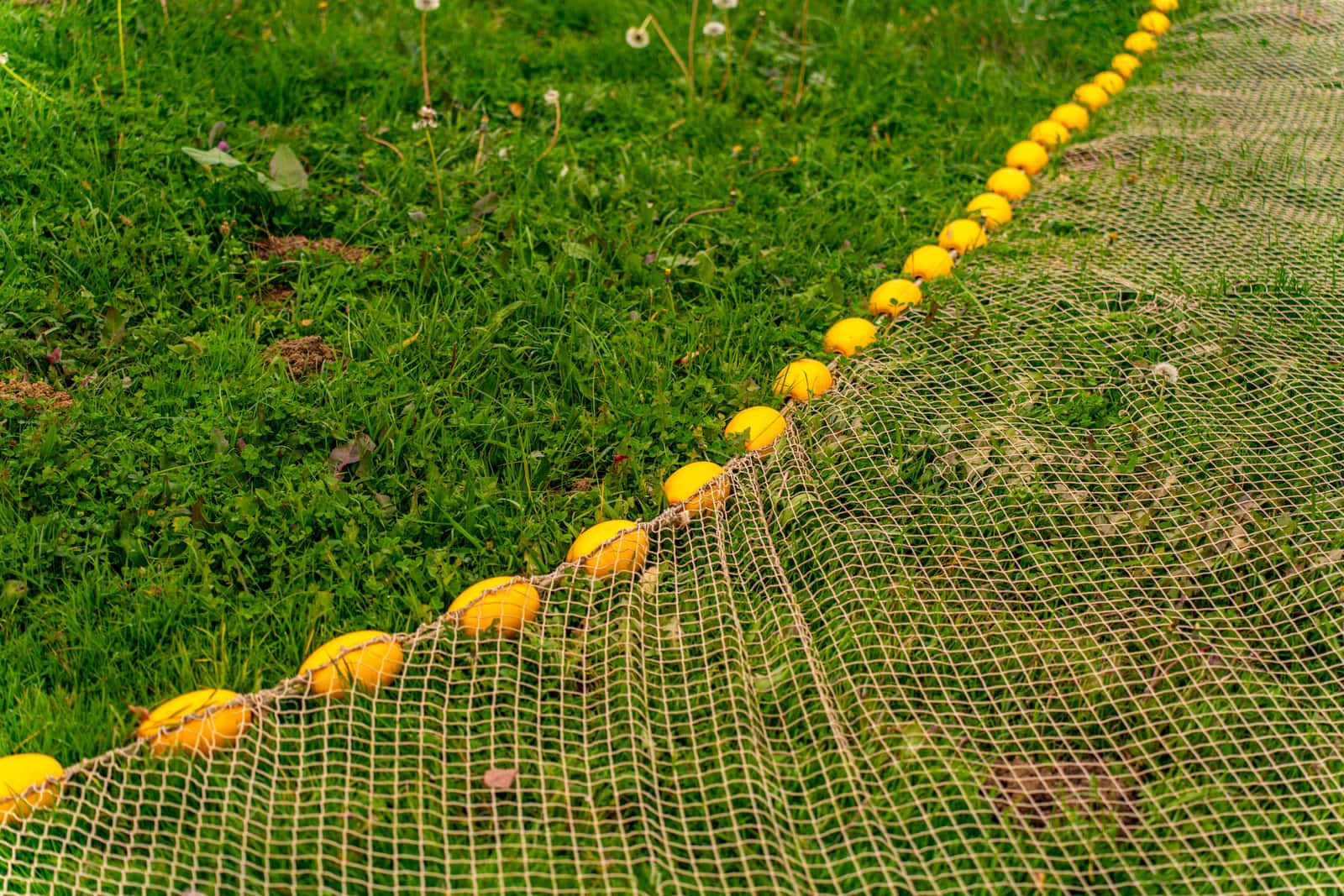
For draping over shrubs, fruit and beds, Tenax's 7 ft polypropylene deer netting is the practical choice: light, cheap per foot and easy to cut. For rabbits use 1 in mesh or smaller. Netting is not a perimeter fence, and using it as one is the most common reason people conclude that garden exclusion fails.
Netting sits between a cage and a fence, and it is best understood by what it is not. It is not rigid, so it does not exclude by structure. It is not tensioned on posts, so it does not exclude by height. What it does is put a physical layer between an animal and a plant, cheaply, over a large area.
Baffleworks is funded by affiliate commission. If you buy through a link on this page we may earn a commission at no extra cost to you, and it never decides a ranking. Full disclosure · how we pick.
Quick picks
Ranked, with the trade-off named. Tap a row for the full write-up; the price button goes straight to Amazon.
| # | Product | Best for | Price |
|---|---|---|---|
| 1 |  Tenax Deer Netting, 7 ft x 100 ftNetting rather than fence: lighter, easier to drape over a shrub or a bed, and not pretending to be a perimeter barrier. | Draping and small enclosures | $53.34 on Amazon |
| 2 |  Pop-Up Garden Mesh Plant Cover, 2 piecesA plain mesh enclosure sold as a pair, aimed squarely at the seedling stage, which is when losing a bed actually costs you the season. | Bird and pest protection on seedlings | $25.99 on Amazon |
| 3 |  HUNKA Hardware Cloth, 1/2 in mesh, 36 in x 50 ft, 19 gaugeRecommended by specification rather than by brand: 1/2 in mesh, 36 in tall, galvanized. This roll meets it — any roll matching the same three numbers does the same job. | A permanent rabbit barrier | $42.99 on Amazon |
| 4 |  Tenax Select Deer Fence, 7.5 ft x 100 ftPolypropylene mesh at 7.5 ft with a published breaking load, which is the only spec on a deer fence that actually predicts whether it survives a deer hitting it. | The full-height barrier | $133.93 on Amazon |
#ad how we are funded · price as of October 24, 2026
The picks in full
Top pick Draping and small enclosures
Tenax Deer Netting, 7 ft x 100 ft
Netting rather than fence: lighter, easier to drape over a shrub or a bed, and not pretending to be a perimeter barrier.
Published specifications
- Height
- 7 ft (published)
- Length
- 100 ft
- Material
- Black polypropylene
- Structure
- Quadrangular mesh (published)
Trade-offs
- Light enough to throw over a shrub or a fruit cage without a post system
- Cheap enough per foot to protect a lot of individual plants
- Not a perimeter fence, and treating it as one is how people conclude that deer fencing does not work
- Loose netting can entangle wildlife if it is left slack and unpegged
Who it is forIndividual shrubs, small beds and winter protection on ornamentals, rather than a garden boundary.
Skip it ifYou want a perimeter. Buy the fence, set posts, and tension it — the height guide explains why the two are not interchangeable.
#ad how we are funded · price as of October 24, 2026
Where these specifications came from
No. 2 Bird and pest protection on seedlings
Pop-Up Garden Mesh Plant Cover, 2 pieces
A plain mesh enclosure sold as a pair, aimed squarely at the seedling stage, which is when losing a bed actually costs you the season.
Published specifications
- Quantity
- 2
- Type
- Pop-up mesh plant enclosure
- Intended use
- Raised beds, fruit, vegetables, seedlings, herbs
Trade-offs
- Covers the window when damage is most expensive: germination to establishment
- Mesh passes light and water, so there is no need to lift it to look after the bed
- The listing does not publish dimensions, so bed fit is a guess
- Light mesh over a light frame is a one- or two-season item
Who it is forA seedbed you need covered this week, where the cost of the cover is trivial next to the cost of resowing.
Skip it ifYou need a specific size. Buy the cage that publishes its dimensions instead.
#ad how we are funded · price as of October 24, 2026
Where these specifications came from
No. 3 A permanent rabbit barrier
HUNKA Hardware Cloth, 1/2 in mesh, 36 in x 50 ft, 19 gauge
Recommended by specification rather than by brand: 1/2 in mesh, 36 in tall, galvanized. This roll meets it — any roll matching the same three numbers does the same job.
Published specifications
- Mesh
- 1/2 in x 1/2 in (published); 1 in or smaller is the spec, 1/2 in excludes young rabbits
- Roll
- 36 in W x 50 ft L (published)
- Gauge
- 19, 0.91 mm wire diameter (published)
- Material
- Hot-dip galvanized over annealed wire (published)
- Height above ground
- At least 2 ft (Colorado State Extension)
- Buried depth
- 4 to 8 in (Colorado State Extension)
Trade-offs
- Extension services put chicken wire, hardware cloth or flexible netting at 2 ft high and buried 4 to 8 in as fairly effective against rabbits
- A permanent fix rather than a reapplication schedule
- Half-inch mesh also excludes young rabbits, which 2 in poultry netting does not
- Hot-dip galvanized after weaving, which is the coating that survives being buried
- Burying the bottom edge is the whole job, and it is real digging
- Galvanized wire is visible in a way black deer netting is not
- 36 in tall means you are burying roughly a third of what you paid for
- The listing warns of sharp edges at both ends — this is a gloves job, and nothing about this brand makes it better than any other roll at the same spec
Who it is forA vegetable plot or a border with a persistent rabbit problem, where you would rather dig once than spray for years.
Skip it ifDeer are the actual problem. Two feet of wire is a step-over for a deer; the height that matters there is 8 ft and up. See deer fencing.
#ad how we are funded · price as of October 24, 2026
Where these specifications came from
No. 4 The full-height barrier
Tenax Select Deer Fence, 7.5 ft x 100 ft
Polypropylene mesh at 7.5 ft with a published breaking load, which is the only spec on a deer fence that actually predicts whether it survives a deer hitting it.
Published specifications
- Height
- 7.5 ft (published)
- Length
- 100 ft
- Material
- UV-stabilized polypropylene
- Breaking load
- Certified 600 to 650 lb (published)
- Life expectancy
- 10 to 15 years (published)
- Origin
- Made in USA
Trade-offs
- A certified breaking load is a real, checkable spec in a category full of adjectives
- UV-stabilized with a stated 10 to 15 year life, so it is not an annual replacement
- Black mesh disappears at a distance far better than wire
- 7.5 ft is below the 8 to 10 ft that extension services recommend for a flat-ground perimeter
- Polypropylene will not stop a determined animal the way woven wire does
Who it is forA garden perimeter where you want the fence to vanish visually. Read how high a deer fence has to be first — the height is the whole decision.
Skip it ifYou are fencing flat, open ground with heavy browse pressure. Michigan State Extension puts the perimeter figure at 8 to 10 ft, and 7.5 ft is a deliberate compromise you should make knowingly.
#ad how we are funded · price as of October 24, 2026
What we would skip
Loose netting left slack and unpegged
Slack netting is an entanglement hazard for birds, snakes and small mammals, and a slack edge is a door for a squirrel. If you are not going to tension and pin it, use a rigid cage instead.
Netting as a deer perimeter
Tenax's 7 ft netting is a drape product. A deer perimeter is a tensioned fence on posts, and extension services put the height at 8 to 10 ft. The two are not interchangeable even when the material is similar.
2 in mesh, if rabbits are the target
University of Georgia Extension notes hex netting comes in 1 in and 2 in openings, and young rabbits pass a 2 in mesh. If you are doing the work, do it at 1 in or smaller.
Mesh size is the specification
The published mesh openings decide which animal you are excluding, and the extension services are specific about it. The University of Georgia Extension notes hex netting is sold in 1 in and 2 in openings, and that hex netting is available in 24, 36 and 48 in heights. A 2 in opening passes a young rabbit.
For birds on fruit, a fine mesh is what you want and the opening can be small because nothing needs to get through. For rabbits, 1 in or smaller. For deer browse, the mesh size barely matters — a deer is stopped by the structure, not by the aperture.
Drape, tent or wrap
- Drape over a fruit bush or a shrub for winter browse protection. Fastest, and fine as long as the edges are gathered and tied rather than left hanging loose.
- Tent over hoops so the net is held clear of the foliage. Better for crops, because an animal cannot browse through mesh that is not touching leaves.
- Wrap around a trunk or a young tree for winter protection. Effective against browse and rubbing, and easy to leave on too long — check it every spring so it does not girdle.
The wildlife-safety point, which is not optional
Slack netting kills animals. Birds, snakes and small mammals get caught in loose mesh and cannot free themselves. This is not a hypothetical risk and it is entirely preventable: tension the net, pin the edges, and check it after storms.
If you are not going to maintain it, buy a rigid cage. A pop-up cage is more expensive per square foot and cannot entangle anything.
Where netting stops and fencing starts
The clean dividing line: if the barrier has to stand up by itself and stop an animal walking into it, that is a fence and it needs posts, tension and height. Michigan State University Extension puts deer perimeters at 8 to 10 ft and says the only sure barriers are woven wire fences or walls at least 10 ft tall.
Tenax's fence products are 7.5 ft and are a knowing compromise against that figure; their netting is 7 ft and is not intended as a perimeter at all. Deer fencing covers where that line falls, and netting vs cages covers the small-scale end of it.
Two crops where the netting question has a specific answer: strawberries, where Ask Extension's figure is a quarter inch or smaller and the best netting for strawberries works through it by animal; and raised beds, where the net needs hoops and an edge seal and the raised bed cover roundup covers the fitted and hooped options.
How we picked
- We started from the published exclusion spec for each animal, taken from cooperative extension services rather than from product listings.
- We preferred products that publish dimensions, because a barrier you cannot check against your bed is a barrier you may have to return.
- We separated barriers by what they exclude. A 30 in mesh cage and an 8 ft deer fence are not competing products, and treating them as though they were is how people conclude that exclusion does not work.
- We named at least one product to skip on every page, with the reason.
- We have not installed any of these. How we pick sets out what that does and does not cover.
Everyone in this category says they tested twenty of these. We have not tested any, and we say so. What we did instead: read the manuals, compiled the published specifications, worked out the clearance geometry, and cited every source. The full method is published.
Questions people actually ask
- What mesh size netting keeps rabbits out?
- 1 in or smaller. The University of Georgia Extension notes hex netting comes in 1 in and 2 in openings, and young rabbits pass a 2 in mesh.
- Can I use deer netting as a fence?
- Netting sold as a drape is not a perimeter fence. A perimeter needs posts, tension and height — extension services put deer fences at 8 to 10 ft. Draped netting protects individual plants.
- Is garden netting safe for wildlife?
- When it is tensioned and pinned, yes. When it is slack, no — birds, snakes and small mammals become entangled in loose mesh. If you will not maintain it, use a rigid cage.
- How do I stop squirrels getting under netting?
- Pin every edge. A slack edge is a door. If an animal is actively digging or working the bed, a rigid cage is a better tool than netting.
Sources
Read next
- Netting vs cages
Browsing animals need a layer; working animals need a structure. How to tell which you have.
- The best plant cages and cloches
Pop-up cages and cloches ranked by published dimensions and how well the skirt actually pins down.
- The best deer fencing
Every mesh deer fence sold online is 7.5 ft; extension services say 8 to 10. What that compromise buys.
- Rabbit fencing
Two feet high, buried four to eight inches, one inch mesh. The one garden problem with a published answer.
- Garden Protection
Cages, cloches, netting and rabbit fencing, sized to the animal doing the damage rather than to the bed.