Guides / Deterrents
Scare tactics that work
Every scare method has the same weakness: the animal learns. What separates the useful ones from the useless is how long that takes, and whether the maker will publish a number.
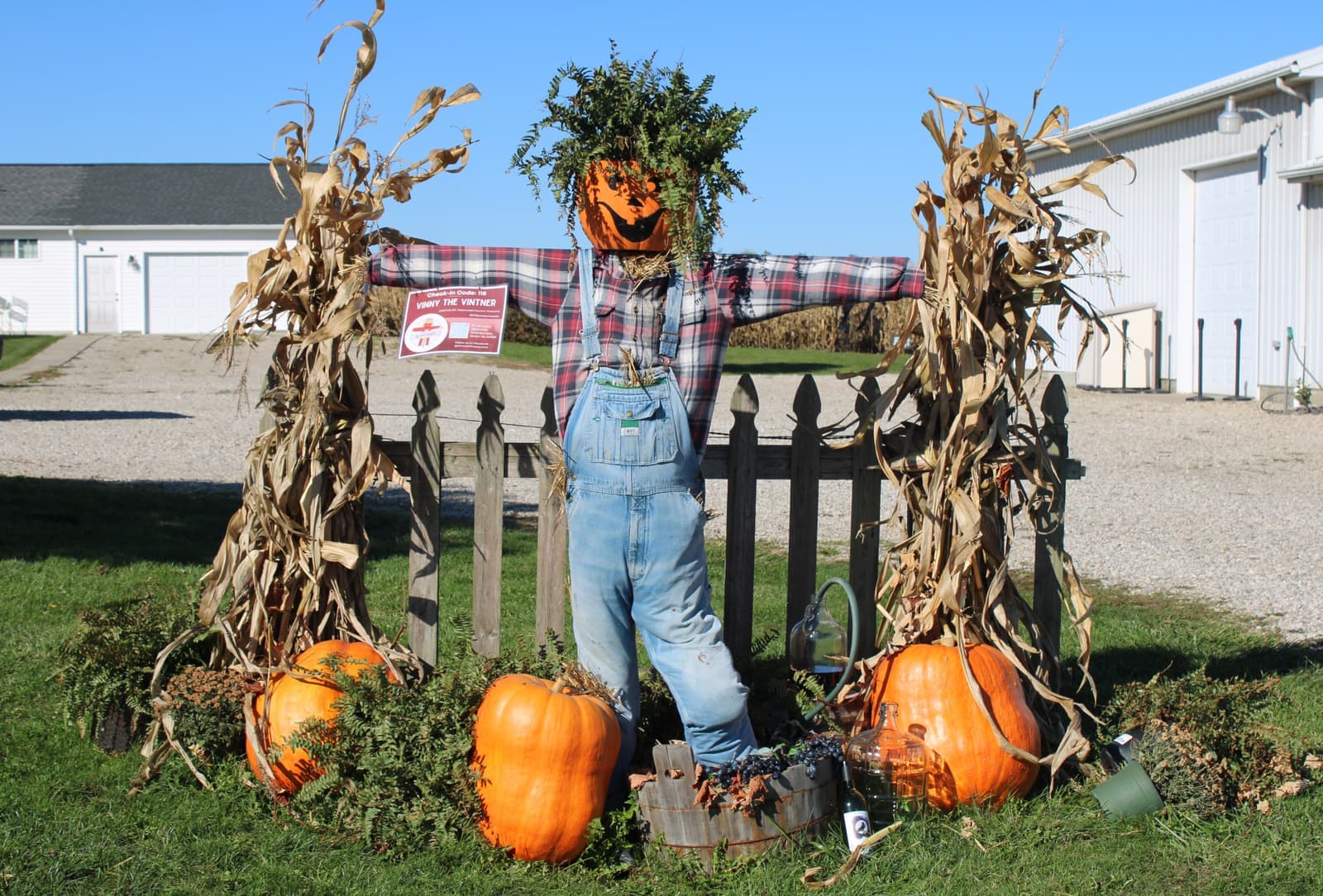
Motion-activated sprinklers are the only scare method with a published, checkable mechanism, and they decay slowest because water is hard to habituate to. Static scares — scarecrows, tape, discs, owl decoys — stop working within days unless they are moved. Ultrasonic and predator-eye devices publish nothing we can assess.
The habituation problem, stated once
Every scare tactic works by making an animal believe something dangerous is present. Animals test that belief. A scare that produces no consequence stops being a scare, usually within days and sometimes within hours.
So the question for any startle device is not whether it works on day one — almost all of them do — but how quickly it stops. That is the axis to compare on, and it is the axis almost no listing addresses.
Ranked by how slowly they decay
| Method | Decays | Published mechanism? | Verdict |
|---|---|---|---|
| Motion sprinkler | Slowly — the consequence is real and physical | Yes: 40 ft range, 3 to 10 second spray (Orbit 62100) | The pick |
| Moved scare (rotated position and type) | Slowly, if genuinely rotated | N/A — a technique, not a product | Worth doing, free |
| Static scarecrow, owl decoy, reflective tape | Fast — days | N/A | Only useful if moved constantly |
| Ultrasonic repeller | Unknown | No frequency, level or range published | Not ranked |
| Solar predator-eye LED | Unknown | No range or flash spec published | Not ranked |
Why the sprinkler is different
A visual or auditory scare makes a claim: something dangerous is here. The animal checks, finds nothing, and updates. A sprinkler does not make a claim — it delivers water, noise and movement simultaneously, and the animal that checks gets wet.
That is a genuinely different category of stimulus, and it is why sprinklers keep working long after a decoy owl has become a perch. Orbit's Yard Enforcer publishes the specifications that let you deploy it properly: passive infrared, an adjustable range up to 40 ft, spray of approximately 3 to 10 seconds, and day and night modes.
Baffleworks is funded by affiliate commission. If you buy through a link on this page we may earn a commission at no extra cost to you, and it never decides a ranking. Full disclosure · how we pick.
Quick picks
Ranked, with the trade-off named. Tap a row for the full write-up; the price button goes straight to Amazon.
| # | Product | Best for | Price |
|---|---|---|---|
| 1 |  Orbit Yard Enforcer Motion-Activated Sprinkler (62100)The one deterrent device category with a mechanism you can verify from the spec sheet: infrared detection out to 40 ft, and a burst of water the animal cannot argue with. | Deer and raccoons over a wide arc | $89.74 on Amazon |
| 2 |  Havahart Critter Ridder Motion-Activated SprinklerThe one unit on this shelf that publishes as much as Orbit does — long-range infrared detection, four sensitivity levels, and a water figure per activation that nobody else states. | An alternative to the Orbit | $49.98 on Amazon |
| 3 | 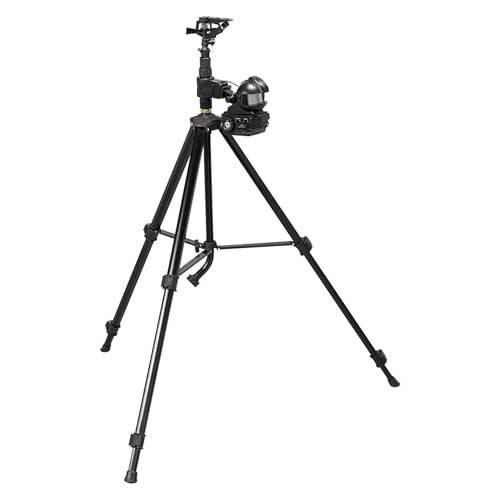 Orbit Garden Enforcer Motion-Activated Sprinkler (62120)The smaller Orbit, aimed at a bed rather than a yard. Same idea, less reach, easier to place where you actually need it. | Bed-scale coverage | $129.99 on Amazon |
#ad how we are funded · price as of October 24, 2026
The picks in full
Top pick Deer and raccoons over a wide arc
Orbit Yard Enforcer Motion-Activated Sprinkler (62100)
The one deterrent device category with a mechanism you can verify from the spec sheet: infrared detection out to 40 ft, and a burst of water the animal cannot argue with.
Published specifications
- Detection
- Passive infrared
- Sensor range
- Up to 40 ft, adjustable (published)
- Spray duration
- Approximately 3 to 10 seconds (published)
- Modes
- Day and night detection
- Function
- Dual-purpose: deterrent and sprinkler
- Model
- 62100
Trade-offs
- Published detection range and spray duration, which almost nothing else in the deterrent aisle offers
- Water plus noise plus movement is a genuine startle, not a claimed one
- Day and night modes let you stop it firing at the postman
- It needs a hose, so its position is decided by your tap as much as by the animals
- Freezing weather takes it out of service exactly when deer browse hardest
Who it is forDeer, raccoons or cats on a defined approach — a bed, a path, a run of shrubs — during the frost-free months.
Skip it ifYour winter freezes. This is a hose-fed device, and a hose-fed device in January is a burst hose. Fence or repellent for the cold half of the year.
#ad how we are funded · price as of October 24, 2026
Where these specifications came from
No. 2 An alternative to the Orbit
Havahart Critter Ridder Motion-Activated Sprinkler
The one unit on this shelf that publishes as much as Orbit does — long-range infrared detection, four sensitivity levels, and a water figure per activation that nobody else states.
Published specifications
- Detection
- Infrared heat and movement. Havahart publishes two figures: 'Up to 100 ft' in its spec table and 'within 60 feet' in its feature text
- Sensitivity
- OFF, 1, 2, 3, 4, Sprinkler — 4 motion levels (published)
- Spray distance
- Up to 35 ft, depending on water pressure (published)
- Water per activation
- 2 to 3 cups per spray (published)
- Burst duration
- Approximately 5 seconds (published)
- Coverage area / detection angle
- Not published
- Batteries
- 2 AA, not included (published)
- Named species
- Birds, cats, chipmunks, deer, dogs, groundhogs, opossums, rabbits, raccoons, skunks, squirrels (published)
Trade-offs
- A published water figure — 2 to 3 cups per activation — which is the number that tells you what a false trigger actually costs
- Either published detection figure, 60 ft or 100 ft, is further than the Orbit's published 40 ft
- Four sensitivity levels, so a cat-sized trigger and a deer-sized one are different settings
- Names eleven species on the spec sheet rather than claiming general animal control
- Havahart's own page gives two different detection ranges — 'Up to 100 ft' in the spec table against 'within 60 feet' in the feature text
- Publishes no detection angle, so the shape of its coverage is unknown where Orbit publishes 120 degrees
- Publishes no coverage area in square feet, which Orbit does
- Two AA batteries and the listing itself warns they self-discharge in storage — check them before the season
- Hose-fed like every unit here, so it is out of service in freezing months
Who it is forA long approach where the extra detection range earns its keep, or a yard with several species where the sensitivity levels matter.
Skip it ifYou need to plan the coverage wedge precisely. Orbit publishes the angle and the area and this does not. The full spec sheet is here.
#ad how we are funded · price as of October 24, 2026
No. 3 Bed-scale coverage
Orbit Garden Enforcer Motion-Activated Sprinkler (62120)
The smaller Orbit, aimed at a bed rather than a yard. Same idea, less reach, easier to place where you actually need it.
Published specifications
- Detection
- Motion activated
- Model
- 62120
- Type
- Garden-scale motion sprinkler
Trade-offs
- Sized for a bed, so it is not overkill on a small plot
- Same operating principle as the Yard Enforcer at a smaller footprint
- Orbit does not publish a detection range for this model in the listing, unlike the 62100
- Same hose dependency and same winter limitation
Who it is forOne bed, one border, or a doorway a raccoon has decided is its route.
Skip it ifYou need to cover an approach rather than a bed. Published range is the spec that matters, and only the 62100 gives you one.
#ad how we are funded · price as of October 24, 2026
Where these specifications came from
How to slow habituation on anything
- Move it. Position is the single biggest factor. A device that has been in one spot for a month is a landmark rather than a threat.
- Vary it. Two different scares alternating beats one scare running continuously.
- Deploy it before the pattern forms, not after. An animal with three weeks of successful visits behind it is much harder to move than one on its second.
- Pair it with a real consequence. A scare next to an actual barrier lasts longer than a scare alone, because the animal cannot simply push through and disprove it.
- Remove the reward. No startle competes with a reliable food source. Spilled seed, unsecured bins and fallen fruit outweigh every device on this page.
The free methods worth trying
- A dog with yard access. The most effective animal deterrent there is, because the threat is genuine and mobile. Penn State Extension lists dog restraint systems alongside fencing and repellents for deer.
- Human activity. Gardens that are used are browsed less. This is not a method so much as an observation, but it explains why damage concentrates in the parts of a garden nobody visits.
- Removing cover. Animals cross open ground reluctantly. Clearing a brush pile or a run of long grass along a boundary changes the route.
Where scares belong in the plan
Last. Exclusion first — a baffle at the right height, a fence at the published height, a cage over the bed. Those do not habituate.
A scare is the right tool for the specific failure point that exclusion cannot reach: the gate, the gap by the drive, the one corner the fence does not cover. Used that way it earns its place. Used as the primary method it teaches the local animals that your garden makes noises and nothing else.
Questions people actually ask
- Do scarecrows work?
- For a few days, unless moved. A static scare makes a claim the animal can test and disprove, and habituation follows quickly. Moving and varying it slows that down considerably.
- What is the most effective scare device?
- A motion-activated sprinkler, because the consequence is physical rather than implied. Orbit's Yard Enforcer publishes a 40 ft adjustable range and a 3 to 10 second spray, so you can deploy it precisely.
- Do ultrasonic devices scare animals away?
- The listings we found publish no frequency, sound pressure level, coverage area or habituation data, so we cannot assess them. That is why nothing here ranks them.
- How long before animals get used to a deterrent?
- Days for a static visual scare; considerably longer for a sprinkler, because it delivers a real consequence. Moving the device and pairing it with a genuine barrier both extend it.
- Does a dog keep deer away?
- A dog with yard access is among the most effective deterrents there is, because the threat is real and mobile. Penn State Extension lists dog restraint systems alongside fencing and repellents.
Sources
Read next
- The best motion-activated sprinklers
The one deterrent category with published, checkable specs. Which unit states its numbers, and where to point it.
- Sprinkler vs ultrasonic vs spray
One publishes a checkable mechanism, one publishes a dose, and one publishes nothing. How we sort them.
- DIY squirrel deterrents that work
The slinky and the wire layer work. The greased pole harms wildlife. Which homemade fixes have a real mechanism.
- The best deer deterrent devices
Ranked on whether the maker publishes a checkable mechanism. Sprinklers do; ultrasonic and LED units do not.
- Active Deterrents
Motion sprinklers, seed treatments and per-animal answers for raccoons, opossums and skunks, judged on whether the mechanism is published or just claimed.