Deterrents / Does it work
Do motion-activated sprinklers work on squirrels?
It is a fair question - one maker's spec sheet names squirrels outright. The damage-management literature does not back it, and the reason is the animal's route rather than the device.
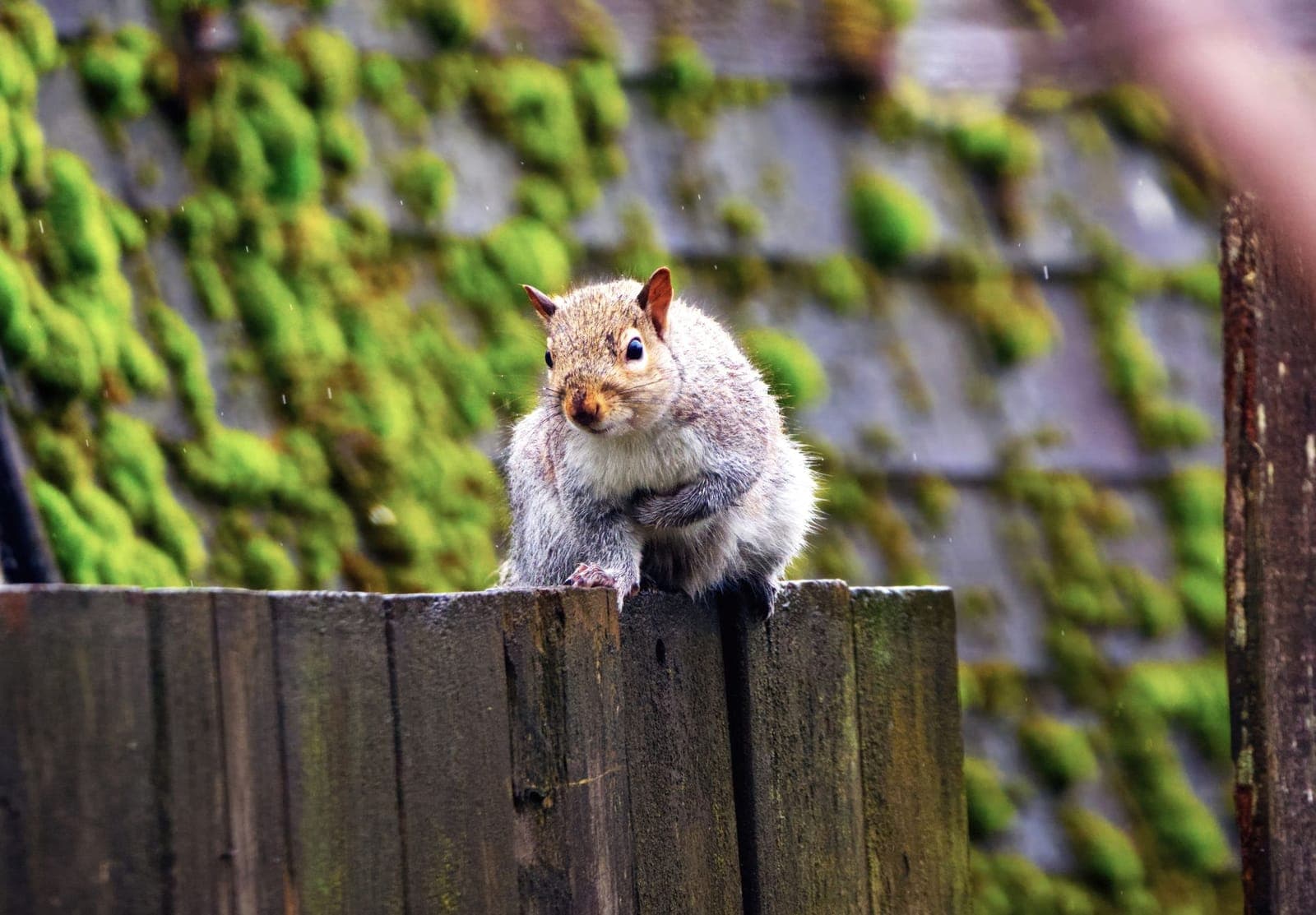
No - not as a feeder defense. A motion-activated sprinkler is a frightening device, and the Internet Center for Wildlife Damage Management states that no frightening devices have been proven effective against tree squirrels. Buy the exclusion geometry instead: a baffle with its top four to five feet up and ten feet of clear air around it. A sprinkler earns its keep on deer and raccoons.
Why this question deserves a straight answer
It is not a naive thing to ask. Havahart's spec sheet for the Critter Ridder names squirrels among eleven species, and a motion sprinkler is the one deterrent device category on this site that we rank at all, precisely because its makers publish checkable numbers. If a device works on deer and the box says squirrels, the inference is reasonable.
The inference is still wrong, and the reason has nothing to do with the device being badly made. It is about which animal you are pointing it at.
What the literature actually says
The ICWDM tree-squirrel control methods page is the standard reference for this species, and on frightening devices it gives one sentence: no frightening devices have been proven effective. It adds a single hedge - strobe lights show some promise - and nothing else. No sprinkler, no noise, no water.
The University of Nebraska's squirrel damage publication is equally telling by omission. It covers taste repellents, porcupine wire, vent screening, pole sleeves and baffles in specific published detail, and it does not raise frightening devices at all. What it does publish is the geometry: use a large-diameter metal pole, with accompanying baffle, to elevate a bird feeder at least five feet off the ground and 10 feet away from branches or other structures.
That is the shape of the evidence. The methods with published support are barriers. The startle methods get one sentence saying they have not been shown to work.
Why the mechanism is wrong for this animal
A sprinkler is well matched to a deer and poorly matched to a squirrel, and four differences explain the whole gap.
The approach is at the wrong height. Orbit publishes a 120 degree sensor wedge with detection up to 40 ft, and recommends tilting it about 10 degrees up from the ground. That is a flat fan aimed across the lawn, which is exactly where a deer walks. A squirrel arrives up the pole or along a branch, above and outside the fan. The device never sees the animal that is already on the feeder.
The visit is too short. A burst runs roughly 3 to 10 seconds on the Orbit and about 5 seconds on the Havahart. A deer browsing a hosta bed is a stationary target for minutes. A squirrel is on the feeder, loaded and gone.
The animal lives there. Habituation is the standing weakness of every startle method, and it is governed by how often the animal meets the device. A deer herd may pass a given approach once a night. A resident gray squirrel visits a feeder dozens of times a day, every day, which is the fastest possible schedule for learning that the water is harmless.
There is always a second route. The Alabama Cooperative Extension System puts a gray squirrel's horizontal jump at roughly eight feet. A device that successfully guards the base of the pole has done nothing about the fence rail, so the animal simply stops using the ground.
| Method | How it works | What the published sources say | Decays over time? |
|---|---|---|---|
| Motion-activated sprinkler | Startle - water, noise and movement together | ICWDM, tree squirrels: no frightening devices have been proven effective | Yes - habituation |
| Ultrasonic repeller | Startle - sound above human hearing | No maker we found publishes a frequency, sound level or range | Yes |
| Strobe light | Startle - light | ICWDM: strobe lights show some promise - the only hedge in the literature | Likely |
| Baffle on a pole | Exclusion - geometry the animal cannot pass | Audubon publishes 4 to 5 ft; ACES publishes a jump of about 8 ft | No |
| Weight-activated feeder | Exclusion - mass closes the ports | Maker-published trigger behavior and capacities | No |
| Caged feeder | Exclusion - aperture too small to pass | UNL: enclose an entire birdfeeder with 2-inch wire mesh to permit small birds to feed, while preventing squirrels | No |
Every entry in the third column is a published statement from a named source rather than our assessment. We have not tested any of these devices.
The listing names squirrels. How to read that.
Havahart's spec table lists the species the Critter Ridder is sold against: birds, cats, chipmunks, deer, dogs, groundhogs, opossums, rabbits, raccoons, skunks and squirrels. We are not calling that false. We are saying that a named species on a spec sheet is a claim rather than evidence, and that for three of those eleven the damage-management literature specifically does not support a frightening device.
Squirrels are one. Opossums are another - ICWDM states that no frightening devices are effective for the control of opossums, which is the finding behind our opossum page. Skunks are the third, where the fix is a low fence rather than a startle. The full Critter Ridder spec sheet sets out what the device does publish, which is a good deal more than most of its shelf.
Baffleworks is funded by affiliate commission. If you buy through a link on this page we may earn a commission at no extra cost to you, and it never decides a ranking. Full disclosure · how we pick.
Quick picks
Ranked, with the trade-off named. Tap a row for the full write-up; the price button goes straight to Amazon.
| # | Product | Best for | Price |
|---|---|---|---|
| 1 |  Erva SB6 Pole-Mount Disk Baffle, 22.5 inThe widest disk we found with a published diameter, which is the whole mechanism: a squirrel on the pole below has to reach past 22.5 inches of steel to get anything. | Round poles, maximum overhang | $39.99 on Amazon |
| 2 |  Brome Squirrel Buster PlusThe weight-activated shroud done properly: a squirrel's weight closes the ports, and the cardinal ring means the mechanism does not cost you the big birds. | Weight-activated, most capacity | $129.25 on Amazon |
| 3 |  Girvenith Metal Caged Seed Feeder, 4 portA steel cage around an enclosed seed compartment, sized so finches and chickadees pass and larger birds do not. The cheapest honest cage on this page. | Small songbirds in a small space | $21.59 on Amazon |
| 4 |  Orbit Yard Enforcer Motion-Activated Sprinkler (62100)The one deterrent device category with a mechanism you can verify from the spec sheet: infrared detection out to 40 ft, and a burst of water the animal cannot argue with. | Deer and raccoons over a wide arc | $89.74 on Amazon |
#ad how we are funded · price as of October 24, 2026
The picks in full
Top pick Round poles, maximum overhang
Erva SB6 Pole-Mount Disk Baffle, 22.5 in
The widest disk we found with a published diameter, which is the whole mechanism: a squirrel on the pole below has to reach past 22.5 inches of steel to get anything.
Fits: Round pole
Published specifications
- Diameter
- 22.5 in (published)
- Type
- Disk, pole-mount
- Material
- Powder-coated galvanized steel, solid steel collars
- Origin
- Made in USA
Trade-offs
- 22.5 in is the largest published disk diameter in this set, so it gives the most overhang past the pole
- Steel collars rather than plastic clamps, which is what usually fails first on a baffle
- Powder coat over galvanized steel, so it is not a chew or corrosion target
- Pole-mount, so it has to come off the pole to install unless your feeder arm lifts clear
- A 22.5 in disk is visually large; on a small deck or patio it dominates
Who it is forA standard round feeder pole where you want the mechanism doing the work rather than luck. Mount the top of the disk at four to five feet and give it the clearance the geometry actually needs.
Skip it ifYour feeder is on a 4x4 wooden post — this is a round-pole fitting. Use the 4x4 post baffles instead.
#ad how we are funded · price as of October 24, 2026
Where these specifications came from
No. 2 Weight-activated, most capacity
Brome Squirrel Buster Plus
The weight-activated shroud done properly: a squirrel's weight closes the ports, and the cardinal ring means the mechanism does not cost you the big birds.
Published specifications
- Seed capacity
- 5.1 lb (published)
- Feeding ports
- 6
- Mechanism
- Weight-activated shroud, adjustable
- Included
- Cardinal ring
- Pole mounting
- Pole-mountable; pole adaptor sold separately
Trade-offs
- 5.1 lb capacity means fewer refills through a hard winter
- Adjustable weight setting, so you can shut out grackles without shutting out cardinals
- The cardinal ring is the fix for the usual complaint about shroud feeders
- The pole adaptor is a separate purchase, which is easy to miss at checkout
- A weight mechanism is a mechanism: it needs the occasional clean to keep moving freely
Who it is forThe default first purchase if you would rather solve the problem at the feeder than at the pole. It also pairs well with a baffle rather than replacing one.
Skip it ifYour problem is chipmunks or small red squirrels. A weight-activated shroud is calibrated for something heavier, and a light animal can feed under the trigger point. A caged feeder is the better answer there.
#ad how we are funded · price as of October 24, 2026
Where these specifications came from
No. 3 Small songbirds in a small space
Girvenith Metal Caged Seed Feeder, 4 port
A steel cage around an enclosed seed compartment, sized so finches and chickadees pass and larger birds do not. The cheapest honest cage on this page.
Published specifications
- Mechanism
- Fixed cage aperture
- Dimensions
- 6.25" L x 6.25" W x 10.25" H (published)
- Feeding ports
- 4 (published)
- Cage
- Durable steel exterior (published)
- Weather
- Rainproof cover; all-weather metal (published)
- Named birds
- Finches and chickadees welcomed, larger birds discouraged (published)
- Filling
- Wide-opening metal top (published)
Trade-offs
- Publishes its actual cage body dimensions, which is how you predict which birds get in
- A fixed aperture ignores weight, so it stops the chipmunk and red squirrel a weight trigger lets through
- All-metal with a rainproof cover — no plastic tube to chew or craze
- Small enough to hang almost anywhere, and cheap enough to try
- The listing publishes the cage body size but not the mesh opening, which is the number that would settle exactly which birds fit
- Excludes cardinals, jays and grosbeaks along with the squirrels — the trade, not a defect
- No published seed capacity, and a 10.25 in body will not hold much
- 'Squirrel proof' in the title is doing more work than the cage alone can — placement still matters
Who it is forA small yard with chipmunks or red squirrels, where finches and chickadees are the birds you actually want.
Skip it ifYou want cardinals. A 6.25 in cage body is the mechanism working as designed, and no setting changes it — see the cardinal page.
#ad how we are funded · price as of October 24, 2026
Where these specifications came from
No. 4 Deer and raccoons over a wide arc
Orbit Yard Enforcer Motion-Activated Sprinkler (62100)
The one deterrent device category with a mechanism you can verify from the spec sheet: infrared detection out to 40 ft, and a burst of water the animal cannot argue with.
Published specifications
- Detection
- Passive infrared
- Sensor range
- Up to 40 ft, adjustable (published)
- Spray duration
- Approximately 3 to 10 seconds (published)
- Modes
- Day and night detection
- Function
- Dual-purpose: deterrent and sprinkler
- Model
- 62100
Trade-offs
- Published detection range and spray duration, which almost nothing else in the deterrent aisle offers
- Water plus noise plus movement is a genuine startle, not a claimed one
- Day and night modes let you stop it firing at the postman
- It needs a hose, so its position is decided by your tap as much as by the animals
- Freezing weather takes it out of service exactly when deer browse hardest
Who it is forDeer, raccoons or cats on a defined approach — a bed, a path, a run of shrubs — during the frost-free months.
Skip it ifYour winter freezes. This is a hose-fed device, and a hose-fed device in January is a burst hose. Fence or repellent for the cold half of the year.
#ad how we are funded · price as of October 24, 2026
Where these specifications came from
What we would skip
A motion sprinkler bought specifically to stop squirrels at a feeder
This is the one purchase this page exists to talk you out of. It is a startle device aimed along the ground at an animal that arrives above it, and the published literature does not support frightening devices for tree squirrels. Buy it for deer and raccoons, where it has a real case, and solve the feeder with geometry.
Ultrasonic repellers, for the same reason and then one more
Same startle category, and no maker we have found publishes a frequency, a sound pressure level or a detection range for one. Do ultrasonic repellents work sets out the two physical properties of ultrasound that make an open garden an unfavorable place for it.
A greased pole, which is the folk version of the same idea
The University of Nebraska is blunt about it: greased poles and sliding two-part poles usually fail. It also fouls the plumage of the birds you are feeding, which is its own reason.
What to buy instead, in order
The useful thing about an exclusion answer is that it is finite. You hit the numbers once and the problem is over, rather than managing a device forever.
- Watch the animal arrive. This takes one morning and it decides everything else. If it climbs the pole, a baffle solves it. If it drops in from a rail, a branch or a roof, no baffle and no device will, and the pole has to move.
- Get the baffle height right. Audubon puts the top of the baffle at four to five feet with the feeder above it. Below four feet a standing jump clears it.
- Buy the ten feet of clear air. UNL publishes 10 ft from branches or structures; ACES publishes a jump of about eight feet. The margin between those two numbers is the point.
- Match the feeder mechanism to the animal. A weight trigger stops a gray squirrel and does not stop a chipmunk or a red squirrel, which feed below the trigger point. For those a cage excludes by geometry instead. Weight-activated against caged is the whole decision.
- Clear the ground seed. ICWDM is explicit that feeders need modifying at the feeder itself and on the ground. A perfect baffle over a carpet of spilled seed has solved half a problem, and the half it left is the half that also brings rats.
How to keep squirrels off bird feeders runs the whole sequence, and do squirrel baffles work covers the four ways the baffle itself fails.
Where a sprinkler does earn its place
This is not a page against motion sprinklers. It is a page against buying one for the wrong animal. On deer and raccoons the case is genuinely good, and for reasons that follow directly from everything above: both animals travel defined routes at ground level, both work mainly at night, and both meet the device rarely enough that habituation takes a season rather than a week.
The motion sprinkler roundup ranks the units on published specification, the deer deterrent devices page explains why sprinklers are the only device category there with a checkable mechanism, and raccoon deterrents covers the one animal where a sprinkler and a baffle genuinely work as a pair.
The honest limits of this answer
We have not tested a sprinkler against squirrels and we are not claiming one has never worked in anybody's yard. Individual animals differ, and a device sited across the one route a particular squirrel uses, moved often, in a yard with nothing else to jump from, may well earn its place as a nuisance.
What we will not do is rank it as the answer when the standard reference for the species says frightening devices have not been proven effective and publishes a barrier specification instead. How we pick sets out what that standard does and does not cover.
How we picked
- We filtered on published mechanism first. If a maker will not state a detection range, a dose or a frequency, we cannot compare the product and we do not rank it.
- We recorded published figures only — detection ranges, spray durations, mixing ratios, stated species coverage.
- We separated startle from exclusion. A device that works by surprise decays through habituation; a barrier does not. We say which is which on every page.
- We named at least one product to skip on every page, with the reason.
- We have not tested any of these. How we pick sets out what that does and does not cover.
Everyone in this category says they tested twenty of these. We have not tested any, and we say so. What we did instead: read the manuals, compiled the published specifications, worked out the clearance geometry, and cited every source. The full method is published.
Questions people actually ask
- Will a motion-activated sprinkler keep squirrels off my bird feeder?
- The published literature does not support it. ICWDM's tree-squirrel control methods page states that no frightening devices have been proven effective. A sprinkler's sensor wedge is aimed along the ground and a squirrel arrives up the pole or along a branch, above it. Use a baffle at four to five feet with ten feet of clearance instead.
- The box says it works on squirrels. Is that a lie?
- It is a claim rather than evidence. Havahart's spec sheet names eleven species including squirrels, opossums and skunks, and for three of those the damage-management literature does not support a frightening device. We rank on what a maker publishes, and we also say where the published sources disagree with the marketing.
- Do squirrels get used to a sprinkler?
- Habituation is the standing weakness of every startle method and it scales with how often the animal meets the device. A resident squirrel visits a feeder dozens of times a day, which is far faster exposure than a deer herd passing an approach once a night.
- Does anything that startles squirrels work?
- ICWDM offers one hedge - strobe lights show some promise - and nothing else. That is a statement about promise rather than proven effectiveness, and we do not rank products on it. Exclusion is the method with published numbers behind it.
- What actually stops squirrels at a feeder?
- Geometry. A baffle with its top four to five feet off the ground, the feeder above it, and about ten feet between the pole and anything solid enough to jump from. Then a feeder mechanism matched to the animal: a weight trigger for gray squirrels, a cage for chipmunks and red squirrels.
- Is a motion sprinkler worth buying at all?
- Yes, for deer and raccoons. Both use defined ground routes, both are mostly nocturnal, and both meet the device rarely enough that it stays novel for a while. Orbit's Yard Enforcer publishes the fullest specification in the category.
Sources
- Internet Center for Wildlife Damage Management, Tree Squirrel Damage Prevention and Control Methods
- University of Nebraska Extension, Control of Tree Squirrel Damage (G1924)
- Alabama Cooperative Extension System, Controlling Eastern Gray Squirrel Damage
- Audubon, How to Stop Squirrels From Raiding Your Bird Feeders
- Havahart, Critter Ridder Motion-Activated Animal Repellent & Sprinkler 5277 (manufacturer page)
Read next
- The best motion-activated sprinklers
The one deterrent category with published, checkable specs. Which unit states its numbers, and where to point it.
- Do ultrasonic repellents work?
No listing publishes a frequency, sound level, coverage area or habituation data. Why that means we will not rank them, and what to buy instead.
- Do squirrel baffles work?
Yes, within a narrow set of conditions. The four failure modes and how to diagnose yours in ten minutes.
- The best squirrel baffles
Seven baffles ranked by published dimensions and mount fit, with the clearance rule that decides all of it.
- Havahart Critter Ridder 5277, reviewed on its published specifications
Four sensitivity levels, 35 ft spray, 2 to 3 cups a burst, eleven named species - and two conflicting detection ranges on Havahart's own page.
- Active Deterrents
Motion sprinklers, seed treatments and per-animal answers for raccoons, opossums and skunks, judged on whether the mechanism is published or just claimed.