Feeders / Large birds
The best squirrel-proof feeders for large birds
Every squirrel-proof mechanism was designed to exclude something. Jays, doves and grosbeaks keep getting caught in the crossfire, and the fix is structural rather than a setting.
Choose a hopper or a tray-equipped feeder rather than a narrow tube, and a weight mechanism rather than a cage. Woodlink's Absolute II publishes a 12 lb hopper with a weight-activated perch bar, which is the largest capacity and the most standing room of anything here. Cages exclude large birds by fixed aperture and cannot be adjusted.
Large birds at a feeder means jays, doves, grosbeaks, woodpeckers and — at the small end of large — cardinals. They are the birds most people are actually hoping to see, and they are the ones most reliably excluded by a squirrel-proof purchase.
Format decides this, not brand
Two structural properties determine whether a large bird can use a feeder at all, and both are visible in the product photo before you read a word of the listing.
| Format | Somewhere to stand | Access to seed | Verdict for large birds |
|---|---|---|---|
| Hopper with a perch bar | A full-width bar or ledge | Open seed doors along the face | Best — the bar is continuous, so body size is not the constraint |
| Shroud tube with a ring | A wide ring the bird can face inward on | Ports behind the shroud | Good — the ring is the accessory that makes this work |
| Caged suet and seed with a tray | The tray itself | Suet cakes plus loose seed | Good for woodpeckers, which cling rather than perch |
| Narrow tube with peg perches | A short peg | Small ports | Poor — built around clinging birds |
| Caged tube | Inside a fixed aperture | Behind the cage | Disqualified — the aperture is the mechanism |
Capacities, port counts and ring types on this page are published figures from each maker's listing and are cited on the individual picks.
Baffleworks is funded by affiliate commission. If you buy through a link on this page we may earn a commission at no extra cost to you, and it never decides a ranking. Full disclosure · how we pick.
Quick picks
Ranked, with the trade-off named. Tap a row for the full write-up; the price button goes straight to Amazon.
| # | Product | Best for | Price |
|---|---|---|---|
| 1 | 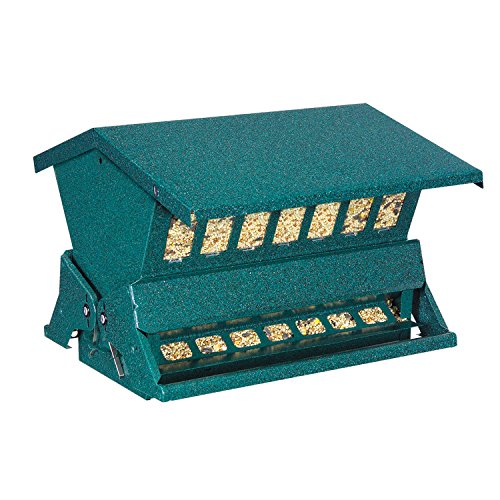 Woodlink Absolute II (7536)The big one: twelve pounds of seed, which changes refilling from a weekly job to a monthly one on most yards. | Highest capacity, double-sided | $84.00 on Amazon |
| 2 |  Brome Squirrel Buster PlusThe weight-activated shroud done properly: a squirrel's weight closes the ports, and the cardinal ring means the mechanism does not cost you the big birds. | Weight-activated, most capacity | $129.25 on Amazon |
| 3 |  Caged Dual-Purpose Suet and Seed FeederSuet is the format squirrels raid hardest, and a caged suet holder with a seed tray solves both problems with the same steel. | Suet and seed in one cage | $45.88 on Amazon |
| 4 |  Brome Squirrel Buster EvolutionThe only feeder we found built around cardinals rather than accommodating them: a double cardinal ring Brome describes as extra-wide and easy to grip, because cardinals prefer to face their food. | Cardinals specifically | $72.51 on Amazon |
| 5 |  Absolute III Squirrel-Resistant FeederThe current model in the Absolute line: a steel hopper whose perch bar closes the seed ports under a squirrel's weight, with a large reservoir and nothing else to go wrong. | A simple weight-bar hopper | $66.99 on Amazon |
| 6 |  Brome Squirrel Buster LegacyFour removable metal perches and a chew-proof build, which is the most perch a Brome feeder publishes without going to a ring. | Removable metal perches | $66.20 on Amazon |
#ad how we are funded · price as of October 24, 2026
The picks in full
Top pick Highest capacity, double-sided
Woodlink Absolute II (7536)
The big one: twelve pounds of seed, which changes refilling from a weekly job to a monthly one on most yards.
Published specifications
- Model
- 7536
- Seed capacity
- 12 lb (published)
- Type
- Hopper with weight-activated perch bar
Trade-offs
- 12 lb published capacity is the largest on this page by a wide margin
- Fewer refills means fewer trips out to a pole you would rather not disturb
- Twelve pounds of seed plus the feeder is real weight on a shepherd's hook
- Seed at the bottom of a big hopper can sit long enough to spoil in humid weather
Who it is forA busy yard, or anyone who has decided that refilling twice a week is the actual problem.
Skip it ifYou are hanging this from a thin hook. Check what your hook is rated for before you put twelve pounds of seed on it — a pole system is the honest answer at this capacity.
#ad how we are funded · price as of October 24, 2026
Where these specifications came from
No. 2 Weight-activated, most capacity
Brome Squirrel Buster Plus
The weight-activated shroud done properly: a squirrel's weight closes the ports, and the cardinal ring means the mechanism does not cost you the big birds.
Published specifications
- Seed capacity
- 5.1 lb (published)
- Feeding ports
- 6
- Mechanism
- Weight-activated shroud, adjustable
- Included
- Cardinal ring
- Pole mounting
- Pole-mountable; pole adaptor sold separately
Trade-offs
- 5.1 lb capacity means fewer refills through a hard winter
- Adjustable weight setting, so you can shut out grackles without shutting out cardinals
- The cardinal ring is the fix for the usual complaint about shroud feeders
- The pole adaptor is a separate purchase, which is easy to miss at checkout
- A weight mechanism is a mechanism: it needs the occasional clean to keep moving freely
Who it is forThe default first purchase if you would rather solve the problem at the feeder than at the pole. It also pairs well with a baffle rather than replacing one.
Skip it ifYour problem is chipmunks or small red squirrels. A weight-activated shroud is calibrated for something heavier, and a light animal can feed under the trigger point. A caged feeder is the better answer there.
#ad how we are funded · price as of October 24, 2026
Where these specifications came from
No. 3 Suet and seed in one cage
Caged Dual-Purpose Suet and Seed Feeder
Suet is the format squirrels raid hardest, and a caged suet holder with a seed tray solves both problems with the same steel.
Published specifications
- Capacity
- 2 suet cakes plus 1 lb seed (published)
- Cage
- Metal
- Tray
- Included
- Finish
- Blue (published)
- Mount
- Hanging
Trade-offs
- Two cakes plus a pound of seed covers woodpeckers and songbirds from one hanger
- The cage is also the fix for starlings on suet, which is the second complaint after squirrels
- Tray catches the seed that would otherwise feed the animals under the feeder
- A seed tray under a suet cage collects wet shell and needs emptying
- The blue finish is a strong look that will not suit every setup
Who it is forAnyone feeding suet through the cold months who has watched a squirrel carry an entire cake away.
Skip it ifYou only feed seed. You are paying for a suet cage you will not fill, and a plain caged tube does the seed job for less.
#ad how we are funded · price as of October 24, 2026
Where these specifications came from
No. 4 Cardinals specifically
Brome Squirrel Buster Evolution
The only feeder we found built around cardinals rather than accommodating them: a double cardinal ring Brome describes as extra-wide and easy to grip, because cardinals prefer to face their food.
Published specifications
- Cardinal provision
- Double Cardinal Ring (published)
- Brome's stated rationale
- Extra-wide, easy to grip, because cardinals prefer to face their food supply
- Seed capacity
- 1.9 lb (published)
- Mechanism
- Weight-activated shroud closes the ports
- Water management
- Built-in diverter: trough, spout and a drip edge above each port (published)
- Cleaning
- Tool-free; every component separates by hand (published)
- Recognition
- Wild Bird Feeding Institute Birding Product of the Year 2025 (per Birding Wire)
Trade-offs
- A double cardinal ring is the only purpose-built cardinal provision we found in a squirrel-proof feeder
- Brome publishes WHY the ring exists rather than just naming it, which is unusually specific for this category
- The water diverter is a genuinely uncommon spec: wet seed is what spoils a feeder between refills
- Tool-free disassembly means it will actually get cleaned, which weight-shroud feeders need
- Carries a named third-party award rather than a star rating
- 1.9 lb is a small reservoir — under half the Squirrel Buster Plus, so expect more refills
- It is the newest model here, so there is less of a track record behind it than the Plus or the Classic
- Still a weight mechanism: too light for chipmunks and red squirrels to trip, same as the rest of the line
Who it is forAnyone whose actual complaint is that cardinals will not use their squirrel-proof feeder. This is the model built for that exact problem.
Skip it ifYou refill reluctantly. At 1.9 lb this is the smallest reservoir on the page, and the Squirrel Buster Plus carries 5.1 lb with a cardinal ring of its own.
#ad how we are funded · price as of October 24, 2026
No. 5 A simple weight-bar hopper
Absolute III Squirrel-Resistant Feeder
The current model in the Absolute line: a steel hopper whose perch bar closes the seed ports under a squirrel's weight, with a large reservoir and nothing else to go wrong.
Published specifications
- Mechanism
- Weight-sensitive; ports close when a squirrel or large bird lands (published)
- Seed capacity
- 8 quarts (published)
- Material
- Steel (published)
- Mounting
- Hanger included (published)
Trade-offs
- Eight quarts is a large reservoir — this is the feeder for people who do not want to refill twice a week
- Steel construction throughout, so there is no plastic tube for a squirrel to chew through
- One moving part. A weight bar has very little to jam or wear out
- The successor to a long-running line rather than a new design with no history
- The listing publishes no trigger weight and no adjustment, so what closes the ports is whatever the factory set
- Closing for 'a squirrel OR a large bird' is the maker's own wording — jays and doves are excluded along with the squirrels
- No published port count
- A hopper this size is heavy when full, which matters for the hook or pole it hangs from
Who it is forSomebody who wants capacity and steel and does not need to let big birds feed.
Skip it ifYou want cardinals and jays to feed. A fixed weight bar cannot be tuned, and the adjustable trigger on the Squirrel Buster Plus is the feature you actually want.
#ad how we are funded · price as of October 24, 2026
Where these specifications came from
No. 6 Removable metal perches
Brome Squirrel Buster Legacy
Four removable metal perches and a chew-proof build, which is the most perch a Brome feeder publishes without going to a ring.
Published specifications
- Perches
- 4 metal, removable (published)
- Seed capacity
- 2.6 lb (published)
- Construction
- Chew-proof (published)
- Cleaning
- Tool-free (published)
- Cardinal ring
- Not published for this model
Trade-offs
- Removable perches are a real feature: you can take them off to discourage larger nuisance birds, or leave them on
- Metal rather than plastic perches, which is what gets chewed first on a feeder squirrels visit
- 2.6 lb sits between the Standard and the Plus, which suits most yards
- Chew-proof construction is published rather than implied
- No cardinal ring published for this model, so cardinal access is down to the standard perches
- Perches, not a ring — Brome's own product line implies that is a meaningful difference for cardinals
- Same weight-trigger limitation against chipmunks and red squirrels
Who it is forA general-purpose squirrel-proof feeder where cardinals are welcome but not the specific reason for the purchase.
Skip it ifCardinals are the whole point. Brome sells a cardinal ring on two other models and not on this one, and that is a distinction worth taking at face value.
#ad how we are funded · price as of October 24, 2026
Where these specifications came from
What we would skip
Caged feeders, for any large bird
This is the same structural problem as the cardinals page, only worse — jays and doves are larger again. Girvenith publishes a 6.25 in cage body. A cage is the right tool against chipmunks and starlings and the wrong one here, and no setting changes it.
Narrow tube feeders with short pegs
A peg perch suits a chickadee that clings. A dove or a jay wants to stand. This is a format mismatch rather than a quality problem, and it is why the hopper and tray designs rank above the tubes on this page.
Weight triggers wound to maximum
On the adjustable models the trigger is a which-birds control. Set to exclude grackles it will also exclude the jays and doves you were trying to attract. Set it as light as your actual squirrel pressure allows and let the pole do the excluding.
Nyjer, thistle or fine mixes
Large birds want black oil sunflower, striped sunflower, peanuts, cracked corn and suet — the same list Audubon gives for cardinals. A feeder full of finch seed will look ignored no matter what its mechanism is.
Capacity matters more than it does for small birds
A jay can empty a small tube in a session. Doves feed in groups. If the feeder is a 1.3 lb reservoir, large birds will drain it before the small birds get a look in, and you will be refilling daily.
The published capacities here run from 1.3 lb to 12 lb, which is close to a tenfold spread. For large birds the top of that range is not indulgence, it is what keeps the feeder in service. Woodlink's Absolute II publishes 12 lb; Brome's Squirrel Buster Plus publishes 5.1 lb.
The corollary is structural. Twelve pounds of seed plus the feeder is real load and belongs on a pole system rather than a decorative hook. Capacity you cannot safely hang is capacity you do not have.
The mess problem is a large-bird problem
Large birds are untidy feeders. They sweep seed aside looking for what they want, and a hopper with open doors sheds considerably more than a shroud tube does. That spill lands on the ground, and spilled seed under a feeder is the single most reliable way to sustain the squirrel population you are trying to exclude.
So a tray is not optional at this size. Either buy a feeder with one, like the caged suet-and-seed model here, or add one. It is the same argument made on keeping squirrels off bird feeders, just with more force: the bigger the bird, the more the ground buffet matters.
Woodpeckers are a separate case
Woodpeckers are large but they do not perch — they cling to a vertical surface. That makes them the one large bird a cage suits, because a caged suet holder gives them exactly the vertical grip they want while excluding squirrels and starlings.
If woodpeckers are the target rather than jays and doves, suet feeders is the more useful page. Suet is also the food they are actually there for.
Let the pole do the work
The recurring theme of this whole section applies with particular force here. A feeder mechanism set aggressively enough to stop squirrels on its own will exclude large birds as a side effect. A feeder on a correctly baffled pole — baffle top at four to five feet, about ten feet of clear air — does not have to be set aggressively at all.
That is the whole trick, and it costs nothing extra if you were buying a pole anyway: fix the geometry and you can run the trigger at its lightest setting, which is exactly the setting the big birds want.
Peanuts are the other way to feed jays and woodpeckers, and they raise the stakes considerably. Squirrel-proof peanut feeders covers the weight-adjustable and caged options, and which one keeps the big birds you actually want.
Woodpeckers sit oddly in this group - they are large birds that cling rather than perch, so a ledge does nothing for them. Feeders for woodpeckers covers what they actually need, including the upside-down suet format that turns starlings away.
How we picked
- We ranked on format first. A hopper gives a bird a ledge to stand on; a narrow tube gives it a peg. That structural difference decides large-bird access more than any brand does.
- We recorded published figures only — capacity, port and perch counts, ring type, tray inclusion.
- We treated cage apertures as disqualifying rather than merely limiting, because a fixed aperture is not something a buyer can adjust.
- We did not invent wingspan or body-length thresholds. No source we found publishes one, so the argument runs on feeder format and the makers' own accessory decisions.
- We have not tested any of these. How we pick sets out what that does and does not cover.
Everyone in this category says they tested twenty of these. We have not tested any, and we say so. What we did instead: read the manuals, compiled the published specifications, worked out the clearance geometry, and cited every source. The full method is published.
Questions people actually ask
- What is the best squirrel-proof feeder for large birds?
- A hopper with a weight-activated perch bar. Woodlink's Absolute II publishes a 12 lb capacity and a full-width bar, which gives jays and doves somewhere to stand rather than a peg to grip.
- Why do large birds avoid my squirrel-proof feeder?
- Usually format. A narrow tube with peg perches is built around clinging birds. A cage excludes by fixed aperture. Both are working as designed; neither suits a jay or a dove.
- Will jays use a caged feeder?
- No. Cage apertures are sized for small songbirds — Girvenith publishes a 6.25 in cage body. That is the mechanism, and it is not adjustable.
- What seed do large birds want?
- Black oil sunflower first, plus striped sunflower, peanuts, cracked corn and suet. Audubon gives that ordering for cardinals and it holds for the larger feeder birds generally. Nyjer is a finch seed.
- Do I need a tray for large birds?
- In practice yes. Large birds sweep seed aside while feeding and a hopper sheds more than a tube. Spilled seed under the feeder sustains the squirrels you are excluding, so a tray is part of the squirrel solution rather than a tidiness accessory.
- What about woodpeckers?
- They cling rather than perch, which makes them the one large bird a cage suits. A caged suet holder gives them a vertical grip while excluding squirrels and starlings. See suet feeders.
Sources
Read next
- The best squirrel-proof bird feeders for cardinals
Cages exclude by aperture and cannot be adjusted; weight triggers can. Which feeders publish a cardinal ring, and which quietly do not.
- The best squirrel-proof bird feeders
Seven feeders ranked by mechanism and published capacity, and which animal each one actually excludes.
- The best squirrel-proof suet feeders
Suet has no weight trigger to tune, so the cage is the whole mechanism. Which ones, and why.
- The best squirrel-proof bird feeder poles
Pole systems ranked on baffle height, anchoring and the ten-foot setback one maker actually publishes.
- Squirrel-Proof Feeders
Weight-activated, caged and spinning feeders, sorted by which animal each mechanism actually keeps out.