Garden / Voles
Vole control in the garden: what actually works
Of all the animals on this site, voles are the one where the extension guidance is bluntest about what does not work. That makes the shopping list short.
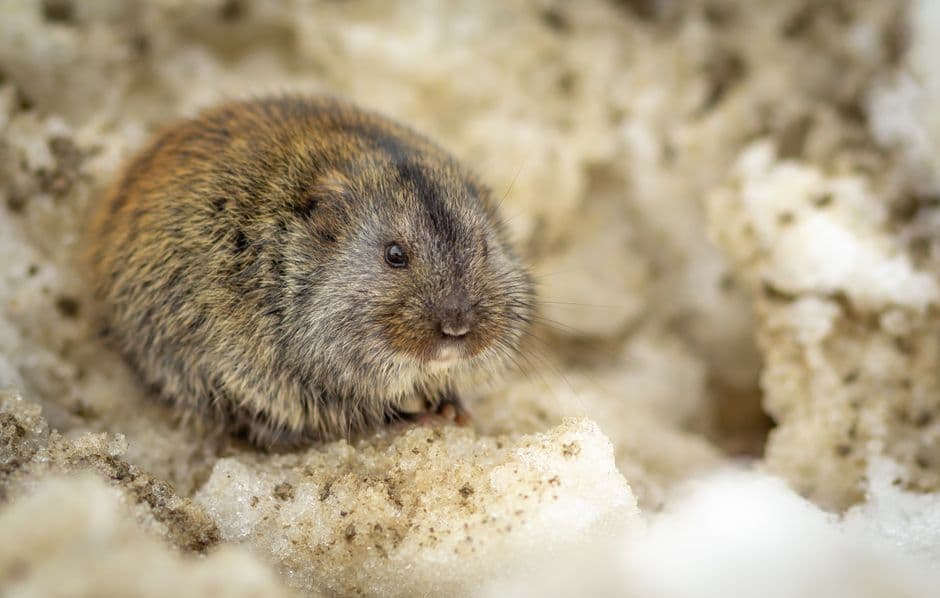
Clear the cover and fit quarter-inch mesh. Penn State specifies wire cylinders of 1/4 in hardware cloth, 18 to 24 in high, buried 4 to 6 in, plus vegetation-free zones extending at least 2 ft from trunks. Where damage is active, mouse-sized snap traps in the runways are the method extension services recommend. Repellents are explicitly not the fix: UC IPM calls their efficacy questionable.
Voles are the quiet one. There is no raided feeder, no chewed pole, no obvious culprit on a branch — just a shrub that fails in spring, or a young tree that comes away in your hand because the bark is gone in a ring at soil level.
Baffleworks is funded by affiliate commission. If you buy through a link on this page we may earn a commission at no extra cost to you, and it never decides a ranking. Full disclosure · how we pick.
Quick picks
Ranked, with the trade-off named. Tap a row for the full write-up; the price button goes straight to Amazon.
| # | Product | Best for | Price |
|---|---|---|---|
| 1 |  Hardware Cloth, 1/4 in mesh, 24 in x 50 ftA 24 in roll of quarter-inch mesh, which is the exact material and the exact height range the extension guidance specifies for vole guards. Fifty feet makes a lot of cylinders. | Trunk cylinders at the published height | $34.99 on Amazon |
| 2 |  Amagabeli Hardware Cloth, 1/4 in mesh, 48 in x 50 ft, 23 gaugeQuarter-inch welded mesh — the size extension guidance names for vole cylinders and for closing entry points. Nothing rodent-sized gets through a 1/4 in square. | The tightest mesh, for rodents and structure work | $59.99 on Amazon |
| 3 | 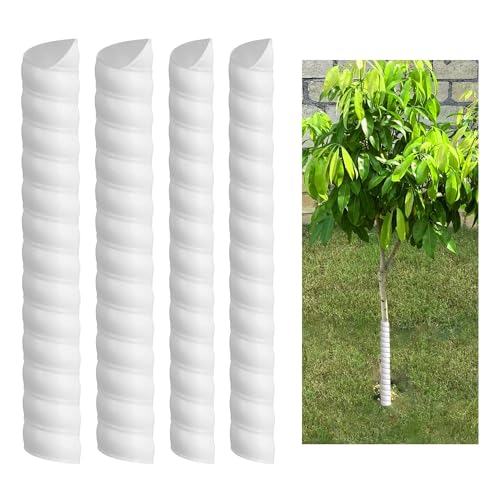 Watayo Spiral Tree Guard, 15.7 in, 4 packThe short spiral: 15.7 in of trunk covered, in two widths, four to a pack — and they connect end to end when one length is not enough. | Small saplings and rodent gnaw at the base | $14.99 on Amazon |
| 4 |  Victor Metal Pedal Mouse Traps, 12 packMouse-sized wooden snap traps, twelve of them. Every extension source on voles reaches for the same tool, and the reason to buy a dozen is that trapping voles is a numbers exercise. | The control method the guidance actually recommends | $12.39 on Amazon |
| 5 | 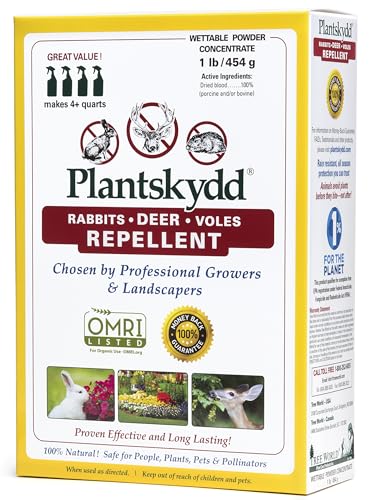 Plantskydd Wettable Powder, 1 lbOne pound makes one gallon: the small box, for finding out whether a repellent program is something you will actually keep up. | Trying it without committing | $39.95 on Amazon |
#ad how we are funded · price as of September 27, 2026
The picks in full
Top pick Trunk cylinders at the published height
Hardware Cloth, 1/4 in mesh, 24 in x 50 ft
A 24 in roll of quarter-inch mesh, which is the exact material and the exact height range the extension guidance specifies for vole guards. Fifty feet makes a lot of cylinders.
Published specifications
- Mesh
- 1/4 in (published)
- Height
- 24 in (published)
- Length
- 50 ft (published)
- Finish
- Hot-dip galvanized after welding (published)
Trade-offs
- 24 in is the top of the 18-to-24 in cylinder range Penn State specifies, so one roll covers the spec without trimming
- Galvanized after welding rather than before, which is the version that survives being buried in wet soil for years
- A 50 ft roll wraps a lot of trunks — at roughly 12 in of circumference per small tree plus overlap, this is dozens of guards
- Quarter-inch mesh is stiff and the cut edges are genuinely sharp; gloves are not optional
- 24 in is the wrong width if you also want to line a raised bed base — that job wants the wider roll
- No published gauge, so you are buying on mesh size and coating rather than wire thickness
Who it is forAnyone with young trees, shrubs or fruit trees where voles are girdling bark at ground level.
Skip it ifYou need one or two guards only. A 50 ft roll is a lot of leftover wire for a single tree.
#ad how we are funded · price as of September 27, 2026
Where these specifications came from
No. 2 The tightest mesh, for rodents and structure work
Amagabeli Hardware Cloth, 1/4 in mesh, 48 in x 50 ft, 23 gauge
Quarter-inch welded mesh — the size extension guidance names for vole cylinders and for closing entry points. Nothing rodent-sized gets through a 1/4 in square.
Published specifications
- Mesh
- 1/4 in welded square (published)
- Gauge
- 23 (published)
- Size
- 48 in x 50 ft (published)
- Finish
- Galvanized (published)
Trade-offs
- 1/4 in is the mesh UC IPM names for closing squirrel entry points, and NC State names for vole cylinders — it is the default for rodent work
- Welded rather than woven, so cut edges hold their shape instead of unravelling
- 48 in width covers a raised bed base or a trunk cylinder without seaming
- 23 gauge is thinner wire than the 19 gauge half-inch cloth; for a chew-resistant barrier the heavier gauge is better
- Stiff and sharp to work with — gloves are not optional
Who it is forSealing gaps, lining bed bottoms, building vole cylinders, and anywhere mice are part of the problem.
Skip it ifYou just want a rabbit fence. A quarter-inch mesh over a big area costs many times what poultry netting does for no extra benefit.
#ad how we are funded · price as of September 27, 2026
Where these specifications came from
No. 3 Small saplings and rodent gnaw at the base
Watayo Spiral Tree Guard, 15.7 in, 4 pack
The short spiral: 15.7 in of trunk covered, in two widths, four to a pack — and they connect end to end when one length is not enough.
Published specifications
- Length
- 15.7 in (published)
- Widths
- 1.6 in and 2 in (published, two sizes in the pack)
- Quantity
- 4 (published)
- Material
- Plastic (published)
- Fitting
- Spiral — wraps the trunk from the bottom up; lengths connect (published)
Trade-offs
- Two widths in one pack, so a pack covers saplings at different stages
- Spiral guards expand as the trunk does, which a rigid tube does not
- Connectable end to end, which is the honest answer to the short length
- Cheap enough to protect a whole row of young stock
- 15.7 in is short — it covers rodent gnaw and rabbit browse at the base and does nothing about deer buck rub higher up
- Publishes no wall thickness or UV rating, so service life is unknown
- Plastic spirals trap moisture against bark if left on year-round in a wet climate
- Four guards will not go far on an orchard
Who it is forYoung saplings with a rabbit or vole problem at ground level, or new stock needing trimmer protection.
Skip it ifThe damage is buck rub. That happens well above 15.7 in and needs the 36 in spiral or a taller guard.
#ad how we are funded · price as of September 27, 2026
Where these specifications came from
No. 4 The control method the guidance actually recommends
Victor Metal Pedal Mouse Traps, 12 pack
Mouse-sized wooden snap traps, twelve of them. Every extension source on voles reaches for the same tool, and the reason to buy a dozen is that trapping voles is a numbers exercise.
Published specifications
- Type
- Mouse-sized snap trap, metal pedal (published)
- Quantity
- 12 (published)
- Reusable
- Yes (published)
- Bait
- Apple slices, or peanut butter and oatmeal
Trade-offs
- Mouse-sized is the correct size — vole guidance specifies mouse traps, not rat traps
- Twelve traps lets you work several runways at once, which is how the published method works
- Wooden snap traps are cheap, reusable and need no batteries or bait stations
- Trapping is lethal and hands-on, and it needs checking twice a day; if that is not for you, stay with the barrier and the habitat work
- Set traps are a hazard to fingers, pets and birds — site them under a board or shingle, in the runway, not in the open
- Traps reduce a local population; they do not stop the next one arriving, which is what the barrier is for
Who it is forAn active infestation with visible surface runways, worked in fall or late winter when the guidance says voles are easiest to trap.
Skip it ifYou have not yet cleared the mulch and vegetation back from your trunks. Habitat first, then traps.
#ad how we are funded · price as of September 27, 2026
Where these specifications came from
No. 5 Trying it without committing
Plantskydd Wettable Powder, 1 lb
One pound makes one gallon: the small box, for finding out whether a repellent program is something you will actually keep up.
Published specifications
- Size
- 1 lb box (published)
- Yield
- Makes 1 gal of liquid (published)
- Targets
- Deer, rabbits, elk, moose, hares, voles, squirrels, chipmunks
- Part number
- PSP-R1
Trade-offs
- Low commitment, and the yield is published so you know what a gallon costs
- Same species coverage as the larger sizes
- One gallon does not go far on a real garden
- Worst cost per treated area of the three Plantskydd formats here
Who it is forA first trial on a few shrubs, or a small courtyard garden where a gallon is genuinely enough.
Skip it ifYou already know you will be spraying all season. Go straight to the 2.2 lb box.
#ad how we are funded · price as of September 27, 2026
Where these specifications came from
What we would skip
Half-inch hardware cloth, for a vole cylinder
It works for rabbits and it is not the published spec here. Penn State, UC IPM and NC State all name quarter-inch mesh for vole exclusion. Buying half-inch means buying a different specification and hoping, on the one animal small enough for that to matter.
A repellent as your only measure
Penn State is explicit: repellents containing thiram or capsaicin are registered for vole control, but little data is available on their effectiveness, and so they "should not be used as the sole method of vole control." UC IPM goes further and calls the efficacy questionable and the use often impractical.
First, make sure it is voles
UC IPM's description is short: "Voles have a compact, heavy body, short legs, a short-furred tail, small eyes, and partially hidden ears." You are more likely to see the runways than the animal — narrow, worn paths through grass and under mulch.
The damage is the tell. "Voles cause damage by feeding on a wide range of garden plants" and "will gnaw the bark of fruit trees", and the serious version has a name: "If voles gnaw completely around the trunk or roots, it will disrupt the tree's flow of nutrients and water, a process known as girdling."
And the diagnostic that separates voles from the animal people usually blame: "Vole girdling damage generally occurs aboveground, while similar pocket gopher damage generally occurs below ground." Chewed bark at and just above soil level is vole work. Mounded soil and severed roots underground is not.
Habitat is the free half of the job
This is the part that costs nothing and the part most people skip. UC IPM: "Weeds, heavy mulch, and dense vegetative cover encourage voles by providing food and protection." A vole crossing open ground is exposed to every hawk and cat in the neighborhood, so cover is not a comfort to them — it is the whole reason they are there.
Penn State puts numbers on it. "Establishing vegetation-free zones that extend at least 2 feet from tree trunks under tree canopies will discourage voles from living near the bases of trees." Where bare soil is not wanted, the alternative is "a layer of crushed stone or gravel 3 to 4 inches deep around the trunk."
On mulch specifically, the instruction is direct: "If voles are damaging trees, clear all mulch 2 feet or more from the bases of trees", and University of Maryland Extension's version is "Do not pile mulch up against tree trunks or underneath shrubs."
UC IPM adds the perimeter version of the same idea: "Reduce the area from which voles can invade gardens or landscaped areas by regularly mowing, spraying with herbicides, grazing, or tilling grassy areas." A mown strip between a meadow and a planting bed is a real barrier in a way a bottle of repellent is not.
The barrier spec, and where the sources disagree
Every source names the same mesh. Penn State: "Wire guards made of 1/4-inch hardware cloth will help prevent meadow vole damage to small trees and shrubs." UC IPM: "Wire fences or aluminum flashing at least 12 inches above the ground with a mesh size of 1/4 inch or smaller will help to exclude voles." NC State's wildlife chapter specifies hardware cloth cylinders of 1/4 in or less.
Height and burial depth are where they part company, and the spread is wide enough to be worth showing rather than averaging.
| Source | Mesh | Height | Burial depth |
|---|---|---|---|
| Penn State Extension | 1/4 in | 18 to 24 in | 4 to 6 in |
| UC IPM | 1/4 in or smaller | At least 12 in above ground | 6 to 10 in |
| NC State Extension | 1/4 in or less | Not specified for voles | 6 in |
| UMD Extension | Hardware cloth | 18 in cylinders | 2 to 3 in below the soil line |
Four sources, four burial depths. Nothing here is averaged. If you are cutting one roll for one job, the deeper figures cost you nothing extra and the shallowest one is the only figure a tunneling animal can beat.
Practically: cut the mesh to a cylinder wider than the trunk so it does not bind as the tree grows, set it into the ground rather than resting it on the surface, and leave it loose enough that bark is not rubbing wire. Check the fit every season — a guard that has become a tourniquet is worse than no guard.
If you are buying mesh for this and for other jobs, hardware cloth vs chicken wire sets out what each mesh size actually stops. Voles are the animal that makes the quarter-inch distinction matter.
Why repellents are not the answer here
This site sells repellents on several pages and recommends them where the evidence supports it. Voles are the case where it does not, and both authorities say so plainly.
Penn State: "Repellents containing thiram (a fungicide) or capsaicin (the ingredient that makes chili peppers hot) are registered for vole control." Then: "Little data is available on the effectiveness of repellents to deter vole damage. Therefore, repellents should not be used as the sole method of vole control."
UC IPM is blunter: "The efficacy of vole repellents is questionable, and their use often is not practical."
So there is one repellent in the picks above, and it is there as an adjunct on a specific job — treating the plants you cannot cage, alongside the barrier and the clearing — rather than as a solution. Its manufacturer lists voles on the label, which is a verifiable claim about the label and not a claim about your garden. The best deer repellents covers how we read repellent labels generally.
Trapping, because the guidance recommends it
For an active problem, extension guidance goes straight to snap traps, and it specifies mouse-sized rather than rat-sized. UC IPM: "Use a sufficient number of traps to control the population", including "standard mouse snap traps", placed "at right angles to the runways with the trigger end in the runway."
Penn State adds the timing and the routine: "Fall and late winter are periods when voles are easiest to trap. Set mouse-sized snap traps at burrow openings or in runways", baited with "a peanut butter-oatmeal mixture or apple slices", and "Check the traps twice daily, in the morning and evening, and reset the traps until no more voles are captured." UMD's version is "snap-type mouse traps baited with apples placed in the surface runways or burrows."
- Find the runways first. Traps set anywhere else catch nothing.
- Set across the runway, not along it, with the trigger where the animal will cross it.
- Cover each trap with a board or shingle. It keeps the set dark, which voles prefer, and it keeps the trap away from birds, pets and fingers.
- Check twice a day and keep resetting. The published method is a short intensive campaign, not a trap left out all season.
- This is lethal control. If that is not something you want to do, the barrier and the clearing are the whole rest of the page and they work on their own.
Expect the problem to come and go
One line from UC IPM explains a lot of garden folklore: "In some areas their numbers are cyclical, reaching peak numbers every 3 to 6 years before dropping back to low levels."
That is why someone swears a particular remedy worked and someone else swears the same remedy did nothing. A bad vole year ends whether or not you intervene. The reason to fit the mesh anyway is that a girdled tree does not come back, and the guard is still there in the next peak.
Where voles fit with everything else
The vole job overlaps two others on this site. Quarter-inch mesh at ground level is the same material and nearly the same install as a rabbit guard, so if you are doing one, do both — tree protection covers the trunk-guard side for larger animals, where the failure mode is antlers rather than teeth.
And if the animal turning up in your beds is stripier and more visible, it is probably not a vole at all: keeping chipmunks out of the garden covers the one people most often mistake for one.
How we picked
- We started from the published exclusion spec for each animal, taken from cooperative extension services rather than from product listings.
- We preferred products that publish dimensions, because a barrier you cannot check against your bed is a barrier you may have to return.
- We separated barriers by what they exclude. A 30 in mesh cage and an 8 ft deer fence are not competing products, and treating them as though they were is how people conclude that exclusion does not work.
- We named at least one product to skip on every page, with the reason.
- We have not installed any of these. How we pick sets out what that does and does not cover.
Everyone in this category says they tested twenty of these. We have not tested any, and we say so. What we did instead: read the manuals, compiled the published specifications, worked out the clearance geometry, and cited every source. The full method is published.
Questions people actually ask
- What is the best way to get rid of voles?
- Remove their cover and exclude them. Penn State specifies vegetation-free zones extending at least 2 ft from trunks and 1/4 in hardware cloth cylinders 18 to 24 in high buried 4 to 6 in. Where damage is active, mouse-sized snap traps set in the runways are the recommended control.
- Do vole repellents work?
- The evidence does not support relying on them. UC IPM says the efficacy of vole repellents is questionable and their use often not practical, and Penn State says little data is available and that they should not be used as the sole method of vole control.
- What size hardware cloth do I need for voles?
- Quarter-inch. Penn State, UC IPM and NC State all specify 1/4 in mesh or smaller. This is the animal where the difference between 1/4 in and 1/2 in mesh actually matters.
- How deep should a vole guard be buried?
- The published figures disagree: Penn State says 4 to 6 in, UC IPM says 6 to 10 in, NC State says 6 in, and UMD says 2 to 3 in below the soil line. Since a vole tunnels, the deeper end of that range is the safer choice and costs nothing extra.
- How can I tell voles from moles?
- By what gets eaten. Voles are plant-eating rodents that girdle bark and take roots and bulbs; moles are insectivores after grubs and worms and do not eat plants. UC IPM also separates voles from pocket gophers: vole girdling generally occurs aboveground, gopher damage below.
- When is the best time to trap voles?
- Fall and late winter, per Penn State, which are the periods it names as easiest. Bait with apple slices or a peanut butter and oatmeal mixture, set in runways or at burrow openings, and check twice daily.
- Why do voles seem to disappear for a few years?
- Because they do. UC IPM notes populations in some areas are cyclical, peaking every 3 to 6 years before dropping back. A quiet stretch is not proof that a remedy worked.
- Will mulch attract voles?
- Heavy mulch against trunks does. UC IPM lists heavy mulch among the things that encourage voles, Penn State says to clear all mulch 2 ft or more from tree bases where voles are causing damage, and UMD says not to pile mulch against trunks or under shrubs.
Sources
Read next
- Hardware cloth vs chicken wire
Chicken wire stops rabbits; hardware cloth stops rodents. The published extension mesh specs by animal, plus gauge, and which roll to buy for the five common garden jobs.
- Protecting trees from deer
Buck rub and browse are different problems with no shared fix. Trunk guards by height, netting held clear, and where sprays actually help.
- How to keep chipmunks out of the garden
Too light for a weight mechanism, small enough to pass 2 in mesh. Why the answer is a finer aperture.
- Rabbit fencing
Two feet high, buried four to eight inches, one inch mesh. The one garden problem with a published answer.
- Garden Protection
Cages, cloches, netting and rabbit fencing, sized to the animal doing the damage rather than to the bed.