Garden / Tomatoes
How to keep squirrels from eating tomatoes
The damage is one bite per fruit, taken and dropped. That pattern tells you the animal is not hungry in the way a repellent assumes, and it points straight at the fix.
Enclose the plants in a cage of hardware cloth or welded wire at 1 in mesh or smaller, fastened at the base, or net the bed on a frame with every edge secured. Pick fruit at first blush and finish ripening it indoors. Repellents are a perimeter measure at best: a squirrel that takes one bite and drops the tomato is not tasting it long enough to be repelled.
Read the damage first
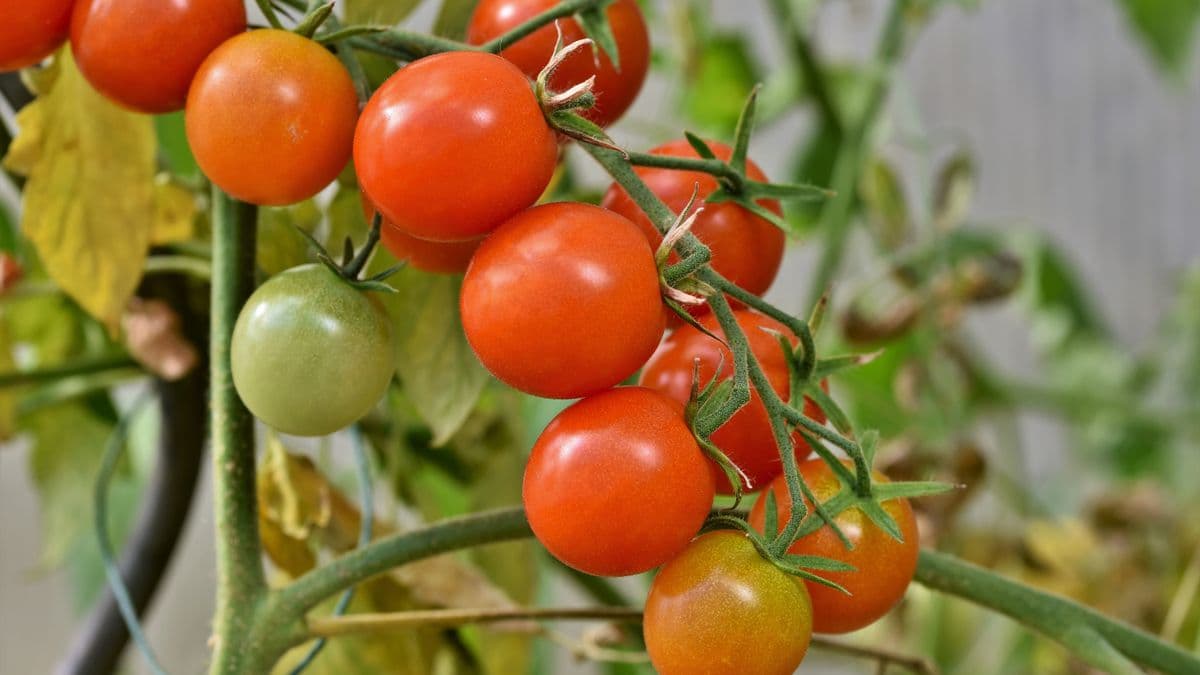
Squirrel damage on tomatoes has a signature, and Walter Reeves — the Georgia gardening columnist — describes it exactly: "They take one bite and drop them on the ground, ruining a perfectly good tomato!" Not a fruit eaten to the core. One bite, then the next fruit, then the next.
Why they do that is argued about at length online, usually with a confident explanation involving thirst. We could not find a published source that establishes the motive, so we are not going to assert one. What matters for the buyer is not why but what: the animal is sampling, not feeding, and that has a direct consequence for which products can work.
A repellent that works by taste needs the animal to taste enough of it to be repelled and to remember. One bite of a tomato is not much exposure, and the next bite is on a different fruit. This is the same logic that runs through squirrel damage around the yard: when the animal is not really eating the thing, a bad-taste product has very little to act on.
What stops it: a barrier the animal cannot get through
Ask Extension, answering a strawberry question that applies equally here, draws the line plainly: fine mesh or bird netting for birds, but for squirrels "a sturdier wire mesh or welded wire fencing may be necessary." The University of Nebraska Extension gives the number behind that: squirrels squeeze through holes 1.5 inches in diameter and will enlarge smaller holes by gnawing. A soft net is a hole waiting to be enlarged.
So the specification for a tomato barrier is the one this site already publishes for rabbit fencing: galvanized wire at 1 in mesh or smaller, with the bottom edge secured so nothing pushes under. Half-inch hardware cloth is the safe choice because it also excludes the chipmunk that shows up once the squirrel is dealt with.
| Plant type | Mature height | Barrier that fits | Notes |
|---|---|---|---|
| Patio or determinate | Typically under 3 ft | Pop-up mesh cage, 40 x 40 x 30 in | Fast, folds flat, stakes included. Mesh, so a determined squirrel can still chew — best where pressure is moderate |
| Indeterminate in a bed | 5 to 6 ft and climbing | Hoops and netting over the bed, edges weighted | The frame keeps the net off the fruit and makes it safe for birds. Fabric mesh is not chew-proof |
| Indeterminate, heavy pressure | 5 to 6 ft | Hardware cloth on a frame around the bed | The only option here that is actually squirrel-rated. Build it once; it is the barrier that does not decay |
| Whole small garden | Any | Walk-in enclosure, 1 in mesh or smaller | Most work and the only thing that also handles the chipmunk, the rabbit and the bird at once |
Whichever you build, fasten the bottom. A squirrel does not go through a barrier if it can go under one, and 'under' is where every draped net fails.
Baffleworks is funded by affiliate commission. If you buy through a link on this page we may earn a commission at no extra cost to you, and it never decides a ranking. Full disclosure · how we pick.
Quick picks
Ranked, with the trade-off named. Tap a row for the full write-up; the price button goes straight to Amazon.
| # | Product | Best for | Price |
|---|---|---|---|
| 1 |  VEVOR Hardware Cloth, 1/2 in mesh, 36 in x 50 ft, 19 gaugeRecommended by specification rather than by brand: 1/2 in mesh, 36 in tall, galvanized. This listing is one that meets it — any roll matching the same three numbers does the same job. | A permanent rabbit barrier | $41.00 on Amazon |
| 2 | ANC POP Pop-Up Mesh Plant Cover, 40 x 40 x 30 inThe published 40 x 40 x 30 in footprint is the useful thing here: you can check it against your bed before you buy, which most cage listings do not let you do. | One raised bed, instantly | Check price on Amazon |
| 3 | 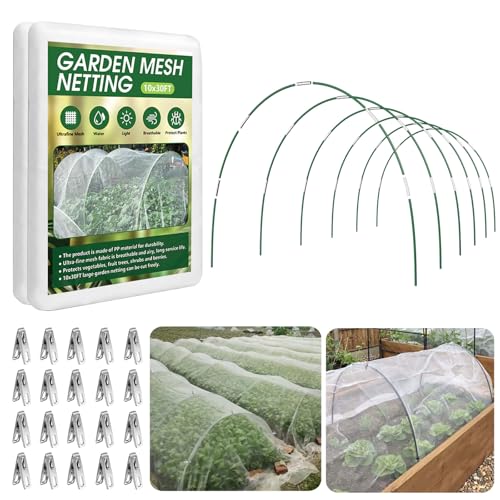 Garden Netting Kit with Fiberglass Hoops, 10 x 30 ft mesh, 6 hoop setsSix sets of 8 ft fiberglass hoops and a 10 x 30 ft run of fine mesh. Enough to hoop several beds, and the hoops are what keep the mesh off the crop. | Hooping several beds from one kit | $32.99 on Amazon |
| 4 |  Tenax Deer Netting, 7 ft x 100 ftNetting rather than fence: lighter, easier to drape over a shrub or a bed, and not pretending to be a perimeter barrier. | Draping and small enclosures | $65.94 on Amazon |
| 5 |  Pop-Up Garden Net Cloche TunnelA small tunnel with published dimensions, sized for the crops that get raided worst: strawberries and low soft fruit. | Strawberries and low crops | Check price on Amazon |
| 6 |  Bobbex-R Rabbit, Squirrel and Chipmunk Repellent, 32 ozFormulated for the small raiders rather than for deer, which matters because the animal eating your bulbs is usually not the animal eating your hostas. | Rabbits and chipmunks specifically | $27.96 on Amazon |
#ad how we are funded · price as of September 12, 2026
The picks in full
Top pick A permanent rabbit barrier
VEVOR Hardware Cloth, 1/2 in mesh, 36 in x 50 ft, 19 gauge
Recommended by specification rather than by brand: 1/2 in mesh, 36 in tall, galvanized. This listing is one that meets it — any roll matching the same three numbers does the same job.
Published specifications
- Mesh
- 1/2 in (published); 1 in or smaller is the spec, 1/2 in excludes young rabbits
- Roll
- 36 in x 50 ft (published)
- Gauge
- 19 (published)
- Material
- Hot-dipped galvanized wire (published)
- Height above ground
- At least 2 ft (Colorado State Extension)
- Buried depth
- 4 to 8 in (Colorado State Extension)
Trade-offs
- Extension services put chicken wire, hardware cloth or flexible netting at 2 ft high and buried 4 to 8 in as fairly effective against rabbits
- A permanent fix rather than a reapplication schedule
- Half-inch mesh also excludes young rabbits, which 2 in poultry netting does not
- Hot-dipped galvanized after welding, which is the coating that survives being buried
- Burying the bottom edge is the whole job, and it is real digging
- Galvanized wire is visible in a way black deer netting is not
- 36 in tall means you are burying roughly a third of what you paid for
- Nothing about this brand makes it better than any other roll at the same spec — do not pay a premium for the name
Who it is forA vegetable plot or a border with a persistent rabbit problem, where you would rather dig once than spray for years.
Skip it ifDeer are the actual problem. Two feet of wire is a step-over for a deer; the height that matters there is 8 ft and up. See deer fencing.
#ad how we are funded · price as of September 12, 2026
Where these specifications came from
No. 2 One raised bed, instantly
ANC POP Pop-Up Mesh Plant Cover, 40 x 40 x 30 in
The published 40 x 40 x 30 in footprint is the useful thing here: you can check it against your bed before you buy, which most cage listings do not let you do.
Published specifications
- Dimensions
- 40 x 40 x 30 in (published)
- Stakes
- 8 ground stakes included
- Material
- Mesh
- Assembly
- Pop-up, folds flat for storage
Trade-offs
- Published dimensions, so bed fit is a measurement rather than a gamble
- Eight stakes is enough to actually pin the skirt, which is where these usually fail
- Folds flat, so it does not become a winter storage problem
- 30 in of height caps what you can grow under it
- A pop-up frame is not a structure; it will not survive being leaned on
Who it is forA single raised bed of seedlings, greens or strawberries that squirrels, chipmunks or birds are working through.
Skip it ifDeer are your problem. A 30 in mesh box is a barrier a deer steps over, and fencing or repellent is the honest answer.
#ad how we are funded · price as of September 12, 2026
Where these specifications came from
No. 3 Hooping several beds from one kit
Garden Netting Kit with Fiberglass Hoops, 10 x 30 ft mesh, 6 hoop sets
Six sets of 8 ft fiberglass hoops and a 10 x 30 ft run of fine mesh. Enough to hoop several beds, and the hoops are what keep the mesh off the crop.
Published specifications
- Mesh
- 10 x 30 ft, ultra fine (published)
- Hoops
- 6 sets, 8 ft fiberglass (published)
- Type
- Row cover / insect netting (published)
- Chew resistance
- Not published
Trade-offs
- Hoops are the part people forget, and this kit includes them
- 30 ft of mesh covers more than one bed
- Fiberglass hoops flex into a 4 ft bed without tools
- Fine mesh, so it earns its keep against insects as well as birds
- Fabric mesh — the same limitation as every fabric cover on this page against a chewing animal
- Edges still have to be weighted or buried, and the kit does not include anything for that
- 8 ft hoops on a 4 ft bed stand tall; on a 2 ft bed they stand very tall
- Fine mesh over hoops catches wind like a sail
Who it is forTwo or three beds with a bird or insect problem, and a gardener who will actually weight the edges.
Skip it ifOne bed. The fitted 4 x 8 net is faster and closes better. And if the animal is a squirrel, neither is the answer.
#ad how we are funded · price as of September 12, 2026
Where these specifications came from
No. 4 Draping and small enclosures
Tenax Deer Netting, 7 ft x 100 ft
Netting rather than fence: lighter, easier to drape over a shrub or a bed, and not pretending to be a perimeter barrier.
Published specifications
- Height
- 7 ft (published)
- Length
- 100 ft
- Material
- Black polypropylene
- Structure
- Quadrangular mesh (published)
Trade-offs
- Light enough to throw over a shrub or a fruit cage without a post system
- Cheap enough per foot to protect a lot of individual plants
- Not a perimeter fence, and treating it as one is how people conclude that deer fencing does not work
- Loose netting can entangle wildlife if it is left slack and unpegged
Who it is forIndividual shrubs, small beds and winter protection on ornamentals, rather than a garden boundary.
Skip it ifYou want a perimeter. Buy the fence, set posts, and tension it — the height guide explains why the two are not interchangeable.
#ad how we are funded · price as of September 12, 2026
Where these specifications came from
No. 5 Strawberries and low crops
Pop-Up Garden Net Cloche Tunnel
A small tunnel with published dimensions, sized for the crops that get raided worst: strawberries and low soft fruit.
Published specifications
- Dimensions
- 39.4 x 15.75 x 15.75 in (published)
- Stakes
- 4
- Type
- Pop-up net cloche tunnel
- Intended use
- Fruit, vegetables, strawberries, flowers, herbs
Trade-offs
- Publishes its dimensions, so it can be planned into a bed layout
- Tunnel shape suits a strawberry row better than a cube does
- Small enough to move as the crop moves through the season
- 15.75 in of height is genuinely low; taller plants will press on the mesh
- Four stakes over a 39 in span is not many if it is windy
Who it is forStrawberries, low herbs, or a short row of seedlings that birds and chipmunks have found.
Skip it ifYour crop grows taller than about a foot. It will be pushing on the roof before it fruits.
#ad how we are funded · price as of September 12, 2026
Where these specifications came from
No. 6 Rabbits and chipmunks specifically
Bobbex-R Rabbit, Squirrel and Chipmunk Repellent, 32 oz
Formulated for the small raiders rather than for deer, which matters because the animal eating your bulbs is usually not the animal eating your hostas.
Published specifications
- Size
- 32 oz concentrate (published)
- Targets
- Rabbit, squirrel, chipmunk
- Form
- Dilute and spray
- Part number
- B550120
Trade-offs
- Targets the species that deer repellents are not formulated for
- Concentrate, so a season of reapplication is affordable
- Same reapplication burden as every other repellent
- It will not fix a rabbit problem that a 2 ft buried fence would fix permanently
Who it is forBulbs, seedlings and container plants that rabbits, chipmunks or squirrels are working through, where a cage would be impractical.
Skip it ifThe damage is at ground level along a boundary. Colorado State Extension is specific: two feet of wire buried 4 to 8 inches is fairly effective against rabbits, and that is a permanent fix a spray is not. See rabbit fencing.
#ad how we are funded · price as of September 12, 2026
The free method that beats all of them
Reeves' second recommendation is the one we would put first: pick the tomatoes when they begin ripening. Fruit taken at first blush — the pink stage — finishes ripening indoors, and he notes it will do so anywhere no warmer than 85 degrees. A fully red tomato on the vine is a target; a pink one on the counter is a tomato.
This costs nothing, it works on the first day, and it works against the bird and the chipmunk as well. It is not a substitute for a barrier on a bed that gets hit hard, but it is the reason a moderate squirrel problem does not always need a purchase.
Where we disagree with a source we cite
Reeves' first recommendation is a cage trap, baited with peanut butter and sunflower seed, followed by relocation two miles away. He is not alone; it is the most common advice in the category. We recommend against it, and we would rather say so than quietly leave it out.
- Regulation varies by state. Trapping and relocating wildlife is restricted or prohibited in many jurisdictions, and it is your responsibility to know which.
- Relocation frequently kills the animal. A squirrel dropped into unfamiliar territory with established residents does not have good odds.
- The territory refills. Removing one squirrel from a yard with a food supply creates a vacancy, and vacancies in squirrel territory are filled within the season.
A barrier solves the tomato problem for every squirrel, this year and next. A trap solves it for one squirrel, for a few weeks. Squirrel proofing 101 covers the wider reasoning.
About repellents, if you use one
If you want a repellent as a perimeter measure, use one on the foliage and the surroundings, not on the fruit, and use one whose label names squirrels. Bobbex-R publishes rabbit, squirrel and chipmunk on its label; the deer product does not name squirrels. Put it on a calendar and reapply after rain and new growth. And do not expect it to carry the job — the barrier carries the job.
One more thing that is not a product: if there is a bird feeder within sight of the tomatoes, the spilled seed under it is what is sustaining the squirrel population that visits the tomatoes. A seed tray and a correctly placed baffle reduce pressure on the whole garden.
Questions people actually ask
- Why do squirrels take one bite out of tomatoes?
- The pattern — one bite, dropped, on to the next fruit — is well documented. The motive is argued about online, but we could not find a published source that establishes it, so we do not assert one. What matters is that the animal is sampling, not feeding, which is why taste repellents have little to act on.
- What mesh size keeps squirrels out of tomatoes?
- One inch or smaller in galvanized wire, with the bottom edge fastened. The University of Nebraska Extension states squirrels squeeze through 1.5 in holes and enlarge smaller ones by gnawing, and Ask Extension recommends sturdier wire mesh or welded wire for squirrels rather than bird netting.
- Does bird netting keep squirrels off tomatoes?
- Not reliably. Squirrels push under unfastened edges and chew fabric mesh. Netting works only on a frame with every edge secured, and even then it is a bird measure that slows a squirrel rather than a squirrel barrier.
- Can I spray repellent on tomatoes?
- We would not spray the fruit you are going to eat. Use a repellent whose label names squirrels on the foliage and the perimeter as a secondary measure. The barrier and early picking do the real work.
- Should I pick tomatoes early to stop squirrels?
- Yes. Pick at first blush and ripen indoors; Walter Reeves notes pink tomatoes finish ripening anywhere no warmer than 85 degrees. It is free, works immediately and also defeats birds and chipmunks.
- Should I trap the squirrel?
- We recommend against it. Regulation varies by state, relocation often kills the animal, and the territory is reoccupied within the season. A barrier protects the tomatoes from every squirrel; a trap deals with one.
Sources
Read next
- The best raised bed covers to keep squirrels out
Fabric stops birds and insects; only wire stops a squirrel that digs. Which cover for which animal, sized to a 4 x 8 bed.
- The best plant cages and cloches
Pop-up cages and cloches ranked by published dimensions and how well the skirt actually pins down.
- Rabbit fencing
Two feet high, buried four to eight inches, one inch mesh. The one garden problem with a published answer.
- Garden Protection
Cages, cloches, netting and rabbit fencing, sized to the animal doing the damage rather than to the bed.