Garden / Roundup
The best raised bed covers to keep squirrels out
Most raised bed covers on sale are fabric, and fabric is a bird-and-insect product. Whether it keeps squirrels out depends entirely on whether the squirrel wants in. Here is how to buy for the animal you actually have.
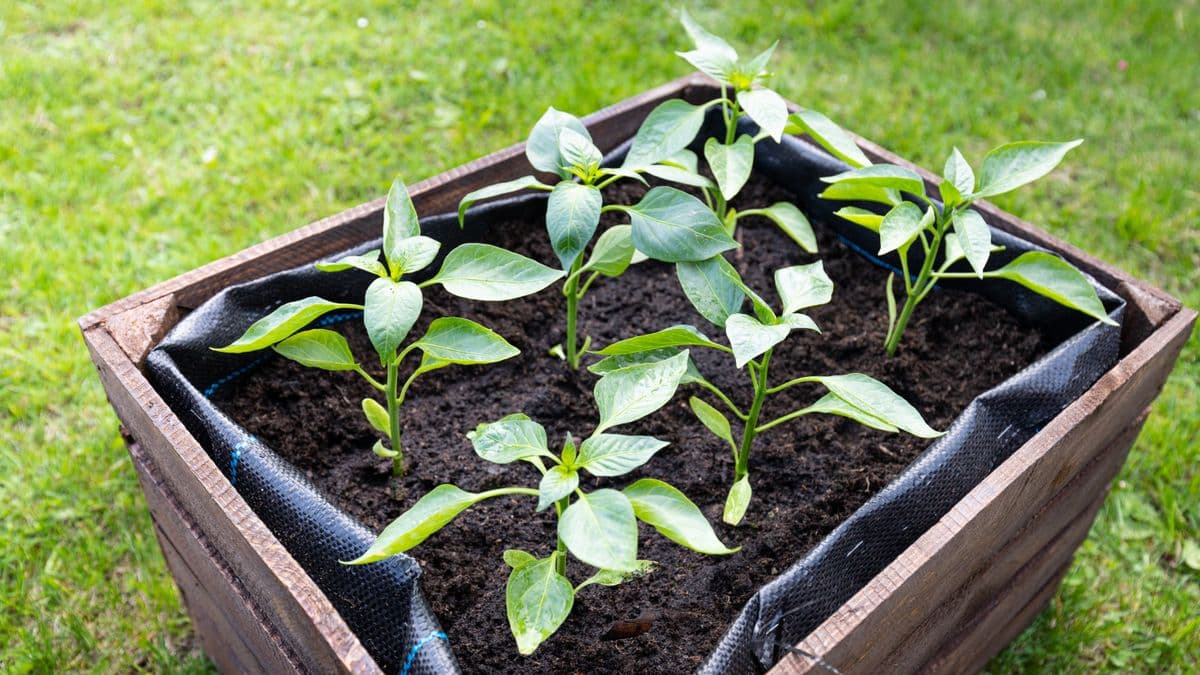
Match the cover to the animal. Birds and insects: a fitted fine-mesh net or a hoop-and-netting kit, edges secured. Squirrels and chipmunks, which dig and chew: hardware cloth at 1 in mesh or smaller on a frame. Size for the mature crop height and the standard 4 x 8 ft bed, and never lay netting loose.
First decide what you are keeping out
A raised bed cover is sold as a general-purpose product and it is not one. The same bed can be raided by a robin after the strawberries, a cabbage moth after the brassicas, a chipmunk after the seedlings and a squirrel after the bulbs, and those four problems have two different solutions.
Birds and insects stop at fabric. A fine mesh they cannot get a beak or a proboscis through is enough, because neither is going to chew. Squirrels and chipmunks do not stop at fabric. The University of Nebraska Extension states that squirrels squeeze through holes 1.5 inches in diameter and will enlarge smaller holes by gnawing, and a fabric net is the easiest hole to enlarge in the garden. Ask Extension's answer on strawberries says the same thing from the other side: bird netting for birds, sturdier wire mesh or welded wire for squirrels.
So the first question is not which cover but which animal. Look at the damage. Fruit pecked: birds. Leaves lacework: insects. Seedlings dug out, bulbs missing, holes in the soil: a rodent, and you need wire.
The specification
| Cover type | Excludes | Does not exclude | Spec that matters |
|---|---|---|---|
| Fine mesh fabric (fitted or on hoops) | Birds, cabbage moths, flea beetles, most insects | Squirrels, chipmunks, rabbits | Edge closure. Fitted with a drawstring, or weighted on every side |
| Pop-up mesh cage | Birds, larger insects | A determined rodent (it is mesh) | Height versus crop height. 30 in is the common figure |
| Hardware cloth on a frame | Squirrels, chipmunks, rabbits, birds | Insects (too coarse) | 1 in mesh or smaller; 1/2 in also excludes young rabbits (Colorado State Extension) |
| Hardware cloth under the bed | Burrowing animals from below | Anything arriving from above | Fitted before the soil goes in, which is the reason to decide early |
The bed size that almost everything is made for is 4 x 8 ft, which is why the fitted nets on this page publish that figure. If your bed is 4 x 2 ft, one of the hoop kits publishes that size instead. Measure before ordering; a fitted cover that does not fit is a tarp.
Baffleworks is funded by affiliate commission. If you buy through a link on this page we may earn a commission at no extra cost to you, and it never decides a ranking. Full disclosure · how we pick.
Quick picks
Ranked, with the trade-off named. Tap a row for the full write-up; the price button goes straight to Amazon.
| # | Product | Best for | Price |
|---|---|---|---|
| 1 |  HUNKA Hardware Cloth, 1/2 in mesh, 36 in x 50 ft, 19 gaugeRecommended by specification rather than by brand: 1/2 in mesh, 36 in tall, galvanized. This roll meets it — any roll matching the same three numbers does the same job. | A permanent rabbit barrier | $42.99 on Amazon |
| 2 | 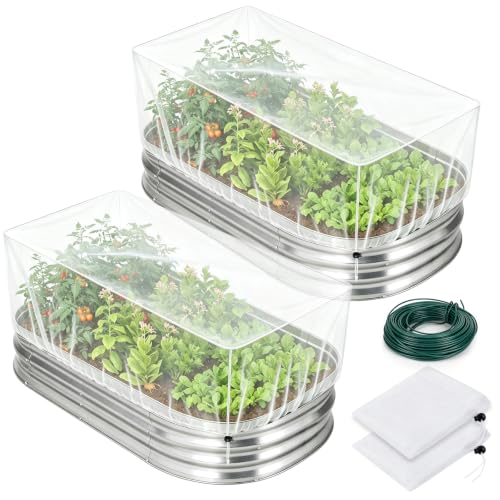 Garden Netting Kit for 4 x 2 ft Raised Beds, 2 packNetting and the hoops to hold it off the crop, cut to the most common small raised bed. The hoops are the part people forget, and the reason draped netting fails. | A 4 x 2 ft bed, netting on hoops | $17.99 on Amazon |
| 3 |  Garden Netting for 4 x 8 ft Raised Beds, fine mesh, drawstring, 2 packA fitted fabric mesh bag with a drawstring, sized to the most common raised bed. It excludes birds and insects. It is not published as chew-proof and this site does not treat it as a squirrel barrier. | Birds and insects on a 4 x 8 bed — not squirrels | $19.99 on Amazon |
| 4 |  Garden Netting Kit, 10 x 30 ft mesh, 6 sets of 8 ft hoopsSix sets of 8 ft hoops and a 10 x 30 ft run of fine mesh. Enough to hoop several beds, and the hoops are what keep the mesh off the crop. | Hooping several beds from one kit | $32.99 on Amazon |
| 5 |  Pop-Up Garden Mesh Plant Cover, 2 piecesA plain mesh enclosure sold as a pair, aimed squarely at the seedling stage, which is when losing a bed actually costs you the season. | Bird and pest protection on seedlings | $25.99 on Amazon |
| 6 |  Pop-Up Raised Bed Mesh Cover with Zipper Door, 45 inA cover that comes up with its frame already in it, and the only one on this shelf publishing a zipper door — you unzip to pick instead of lifting the whole thing off the row. | Strawberries and low crops | $14.99 on Amazon |
#ad how we are funded · price as of October 29, 2026
The picks in full
Top pick A permanent rabbit barrier
HUNKA Hardware Cloth, 1/2 in mesh, 36 in x 50 ft, 19 gauge
Recommended by specification rather than by brand: 1/2 in mesh, 36 in tall, galvanized. This roll meets it — any roll matching the same three numbers does the same job.
Published specifications
- Mesh
- 1/2 in x 1/2 in (published); 1 in or smaller is the spec, 1/2 in excludes young rabbits
- Roll
- 36 in W x 50 ft L (published)
- Gauge
- 19, 0.91 mm wire diameter (published)
- Material
- Hot-dip galvanized over annealed wire (published)
- Height above ground
- At least 2 ft (Colorado State Extension)
- Buried depth
- 4 to 8 in (Colorado State Extension)
Trade-offs
- Extension services put chicken wire, hardware cloth or flexible netting at 2 ft high and buried 4 to 8 in as fairly effective against rabbits
- A permanent fix rather than a reapplication schedule
- Half-inch mesh also excludes young rabbits, which 2 in poultry netting does not
- Hot-dip galvanized after weaving, which is the coating that survives being buried
- Burying the bottom edge is the whole job, and it is real digging
- Galvanized wire is visible in a way black deer netting is not
- 36 in tall means you are burying roughly a third of what you paid for
- The listing warns of sharp edges at both ends — this is a gloves job, and nothing about this brand makes it better than any other roll at the same spec
Who it is forA vegetable plot or a border with a persistent rabbit problem, where you would rather dig once than spray for years.
Skip it ifDeer are the actual problem. Two feet of wire is a step-over for a deer; the height that matters there is 8 ft and up. See deer fencing.
#ad how we are funded · price as of October 29, 2026
Where these specifications came from
No. 2 A 4 x 2 ft bed, netting on hoops
Garden Netting Kit for 4 x 2 ft Raised Beds, 2 pack
Netting and the hoops to hold it off the crop, cut to the most common small raised bed. The hoops are the part people forget, and the reason draped netting fails.
Published specifications
- Bed fit
- 4 x 2 ft raised beds (published)
- Cover dimensions
- 59 x 27.6 x 17.7 in / 150 x 70 x 45 cm (published)
- Mesh
- 0.05 in ultra-fine (published)
- Hoops
- 66 ft vinyl-coated steel hoop support wire (published)
- Quantity
- 2 (published)
- Fixings
- Cable ties included (published)
Trade-offs
- Publishes an actual mesh figure — 0.05 in — which almost nothing else on this shelf does
- Hoops included, so the netting is held clear of the fruit instead of resting on it
- Sized and stated in both inches and centimeters, so the bed fit can be checked before ordering
- Vinyl-coated hoop wire rather than bare steel, which is what rusts into the soil
- Netting only — unlike the kit it replaces, there is no PE sheeting, so this does pest exclusion and not frost protection
- 17.7 in of headroom is low; it suits salad crops and strawberries and nothing upright
- Cable ties rather than clips means the cover is fiddly to lift for daily harvesting
- Fine mesh at 0.05 in excludes pollinators too — lift it when anything under it flowers
Who it is forA 4 x 2 ft bed of low crops with a bird or insect problem, where the netting needs to stay off the leaves.
Skip it ifYou wanted one cover to do frost as well. This one does not, and buying it expecting that is the mistake this entry exists to prevent.
#ad how we are funded · price as of October 29, 2026
Where these specifications came from
No. 3 Birds and insects on a 4 x 8 bed — not squirrels
Garden Netting for 4 x 8 ft Raised Beds, fine mesh, drawstring, 2 pack
A fitted fabric mesh bag with a drawstring, sized to the most common raised bed. It excludes birds and insects. It is not published as chew-proof and this site does not treat it as a squirrel barrier.
Published specifications
- Bed size
- 4 x 8 ft (published)
- Quantity
- 2 (published)
- Mesh
- Fine mesh fabric (published)
- Closure
- Drawstring (published)
- Named targets
- Small animals and pests (published)
- Chew resistance
- Not published
Trade-offs
- Fitted to the bed, so it closes at the edges — the failure point of every draped net
- Fine enough for insects, which a hardware-cloth cage is not
- Fast: on and off in a minute, which matters for a bed you harvest from daily
- Two in the pack for two beds, or one in use and one in the wash
- Fabric. A squirrel that wants what is under it will chew it, and the listing does not claim otherwise
- Needs something inside to hold it off the plants, or it lies on the foliage
- 'Small animals' on a listing is not a species claim and should not be read as one
- Fine mesh shades slightly and slows airflow; it is a season cover, not a permanent one
Who it is forA bed whose problem is birds, cabbage moths or flea beetles, on a plot where squirrels are not the animal doing the damage.
Skip it ifThe damage is squirrel or chipmunk digging. That is a hardware-cloth job — this will slow them down for about a day.
#ad how we are funded · price as of October 29, 2026
Where these specifications came from
No. 4 Hooping several beds from one kit
Garden Netting Kit, 10 x 30 ft mesh, 6 sets of 8 ft hoops
Six sets of 8 ft hoops and a 10 x 30 ft run of fine mesh. Enough to hoop several beds, and the hoops are what keep the mesh off the crop.
Published specifications
- Mesh
- 10 x 30 ft, ultra fine (published)
- Hoops
- 6 sets, 8 ft (published)
- Hoop material
- Not published
- Type
- Row cover / insect netting (published)
- Chew resistance
- Not published
Trade-offs
- Hoops are the part people forget, and this kit includes them
- 30 ft of mesh covers more than one bed
- 8 ft hoops flex into a 4 ft bed without tools
- Fine mesh, so it earns its keep against insects as well as birds
- Fabric mesh — the same limitation as every fabric cover on this page against a chewing animal
- Edges still have to be weighted or buried, and the kit does not include anything for that
- The listing does not publish what the hoops are made of, which the kit it replaced did
- Fine mesh over hoops catches wind like a sail
Who it is forTwo or three beds with a bird or insect problem, and a gardener who will actually weight the edges.
Skip it ifOne bed. The fitted 4 x 8 net is faster and closes better. And if the animal is a squirrel, neither is the answer.
#ad how we are funded · price as of October 29, 2026
Where these specifications came from
No. 5 Bird and pest protection on seedlings
Pop-Up Garden Mesh Plant Cover, 2 pieces
A plain mesh enclosure sold as a pair, aimed squarely at the seedling stage, which is when losing a bed actually costs you the season.
Published specifications
- Quantity
- 2
- Type
- Pop-up mesh plant enclosure
- Intended use
- Raised beds, fruit, vegetables, seedlings, herbs
Trade-offs
- Covers the window when damage is most expensive: germination to establishment
- Mesh passes light and water, so there is no need to lift it to look after the bed
- The listing does not publish dimensions, so bed fit is a guess
- Light mesh over a light frame is a one- or two-season item
Who it is forA seedbed you need covered this week, where the cost of the cover is trivial next to the cost of resowing.
Skip it ifYou need a specific size. Buy the cage that publishes its dimensions instead.
#ad how we are funded · price as of October 29, 2026
Where these specifications came from
No. 6 Strawberries and low crops
Pop-Up Raised Bed Mesh Cover with Zipper Door, 45 in
A cover that comes up with its frame already in it, and the only one on this shelf publishing a zipper door — you unzip to pick instead of lifting the whole thing off the row.
Published specifications
- Dimensions
- 45.3 x 21.7 x 17.7 in (published)
- Frame
- Pop-up, integrated (published)
- Access
- Zipper door (published)
- Mesh
- Mesh plant netting (published); no aperture published
- Anchoring
- Stakes included (count not published)
- Named use
- Raised beds, vegetables, seedlings, strawberries (published)
Trade-offs
- Pops up with the frame already in it, which is the whole argument against hoop-and-drape kits
- A zipper door, which nothing else on this shelf publishes — you pick without lifting the cover off the row
- The listing names strawberries specifically rather than just 'plants'
- At 45.3 in long it covers a bed row, and at 17.7 in it stands taller than the 39 x 18 x 16 row protector
- The listing publishes no pack count, so order on the assumption that it is one cover
- Publishes no mesh aperture, so its exclusion range is a claim rather than a figure
- Fabric mesh: a bird and insect barrier, not a squirrel one
- At 17.7 in it suits strawberries and salad crops and nothing that stands up
Who it is forA strawberry row or a bed of salad crops with a bird and insect problem, and no patience for assembly.
Skip it ifThe animal digs. Hardware cloth is the answer there, and no polyester mesh will hold a determined rodent.
#ad how we are funded · price as of October 29, 2026
Height: the specification people forget
A cover has to clear the crop at its mature height, not at planting. Lettuce and strawberries are happy under 15 in of hoop. Bush beans want more. Indeterminate tomatoes and pole beans outgrow every hoop kit sold, and the honest answer for those is that a bed cover is the wrong shape — protecting tomatoes covers what works instead.
The 8 ft hoop kits flex into a tall arch over a 4 ft bed. That is the right tool for a mixed bed where something in the middle is going to get to three feet. For a bed of low crops, a 15 in pop-up tunnel is less material, less wind load and easier to lift for harvest.
Why the frame is not optional
Netting laid directly on plants does two things wrong. It lets birds peck through it wherever a fruit touches the mesh, and it entangles wildlife. The Wildlife Rescue League notes garden netting traps small mammals and reptiles, and reports a wildlife control operator encountering birds, owls, even squirrels caught in it. Its recommendation is worth quoting: consider a solid structure which animals cannot attempt to get through.
That is an argument for hoops at minimum and for hardware cloth on a frame where the animal is a rodent. A net stretched tight over hoops with the edges secured is a barrier. A net lying on the bed is a hazard with a gap under every edge.
Under the bed, before the soil
If the bed is new, line the base with hardware cloth before filling it. It costs one roll and an afternoon, it excludes anything arriving from below, and it cannot be retrofitted without emptying the bed. This page is about covers, but the cheapest exclusion on a raised bed is the floor.
What we would buy, by problem
- Birds on strawberries, moths on brassicas, one 4 x 8 bed: the fitted 4 x 8 net with a drawstring, over a few hoops so it clears the plants. Fastest on and off, and the edges close.
- Same problem, several beds: the hoop-and-netting kit — six sets of 8 ft hoops and 30 ft of mesh — with the edges weighted.
- Squirrels or chipmunks digging: hardware cloth at 1/2 in on a simple frame. It is the only cover here that is actually rated for the animal.
- A low bed of mixed salad crops: a pop-up tunnel or pop-up mesh cage. Least effort per season.
Building from a roll instead of buying a kit means choosing the right mesh first. Hardware cloth vs chicken wire covers mesh size, gauge and which roll suits which job.
Questions people actually ask
- Will garden netting keep squirrels out of a raised bed?
- Not reliably. Fabric mesh stops birds and insects, but the University of Nebraska Extension states squirrels enlarge small holes by gnawing, and Ask Extension recommends sturdier wire mesh or welded wire for squirrels. Digging damage is a hardware-cloth job.
- What size cover do I need for a raised bed?
- Most fitted covers publish 4 x 8 ft, the standard bed. One hoop kit here publishes 4 x 2 ft. Measure the bed and buy for the mature height of the tallest crop, not the height at planting.
- What mesh size keeps chipmunks out?
- Half-inch hardware cloth. Colorado State Extension notes 1/2 in also excludes young rabbits, and a chipmunk needs a finer aperture than a squirrel. One inch is enough for squirrels; go to 1/2 in if chipmunks are present.
- Is it safe to put netting over a raised bed?
- On hoops, pulled tight, with the edges secured — yes. Laid loose, no: the Wildlife Rescue League reports birds, owls and squirrels entangled in garden netting and recommends a solid structure animals cannot attempt to get through.
- Should I put hardware cloth under a raised bed?
- If the bed is new, yes. It excludes anything arriving from below and cannot be added later without emptying the bed. It is the cheapest exclusion a raised bed can have.
- Do pop-up covers work for tall plants?
- No. Pop-up tunnels and cages publish heights around 15 to 30 in, which suits salad crops, strawberries and bush beans. Indeterminate tomatoes and pole beans outgrow them, and need a different approach.
Sources
Read next
- The best plant cages and cloches
Pop-up cages and cloches ranked by published dimensions and how well the skirt actually pins down.
- How to keep squirrels from eating tomatoes
One bite per fruit is the signature, and it tells you repellents will miss. Cage sizes from the exclusion spec, and the free method that beats them.
- The best netting for strawberries
Quarter-inch mesh on a frame for birds; hardware cloth for the chipmunk. The strawberry barrier for each thief, from the extension answer.
- Garden Protection
Cages, cloches, netting and rabbit fencing, sized to the animal doing the damage rather than to the bed.