Guides / Feeders
How to keep rats away from bird feeders
The feeder is rarely what the rats are eating. It is what falls, what the ground holds overnight, and what is stored in a bag in the garage.
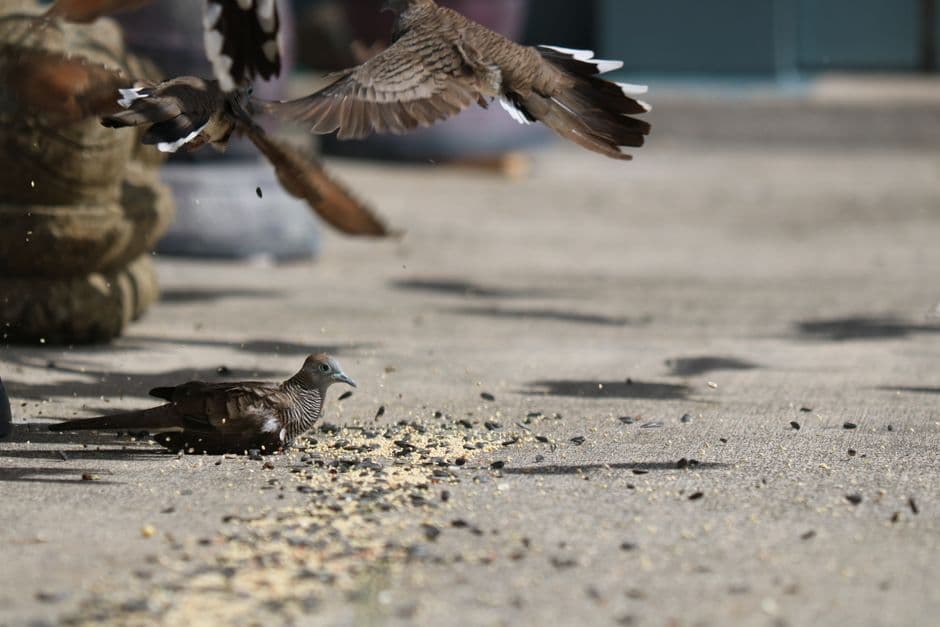
Stop the spill reaching the ground, store your seed in metal, and clear what is already down there. A seed catcher tray, a galvanized can with a lid, and a nightly sweep remove the three food sources rats are actually using. The feeder itself is almost never the problem - the ground under it is.
This is the one feeder problem where the honest advice starts with a question about your own habits rather than a product. Rats do not climb a pole for a mouthful of sunflower. They arrive because a reliable food supply appears on the ground every day and is still there after dark.
What the guidance actually says
The Internet Center for Wildlife Damage Management lists rats and mice alongside squirrels, chipmunks and voles among the animals that benefit from bird feeders, and its fix for the spill is blunt: "Consider attaching a bucket below the thistle feeder to catch seeds."
It is equally direct about why it matters: "Food so easily accessible will increase your mouse population, and they will then enter your home." That sentence is about mice and thistle specifically, and it generalizes exactly as you would expect.
UNH Extension's rodent guidance puts food removal at the top of the list too - "Remove food sources - bird feeders, pet food and compost" - and adds the storage rule most people miss: "Keep all feed covered in metal containers (plastic can be chewed through)."
The three food sources, in order
1. The spill
Every open-port feeder throws seed. Birds are messy eaters, they flick through a hopper looking for favorites, and the reject rate on a mixed blend is high. That is the daily delivery.
A tray under the feeder catches it before it lands. This is the single highest-leverage purchase on this page, and seed catcher trays covers sizing and drainage - a tray that holds water is its own problem.
Two feeder choices reduce the spill at source: shelled hearts instead of seed in the shell, so there is no hull at all, and a weight-activated feeder, which closes when a squirrel lands and therefore stops the bulk scattering that a raid causes.
2. The store
A paper sack of seed in a garage, shed or porch is the reason many rat problems start indoors rather than outdoors. Rodents gnaw paper and plastic; they do not gnaw galvanized steel.
A metal can with a lid that seats properly solves it permanently. Where raccoons are also active, use one with a locking or strapped lid - raccoons lift a resting lid without difficulty. Raccoon deterrents covers that end of the problem.
3. The ground
What has already fallen is a standing supply, and it does not clear itself. Rake or sweep under the feeder, and do it in the evening rather than the morning: rats forage at night, and an empty ground at dusk is worth far more than an empty ground at noon.
Move the feeding station occasionally too. A fixed spot builds up a seed bank in the grass and soil that survives any amount of surface sweeping.
Baffleworks is funded by affiliate commission. If you buy through a link on this page we may earn a commission at no extra cost to you, and it never decides a ranking. Full disclosure · how we pick.
Quick picks
Ranked, with the trade-off named. Tap a row for the full write-up; the price button goes straight to Amazon.
| # | Product | Best for | Price |
|---|---|---|---|
| 1 |  6 Gallon Galvanized Steel Seed Can with LidA galvanized can with a lid, which is the storage extension guidance actually names: rodents gnaw through plastic and paper, and do not gnaw through steel. | Storing seed where rodents cannot smell their way in | $26.79 on Amazon |
| 2 | 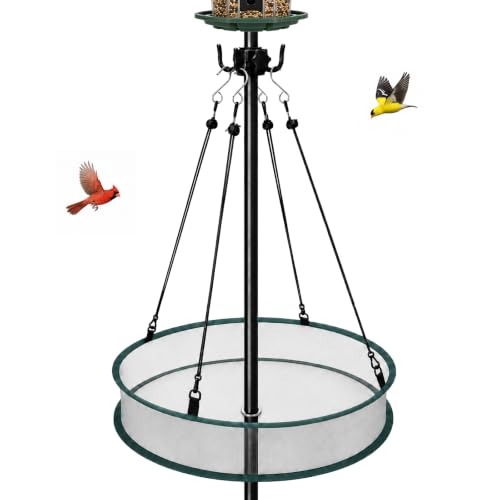 Berrihop 20 in Pole-Mount Seed Catcher TrayThe one built for a pole rather than a hook: a center hole drops it over a 1 in pole so it stays centered under the feeder instead of swinging off-line. | A pole-mounted feeder, which is most of this site | $15.99 on Amazon |
| 3 |  Birds Choice 21.5 x 21.5 in Seed Catcher Open PlatformThe built-to-last option: a perforated metal screen bottom that drains and cleans easily. It is also sold as a platform feeder, and that dual purpose is the reason to think twice. | A permanent metal tray, if you accept what it also is | $116.99 on Amazon |
| 4 |  Brome Squirrel Buster PlusThe weight-activated shroud done properly: a squirrel's weight closes the ports, and the cardinal ring means the mechanism does not cost you the big birds. | Weight-activated, most capacity | $128.79 on Amazon |
| 5 |  Erva SB6 Pole-Mount Disk Baffle, 22.5 inThe widest disk we found with a published diameter, which is the whole mechanism: a squirrel on the pole below has to reach past 22.5 inches of steel to get anything. | Round poles, maximum overhang | $39.99 on Amazon |
#ad how we are funded · price as of September 21, 2026
The picks in full
Top pick Storing seed where rodents cannot smell their way in
6 Gallon Galvanized Steel Seed Can with Lid
A galvanized can with a lid, which is the storage extension guidance actually names: rodents gnaw through plastic and paper, and do not gnaw through steel.
Published specifications
- Capacity
- 6 gallon (published)
- Material
- Galvanized steel (published)
- Lid
- Included (published)
- Stated use
- Bird seed storage, rodent proof (published)
Trade-offs
- Steel is on the short list of materials rodents cannot gnaw through, alongside concrete and wire mesh
- 6 gallons takes a 15-20 lb bag of seed with the bag opened flat inside
- A lid that seats properly also keeps the seed dry, which is the other way stored seed goes bad
- A lid that merely rests on top is not enough where raccoons are active — they lift lids; a locking or strapped lid is the fix
- Galvanized steel left in the weather will eventually rust at the seams
Who it is forAnyone storing seed in a garage, shed or porch — which is the single most common reason rats appear at a feeder.
Skip it ifYou buy 5 lb bags and use them in a fortnight. The bag in a sealed bin indoors is fine.
#ad how we are funded · price as of September 21, 2026
Where these specifications came from
No. 2 A pole-mounted feeder, which is most of this site
Berrihop 20 in Pole-Mount Seed Catcher Tray
The one built for a pole rather than a hook: a center hole drops it over a 1 in pole so it stays centered under the feeder instead of swinging off-line.
Published specifications
- Diameter
- 20 in (published)
- Depth
- 4 in mesh wall (published)
- Pole fit
- 1 in poles, center hole (published)
- Material
- Weather-resistant fiberglass mesh with a steel wire rim (published)
- Drainage
- Fine mesh bottom; air circulates and rainwater passes through (published)
- Mounting
- Pole hook plus four tray hooks, adjustable cords (published)
Trade-offs
- A center hole around the pole keeps the tray centered under the feeder, which a hanging hoop does not
- Mesh bottom drains, so seed dries instead of sitting in a puddle
- 20 in is wide enough to catch what a busy tube feeder throws
- Adjustable cords let you set the tray height without moving the feeder
- Published for 1 in poles only — measure yours, because 1.25 and 1.5 in poles are common
- Four hooks and cords is more setup than a simple hoop
- Mesh sags over time under a heavy load of husks if it is not emptied
- It still has to sit ABOVE the baffle; hung below one it hands a squirrel a platform
Who it is forAnyone running the setup this site recommends — feeder on a pole, baffle beneath — who wants the spill caught rather than left on the ground.
Skip it ifYour feeder hangs from a hook or a branch. There is no pole for the center hole, and a hanging hoop is the right shape.
#ad how we are funded · price as of September 21, 2026
Where these specifications came from
No. 3 A permanent metal tray, if you accept what it also is
Birds Choice 21.5 x 21.5 in Seed Catcher Open Platform
The built-to-last option: a perforated metal screen bottom that drains and cleans easily. It is also sold as a platform feeder, and that dual purpose is the reason to think twice.
Published specifications
- Size
- 21-1/2 x 21-1/2 in (published)
- Bottom
- Perforated metal screen, offers drainage (published)
- Mounting
- Below a feeder, or post-mounted as a feeder; pole kit sold separately (published)
- Named birds
- Cardinals, chickadees, doves, woodpeckers (published)
- Cleaning
- Published as easy to clean
Trade-offs
- A perforated metal screen is the best-draining bottom here and the easiest to scrub
- Square 21.5 in gives more catching area than any round tray on this page
- Metal rather than mesh or plastic, so it is the one most likely to still be there in five years
- An established brand with a published product line rather than an unbranded listing
- Several times the price of every other tray here
- Sold as a platform feeder as much as a catcher, and the listing names doves — a ground-feeding flock is what a seed tray is supposed to reduce
- Pole kit sold separately, so the real cost is higher than the tray
- A wide rigid square under a feeder is a substantial piece of furniture in a small yard
Who it is forA permanent station where the tray is part of the setup for years and the extra cost is amortized over that.
Skip it ifYou are buying it to reduce ground feeding. Mounted as a platform it does the opposite, and the cheaper mesh trays catch spill without inviting a crowd.
#ad how we are funded · price as of September 21, 2026
Where these specifications came from
No. 4 Weight-activated, most capacity
Brome Squirrel Buster Plus
The weight-activated shroud done properly: a squirrel's weight closes the ports, and the cardinal ring means the mechanism does not cost you the big birds.
Published specifications
- Seed capacity
- 5.1 lb (published)
- Feeding ports
- 6
- Mechanism
- Weight-activated shroud, adjustable
- Included
- Cardinal ring
- Pole mounting
- Pole-mountable; pole adaptor sold separately
Trade-offs
- 5.1 lb capacity means fewer refills through a hard winter
- Adjustable weight setting, so you can shut out grackles without shutting out cardinals
- The cardinal ring is the fix for the usual complaint about shroud feeders
- The pole adaptor is a separate purchase, which is easy to miss at checkout
- A weight mechanism is a mechanism: it needs the occasional clean to keep moving freely
Who it is forThe default first purchase if you would rather solve the problem at the feeder than at the pole. It also pairs well with a baffle rather than replacing one.
Skip it ifYour problem is chipmunks or small red squirrels. A weight-activated shroud is calibrated for something heavier, and a light animal can feed under the trigger point. A caged feeder is the better answer there.
#ad how we are funded · price as of September 21, 2026
Where these specifications came from
No. 5 Round poles, maximum overhang
Erva SB6 Pole-Mount Disk Baffle, 22.5 in
The widest disk we found with a published diameter, which is the whole mechanism: a squirrel on the pole below has to reach past 22.5 inches of steel to get anything.
Fits: Round pole
Published specifications
- Diameter
- 22.5 in (published)
- Type
- Disk, pole-mount
- Material
- Powder-coated galvanized steel, solid steel collars
- Origin
- Made in USA
Trade-offs
- 22.5 in is the largest published disk diameter in this set, so it gives the most overhang past the pole
- Steel collars rather than plastic clamps, which is what usually fails first on a baffle
- Powder coat over galvanized steel, so it is not a chew or corrosion target
- Pole-mount, so it has to come off the pole to install unless your feeder arm lifts clear
- A 22.5 in disk is visually large; on a small deck or patio it dominates
Who it is forA standard round feeder pole where you want the mechanism doing the work rather than luck. Mount the top of the disk at four to five feet and give it the clearance the geometry actually needs.
Skip it ifYour feeder is on a 4x4 wooden post — this is a round-pole fitting. Use the 4x4 post baffles instead.
#ad how we are funded · price as of September 21, 2026
Where these specifications came from
Rats climb, so the pole matters
A baffle is normally sold as squirrel hardware, and it works on rats for the same reason: a smooth, wide obstruction at height that offers nothing to grip. ICWDM's feeder spec is a post-mounted feeder "at least 6 feet off the ground and at least 10 feet away from any nearby branches or structures", with cones "attached at least 4 feet off the ground" that "extend out at least 2 feet."
Those numbers do double duty here. The best squirrel baffles has the hardware and squirrel jump clearance has the geometry.
The fix to avoid
Rodenticide in a yard you are deliberately filling with wildlife is a poor trade. UNH Extension is explicit about why: "Predators such as owls, hawks, fisher and fox may feed on live rodents that have ingested the rodenticide", and "Risk to predators and scavengers is higher because the amount of poison rodents consume over several days is greater."
The owl or hawk that turns up because your yard has rodents in it is the one that eats the poisoned rodent. Remove the food supply instead - it is slower, and it is the only approach that does not work against the reason you put feeders up.
If rats are already inside a building, that is a different job from feeder management and it is worth involving a professional. Nothing on this page addresses an indoor infestation.
A working order of operations
- Clear the ground under every feeder, thoroughly, once - not a sweep, a rake.
- Move the seed into a metal can with a lid, today.
- Fit a tray under the feeder that spills most.
- Switch that feeder to shelled hearts or a weight-activated body.
- Check the pole has a baffle at four to five feet and ten feet of clearance around it.
- Sweep in the evening for two weeks, then judge whether it is working.
- If nothing changes, take the feeders down for a fortnight to confirm they are the source before spending anything else.
What not to bother with
- Ultrasonic devices. Ultrasonic repellers covers the evidence; it is not encouraging for any rodent.
- Moving the feeder a few feet. The seed bank moves with you. Clearing the ground is what changes the supply.
- Hot pepper seed, for rats. Capsaicin is a mammal deterrent, but a rat eating spilled seed at night has no alternative to compare it with. Geometry and sanitation, not seasoning.
- Cage traps around a feeding station. You will catch the animals you are feeding.
Questions people actually ask
- Do bird feeders attract rats?
- The spilled seed under them does. ICWDM lists rats and mice among the animals that benefit from feeders, and its guidance focuses on stopping seed reaching the ground rather than on the feeder itself.
- How do I store birdseed so rodents cannot get it?
- In metal. UNH Extension's guidance is to keep all feed covered in metal containers because plastic can be chewed through. A galvanized can with a lid that seats properly is the standard answer.
- Will a baffle stop rats climbing my feeder pole?
- A correctly placed baffle works on rats for the same reason it works on squirrels - it presents a wide, smooth obstruction with nothing to grip. It has to be at four to five feet with real clearance around the pole.
- Should I stop feeding birds if I have rats?
- Temporarily, yes - it is the fastest way to confirm the feeders are the food source. Two weeks is enough. If activity stops, fix the spill and the storage before rehanging.
- Is rat poison safe to use near bird feeders?
- We would not. UNH Extension notes that owls, hawks, fisher and fox may feed on live rodents that have ingested rodenticide, with higher risk to predators and scavengers. In a yard managed for birds that is working against yourself.
- What time of day should I clear up under the feeder?
- Evening. Rats forage at night, so the state of the ground at dusk is what matters. Sweeping in the morning leaves the supply available all day and all night.
Sources
Read next
- The best seed catcher trays
A tray's real job is denying squirrels the ground buffet, not tidiness. Ranked on diameter and drainage, with the ones that double as feeders flagged.
- Weight-activated feeders
How the shroud and perch-bar mechanisms work, what the adjustment is really for, and where they stop.
- Raccoon deterrents
Food management first, then a baffle that actually names raccoons, then a sprinkler on the route.
- The best squirrel baffles
Seven baffles ranked by published dimensions and mount fit, with the clearance rule that decides all of it.
- Squirrel-Proof Feeders
Weight-activated, caged and spinning feeders, sorted by which animal each mechanism actually keeps out.