Guides / Garden
How to protect fruit trees from squirrels
This is the hardest exclusion job in the yard, and the guidance says so plainly. Knowing why changes what you should spend money on.
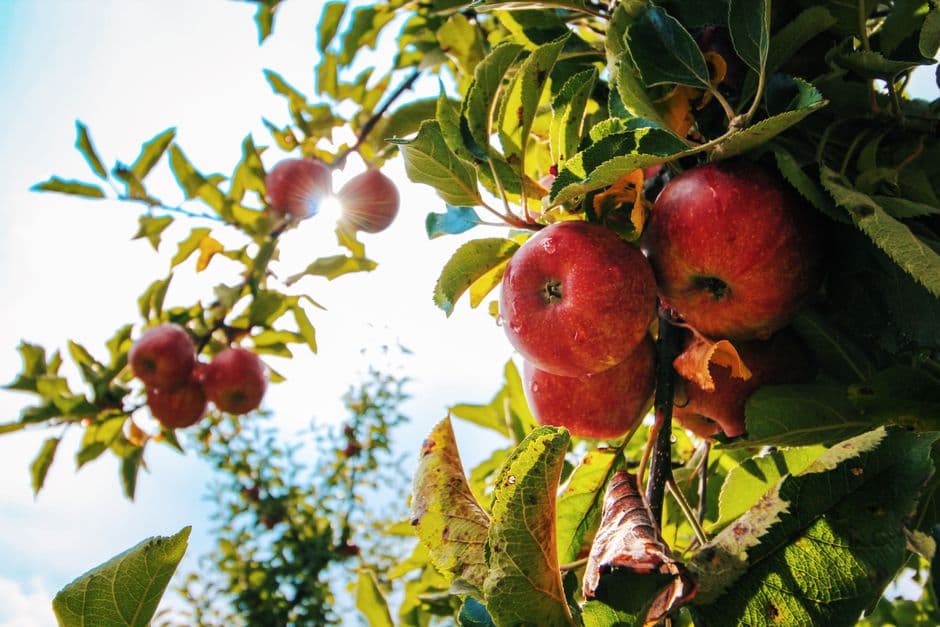
Net the tree or protect one tree at a time - those are the only approaches with a published track record. UC IPM states that it is virtually impossible to keep squirrels out of fruit or nut trees because of their climbing and jumping ability, and that netting a single tree works mainly when other unprotected trees are available nearby. A trunk band only helps on an isolated tree with nothing overhanging it.
Most pages on this subject promise more than the extension literature does. It is worth starting from what the guidance actually says, because it changes which fix is worth your money.
Why this one is genuinely hard
UC IPM's Tree Squirrels Pest Notes does not hedge: "It is virtually impossible to keep squirrels out of fruit or nut trees because of their superb climbing and jumping ability."
A feeder is a single point you can isolate in mid-air. A tree is a structure with dozens of approach routes, connected by branches to everything around it, and the fruit is distributed through the canopy rather than sitting in one protectable container.
That is the whole problem in one sentence, and it is why a trunk baffle alone so often disappoints. The trunk is one route in. It is rarely the only one.
Netting the tree
UC IPM's practical suggestion is specific about the condition attached to it: "Sometimes if there are other unprotected fruit or nut trees available to the squirrels, you can protect the crop of a single tree by netting it as you would to exclude foraging birds."
Read the condition. Netting works best when there is an easier meal next door. In a yard with one tree and a resident squirrel population, a net is a puzzle rather than a barrier - and squirrels are good at puzzles.
- Net over the whole canopy and gather it in at the trunk, below the lowest fruit. An open skirt is a door.
- Use a fine enough mesh that an animal cannot push a head through, and keep it taut - a slack net catches wildlife rather than excluding it.
- Put it on as the fruit approaches ripeness, not in spring. Months of netting is months of wind damage and tangled birds.
- Check it every few days. A net with a chewed hole is worse than no net, because it concentrates traffic at one point.
Garden netting covers mesh sizes and the wildlife-safety considerations in more detail.
Baffleworks is funded by affiliate commission. If you buy through a link on this page we may earn a commission at no extra cost to you, and it never decides a ranking. Full disclosure · how we pick.
Quick picks
Ranked, with the trade-off named. Tap a row for the full write-up; the price button goes straight to Amazon.
| # | Product | Best for | Price |
|---|---|---|---|
| 1 |  Junkin Clear Tree Trunk Wrap, 16 in x 60 in, 2 rollsA clear sheet that wraps the trunk into a smooth collar with nothing to grip. Two 16 x 60 in rolls covers a trunk up to roughly 19 in around, twice. | Wrapping a smooth-barked trunk | $16.99 on Amazon |
| 2 |  ShrubGuard 1/2 in Mesh Shrub Netting BagA mesh bag made for exactly this job — its listing names arborvitae — that keeps deer off the foliage and holds the branches together under snow load. | Individual arborvitae through winter | $19.99 on Amazon |
| 3 |  codree Deer Netting for Shrubs, 7.8 x 7.8 ft, 3 packLarge drawstring covers sized for a tall shrub. The size is the reason to buy them; the material is the reason to check them after every storm. | Taller evergreens, three at a time | $25.99 on Amazon |
| 4 |  Tenax Deer Netting, 7 ft x 100 ftNetting rather than fence: lighter, easier to drape over a shrub or a bed, and not pretending to be a perimeter barrier. | Draping and small enclosures | $65.94 on Amazon |
| 5 |  Orbit Yard Enforcer Motion-Activated Sprinkler (62100)The one deterrent device category with a mechanism you can verify from the spec sheet: infrared detection out to 40 ft, and a burst of water the animal cannot argue with. | Deer and raccoons over a wide arc | $89.99 on Amazon |
#ad how we are funded · price as of September 21, 2026
The picks in full
Top pick Wrapping a smooth-barked trunk
Junkin Clear Tree Trunk Wrap, 16 in x 60 in, 2 rolls
A clear sheet that wraps the trunk into a smooth collar with nothing to grip. Two 16 x 60 in rolls covers a trunk up to roughly 19 in around, twice.
Published specifications
- Sheet
- 16 in x 60 in (published)
- Quantity
- 2 rolls (published)
- Material
- Clear PVC
- Mount
- Wrap and fasten
Trade-offs
- A 16 in band is close to the 2 ft width extension guidance specifies for metal bands on trunks
- Clear plastic is far less visible on an ornamental tree than sheet metal
- Two rolls means a second tree, or a double wrap on one big trunk
- Only works if the squirrel cannot bypass it — a branch from a neighboring tree or a fence makes the whole wrap pointless
- Fasteners must never be driven into the trunk; wrap and secure to itself, and re-check as the tree grows
Who it is forAn isolated fruit or nut tree with clean ground around it and no overhanging neighbors.
Skip it ifThe tree is in a canopy or within jumping distance of a roof or fence. Nothing on the trunk helps when the route in is through the air.
#ad how we are funded · price as of September 21, 2026
Where these specifications came from
No. 2 Individual arborvitae through winter
ShrubGuard 1/2 in Mesh Shrub Netting Bag
A mesh bag made for exactly this job — its listing names arborvitae — that keeps deer off the foliage and holds the branches together under snow load.
Published specifications
- Mesh
- 1/2 in (published)
- Material
- Multi-strand UV-stabilized HDPE (published)
- Format
- Bag, placed over the plant (published)
- Named use
- Arborvitae, evergreens and trees in winter (published)
- Stated protection
- Deer, rabbits, birds; snow and ice damage (published)
- Service life
- Published as multiyear; no figure given
Trade-offs
- Names arborvitae in the listing, so it is built for the shape and the season rather than repurposed from bird netting
- Does two winter jobs at once — keeps deer off and stops snow splaying the branches open
- UV-stabilized HDPE is the material that survives a season outdoors; plain poly netting goes brittle
- A physical barrier does not wear off, which a repellent in freezing weather does
- Publishes no bag dimensions in the listing we cite, so confirm the size against your tallest plant before ordering
- One bag per plant: a long hedge row is many bags, and netting on a roll becomes cheaper
- A bag has to come off in spring before new growth pushes through the mesh
- It is visible. A netted hedge is a netted hedge, which some yards will not tolerate out front
Who it is forA handful of specimen arborvitae — a corner planting or a short screen — that deer strip every winter.
Skip it ifYou are protecting a long hedge row. Buy 7 ft deer netting on a roll and run it along the line instead of bagging plants one at a time.
#ad how we are funded · price as of September 21, 2026
Where these specifications came from
No. 3 Taller evergreens, three at a time
codree Deer Netting for Shrubs, 7.8 x 7.8 ft, 3 pack
Large drawstring covers sized for a tall shrub. The size is the reason to buy them; the material is the reason to check them after every storm.
Published specifications
- Size
- 7.8 x 7.8 ft each (published)
- Quantity
- 3 (published)
- Closure
- Drawstring (published)
- Material
- Non-woven fabric, breathable (published)
- Stated protection
- Cold air, snow, birds, deer (published)
Trade-offs
- 7.8 ft covers reach the height a standing deer browses to, which small shrub bags do not
- Drawstring closure at the base, so the cover does not blow off or ride up
- Three in a pack covers a short screen of arborvitae in one purchase
- Breathable fabric lets light and air through, so the plant is not sealed in for the winter
- Non-woven fabric, not a mesh net — it is closer to frost cloth than to deer netting, and a determined deer can tear it
- Publishes no fabric weight or UV rating, so it may not survive more than a season
- A solid fabric cover catches wind far more than an open mesh does
- Fabric over a wet evergreen can hold moisture against the foliage; check it after thaws
Who it is forTall, young arborvitae where the height matters more than the durability, and somebody who will check the covers through the winter.
Skip it ifDeer pressure is heavy. A mesh bag or netting resists tearing far better than non-woven fabric, and this listing does not claim otherwise.
#ad how we are funded · price as of September 21, 2026
Where these specifications came from
No. 4 Draping and small enclosures
Tenax Deer Netting, 7 ft x 100 ft
Netting rather than fence: lighter, easier to drape over a shrub or a bed, and not pretending to be a perimeter barrier.
Published specifications
- Height
- 7 ft (published)
- Length
- 100 ft
- Material
- Black polypropylene
- Structure
- Quadrangular mesh (published)
Trade-offs
- Light enough to throw over a shrub or a fruit cage without a post system
- Cheap enough per foot to protect a lot of individual plants
- Not a perimeter fence, and treating it as one is how people conclude that deer fencing does not work
- Loose netting can entangle wildlife if it is left slack and unpegged
Who it is forIndividual shrubs, small beds and winter protection on ornamentals, rather than a garden boundary.
Skip it ifYou want a perimeter. Buy the fence, set posts, and tension it — the height guide explains why the two are not interchangeable.
#ad how we are funded · price as of September 21, 2026
Where these specifications came from
No. 5 Deer and raccoons over a wide arc
Orbit Yard Enforcer Motion-Activated Sprinkler (62100)
The one deterrent device category with a mechanism you can verify from the spec sheet: infrared detection out to 40 ft, and a burst of water the animal cannot argue with.
Published specifications
- Detection
- Passive infrared
- Sensor range
- Up to 40 ft, adjustable (published)
- Spray duration
- Approximately 3 to 10 seconds (published)
- Modes
- Day and night detection
- Function
- Dual-purpose: deterrent and sprinkler
- Model
- 62100
Trade-offs
- Published detection range and spray duration, which almost nothing else in the deterrent aisle offers
- Water plus noise plus movement is a genuine startle, not a claimed one
- Day and night modes let you stop it firing at the postman
- It needs a hose, so its position is decided by your tap as much as by the animals
- Freezing weather takes it out of service exactly when deer browse hardest
Who it is forDeer, raccoons or cats on a defined approach — a bed, a path, a run of shrubs — during the frost-free months.
Skip it ifYour winter freezes. This is a hose-fed device, and a hose-fed device in January is a burst hose. Fence or repellent for the cold half of the year.
#ad how we are funded · price as of September 21, 2026
Where these specifications came from
The trunk band, and its one condition
NC State Extension's wildlife chapter gives the published spec for the trunk approach: 2-foot-wide metal bands around the tree, 6 feet off the ground.
Two feet of smooth, unclimbable band starting six feet up, is the same mechanism as a pole baffle: an obstruction too wide to reach past and too smooth to grip. On the right tree it works.
The condition is the one that fails most often. A band is worthless unless the tree is genuinely isolated. Alabama Cooperative Extension puts a gray squirrel's horizontal jump at roughly eight feet - so a neighboring branch, a fence, a shed roof or a wall within that distance makes the trunk irrelevant.
- Prune the canopy clear of everything else first. UC IPM's related advice is that "Trees that overhang roofs or are close to telephone lines should be cut back to slow the movement of squirrels about the yard."
- Fit the band above six feet, not at chest height where it is easy to install.
- Never nail or screw into the trunk. Wrap and fasten to itself, and re-check the fit every season as the tree grows.
- One tree, one band, all routes closed - or do not bother.
Harvest timing beats hardware
The single most effective thing most people do is pick earlier. Squirrels take fruit before it is fully ripe - often well before the gardener considers it ready - so a crop left to peak on the tree is a crop offered to whoever gets there first.
Picking at first blush and ripening indoors loses a little flavor on some fruit and loses the entire crop on none of it. For nuts, the same logic applies with less compromise: gather as they drop rather than leaving them under the tree.
What about repellents and scare devices?
UC IPM is direct about repellents: "Although some chemical repellents are registered for use to keep tree squirrels out of an area, their effectiveness is questionable." Treat that as the ceiling on expectations.
A motion-activated sprinkler is a more credible option in an orchard setting than a spray, because it addresses approach routes rather than the fruit itself - and it is worth nothing on a tree squirrels reach through the canopy. Motion-activated sprinklers covers the hardware and scare tactics that work covers what habituation does to all of them.
A realistic plan
- Walk the tree and list every route in: branches, fences, wires, roofs, neighboring trees.
- Prune what you can to isolate the canopy. This is the step that makes everything else possible.
- If the tree is genuinely isolated, fit a wide smooth band above six feet.
- If it is not - and most are not - plan to net the canopy as ripening approaches.
- Pick early and pick often, and clear windfalls daily so the ground is not a second supply.
- Accept a share. On a connected tree in a squirrel-populated neighborhood, the honest target is most of the crop, not all of it.
Questions people actually ask
- Can you really keep squirrels out of a fruit tree?
- Not reliably. UC IPM states that it is virtually impossible because of their climbing and jumping ability. Netting the canopy and picking early are the two approaches with real effect; everything else reduces losses at the margin.
- Does a metal band around the trunk work?
- On an isolated tree, yes. NC State specifies 2-foot-wide metal bands 6 feet off the ground. It stops working the moment a squirrel can jump in from a fence, roof or neighboring branch - roughly eight feet horizontally for a gray squirrel.
- When should I net a fruit tree?
- As the fruit approaches ripeness, not in spring. Netting up for months means wind damage, tangles and more risk to birds for no extra crop protection.
- Do squirrel repellents work on fruit trees?
- UC IPM describes the effectiveness of chemical repellents for tree squirrels as questionable. Do not build a plan around one.
- Why do squirrels take fruit before it is ripe?
- They are not waiting for peak flavor. Fruit is taken at the point it becomes worth taking, which is usually earlier than a gardener would pick - which is also why harvesting at first blush is such an effective response.
- Should I feed squirrels elsewhere to keep them off my tree?
- No. Distraction feeding raises the local population and makes them permanent residents. You end up excluding more animals than you started with.
Sources
Read next
- How to keep squirrels out of the garden
Squirrels work a garden rather than browse it, which is why a cage holds and a drape does not.
- The best garden netting
Cheap protection by the square foot, and the mesh sizes and pinning that decide whether it works.
- Squirrel baffles for trees
A trunk baffle closes one route out of many. What to do instead when the feeder has to stay in the tree.
- The best motion-activated sprinklers
The one deterrent category with published, checkable specs. Which unit states its numbers, and where to point it.
- Garden Protection
Cages, cloches, netting and rabbit fencing, sized to the animal doing the damage rather than to the bed.