Guides / Garden
How to keep squirrels out of the garden
Squirrels do not browse a garden, they work it. They dig, pull, probe and test, which is why a drape does not hold and a rigid cage does.
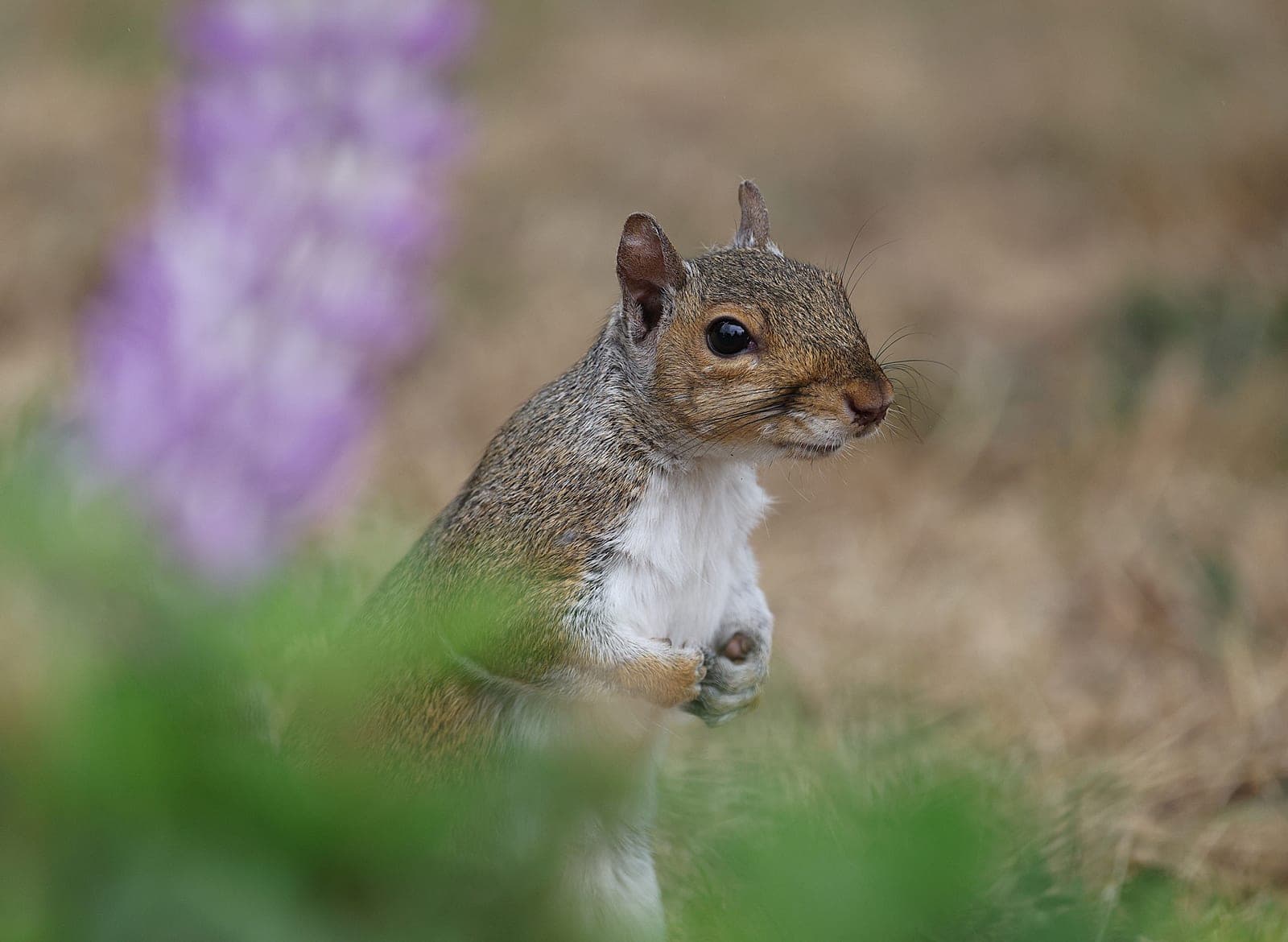
Cover the bed with a rigid mesh cage and pin the skirt down. Squirrels dig, pull and probe rather than browse, so a slack net edge is a door and a cage is not. For bulbs specifically, lay wire mesh over the planting area and cover it with soil.
The three targets
- Bulbs. Freshly planted bulbs are dug up in the days after planting, when the disturbed soil is obvious. Crocus and tulip are taken most often.
- Seedlings. Pulled rather than eaten, frequently for no visible reason. The cost is a resown bed and two weeks of the season.
- Soft fruit and tomatoes. Taken as they ripen, often a single bite from each fruit rather than one eaten whole, which is more infuriating than either.
All three are working behaviors rather than browsing, and that is the key to choosing a barrier.
Cages, not netting
A browsing animal is stopped by a layer between mouth and plant. A working animal solves a layer. A squirrel will lift a slack net edge, dig under an unpinned skirt, or simply chew through a light mesh laid loosely.
So a rigid pop-up cage, pinned properly, is the reliable answer. ANC POP publishes 40 x 40 x 30 in with eight ground stakes; the stake count is not a detail, it is the product. Plant cages and cloches covers the options and netting vs cages covers the distinction.
Baffleworks is funded by affiliate commission. If you buy through a link on this page we may earn a commission at no extra cost to you, and it never decides a ranking. Full disclosure · how we pick.
Quick picks
Ranked, with the trade-off named. Tap a row for the full write-up; the price button goes straight to Amazon.
| # | Product | Best for | Price |
|---|---|---|---|
| 1 |  ANC POP Pop-Up Mesh Plant Cover, 2-packANC POP's pop-up cage, sold as a pair. The single-unit listing is gone, so this is now the only way to buy this cage. | Two beds at once | $51.99 on Amazon |
| 2 |  HUNKA Hardware Cloth, 1/2 in mesh, 36 in x 50 ft, 19 gaugeRecommended by specification rather than by brand: 1/2 in mesh, 36 in tall, galvanized. This roll meets it — any roll matching the same three numbers does the same job. | A permanent rabbit barrier | $42.99 on Amazon |
| 3 |  Bobbex-R Rabbit, Squirrel and Chipmunk Repellent, 32 ozFormulated for the small raiders rather than for deer, which matters because the animal eating your bulbs is usually not the animal eating your hostas. | Rabbits and chipmunks specifically | $27.95 on Amazon |
| 4 |  Pop-Up Raised Bed Mesh Cover with Zipper Door, 45 inA cover that comes up with its frame already in it, and the only one on this shelf publishing a zipper door — you unzip to pick instead of lifting the whole thing off the row. | Strawberries and low crops | $14.99 on Amazon |
#ad how we are funded · price as of October 24, 2026
The picks in full
Top pick Two beds at once
ANC POP Pop-Up Mesh Plant Cover, 2-pack
ANC POP's pop-up cage, sold as a pair. The single-unit listing is gone, so this is now the only way to buy this cage.
Published specifications
- Dimensions
- 40 x 40 x 30 in each (published)
- Quantity
- 2
- Stakes
- 8 ground stakes
- Assembly
- Pop-up, folds flat
Trade-offs
- Two beds covered from one purchase, which suits a plot where more than one bed is under pressure
- Identical footprint, so beds can be laid out to one dimension
- You are committed to the 40 in module whether or not your beds match it
- The published 30 in height caps what you can grow under it
Who it is forA vegetable plot with more than one bed under pressure, which is most vegetable plots by midsummer.
Skip it ifYou have one bed and do not want a spare. There is no single-unit listing for this cage any more, so the cheaper two-pack covers on this page are the alternative.
#ad how we are funded · price as of October 24, 2026
Where these specifications came from
No. 2 A permanent rabbit barrier
HUNKA Hardware Cloth, 1/2 in mesh, 36 in x 50 ft, 19 gauge
Recommended by specification rather than by brand: 1/2 in mesh, 36 in tall, galvanized. This roll meets it — any roll matching the same three numbers does the same job.
Published specifications
- Mesh
- 1/2 in x 1/2 in (published); 1 in or smaller is the spec, 1/2 in excludes young rabbits
- Roll
- 36 in W x 50 ft L (published)
- Gauge
- 19, 0.91 mm wire diameter (published)
- Material
- Hot-dip galvanized over annealed wire (published)
- Height above ground
- At least 2 ft (Colorado State Extension)
- Buried depth
- 4 to 8 in (Colorado State Extension)
Trade-offs
- Extension services put chicken wire, hardware cloth or flexible netting at 2 ft high and buried 4 to 8 in as fairly effective against rabbits
- A permanent fix rather than a reapplication schedule
- Half-inch mesh also excludes young rabbits, which 2 in poultry netting does not
- Hot-dip galvanized after weaving, which is the coating that survives being buried
- Burying the bottom edge is the whole job, and it is real digging
- Galvanized wire is visible in a way black deer netting is not
- 36 in tall means you are burying roughly a third of what you paid for
- The listing warns of sharp edges at both ends — this is a gloves job, and nothing about this brand makes it better than any other roll at the same spec
Who it is forA vegetable plot or a border with a persistent rabbit problem, where you would rather dig once than spray for years.
Skip it ifDeer are the actual problem. Two feet of wire is a step-over for a deer; the height that matters there is 8 ft and up. See deer fencing.
#ad how we are funded · price as of October 24, 2026
Where these specifications came from
No. 3 Rabbits and chipmunks specifically
Bobbex-R Rabbit, Squirrel and Chipmunk Repellent, 32 oz
Formulated for the small raiders rather than for deer, which matters because the animal eating your bulbs is usually not the animal eating your hostas.
Published specifications
- Size
- 32 oz concentrate (published)
- Targets
- Rabbit, squirrel, chipmunk
- Form
- Dilute and spray
- Part number
- B550120
Trade-offs
- Targets the species that deer repellents are not formulated for
- Concentrate, so a season of reapplication is affordable
- Same reapplication burden as every other repellent
- It will not fix a rabbit problem that a 2 ft buried fence would fix permanently
Who it is forBulbs, seedlings and container plants that rabbits, chipmunks or squirrels are working through, where a cage would be impractical.
Skip it ifThe damage is at ground level along a boundary. Colorado State Extension is specific: two feet of wire buried 4 to 8 inches is fairly effective against rabbits, and that is a permanent fix a spray is not. See rabbit fencing.
#ad how we are funded · price as of October 24, 2026
No. 4 Strawberries and low crops
Pop-Up Raised Bed Mesh Cover with Zipper Door, 45 in
A cover that comes up with its frame already in it, and the only one on this shelf publishing a zipper door — you unzip to pick instead of lifting the whole thing off the row.
Published specifications
- Dimensions
- 45.3 x 21.7 x 17.7 in (published)
- Frame
- Pop-up, integrated (published)
- Access
- Zipper door (published)
- Mesh
- Mesh plant netting (published); no aperture published
- Anchoring
- Stakes included (count not published)
- Named use
- Raised beds, vegetables, seedlings, strawberries (published)
Trade-offs
- Pops up with the frame already in it, which is the whole argument against hoop-and-drape kits
- A zipper door, which nothing else on this shelf publishes — you pick without lifting the cover off the row
- The listing names strawberries specifically rather than just 'plants'
- At 45.3 in long it covers a bed row, and at 17.7 in it stands taller than the 39 x 18 x 16 row protector
- The listing publishes no pack count, so order on the assumption that it is one cover
- Publishes no mesh aperture, so its exclusion range is a claim rather than a figure
- Fabric mesh: a bird and insect barrier, not a squirrel one
- At 17.7 in it suits strawberries and salad crops and nothing that stands up
Who it is forA strawberry row or a bed of salad crops with a bird and insect problem, and no patience for assembly.
Skip it ifThe animal digs. Hardware cloth is the answer there, and no polyester mesh will hold a determined rodent.
#ad how we are funded · price as of October 24, 2026
The bulb trick
Bulbs have a specific and effective answer. After planting, lay wire mesh — hardware cloth or chicken wire — flat over the planting area and cover it with an inch or two of soil.
- Plant the bulbs as normal and firm the soil.
- Lay a sheet of 1 in or smaller mesh flat across the whole planted area, extending a few inches past it.
- Pin the corners with landscape staples so it cannot be flipped.
- Cover with an inch or two of soil, then mulch as usual.
- Shoots grow up through the mesh in spring; the digging is blocked all winter.
The reason this works so well is that the vulnerable window is short. Squirrels dig where the soil has recently been disturbed. Get the bulbs through that first month and the problem mostly disappears on its own.
Bulb choice helps too, and it is the one place plant selection genuinely moves the needle against squirrels — plants squirrels avoid explains why it works for bulbs and barely at all for anything else.
Repellents, in their proper place
Plant repellents such as Bobbex-R are formulated for rabbits, squirrels and chipmunks rather than for deer, and they carry the same reapplication burden as any coating: rain strips them, new growth is untreated.
Use them where a cage is impractical — a container by the door, a specimen shrub, a border you are not going to cover. Do not use one as the primary defense on a bed you could cage. And note that a seed treatment such as capsaicin sauce is for feeder seed and does nothing for a garden bed; the two products are not interchangeable.
Fix the feeder, reduce the garden pressure
This is the connection nobody makes, and it is the reason this site covers both. If you run a bird feeder within sight of the vegetable beds, spilled seed is a permanent food source subsidizing the local squirrel population. That population then works your garden.
Fitting a baffle and a seed tray reduces garden pressure at no additional cost. It is the single most overlooked move in garden protection.
What does not work
- Loose netting laid over a bed. A working animal lifts the edge within a day.
- Blood, bone or hair scattered on the soil. No published effectiveness, and it can attract other animals.
- Ultrasonic devices. No published frequency, range or habituation data on the listings we found.
- Removing the squirrels. Trapping and relocation is regulated differently in every state, frequently kills the animal, and the territory is reoccupied within weeks.
Two specific cases get their own pages. Tomatoes generate the most complaints, and the one-bite-per-fruit damage points at a specific fix: how to keep squirrels from eating tomatoes. And a raised bed is the case where most covers on sale are the wrong material for the animal — the best raised bed covers separates fabric from wire.
If the animal digs rather than climbs to reach the beds, it may not be a squirrel at all. Keeping groundhogs out of the garden covers the one garden mammal that both climbs a fence and burrows under it, and the fence shape published for it.
Fruit and nut trees are the hardest exclusion job in the whole yard, and the extension guidance says so directly. Protecting fruit trees from squirrels covers what is realistic and what is not.
Questions people actually ask
- How do I stop squirrels digging up my bulbs?
- Lay wire mesh of 1 in or smaller flat over the planted area, pin the corners, and cover with an inch or two of soil. Shoots grow through it in spring. The vulnerable window is the first month after planting.
- Will netting keep squirrels out of a raised bed?
- Not reliably. Squirrels work a barrier rather than browsing at it, and a slack net edge is a door. A rigid pop-up cage with the skirt pinned down is the dependable answer.
- Do squirrel repellents work in the garden?
- Plant repellents such as Bobbex-R reduce damage while they are on the plant, with the same reapplication burden as any coating. Use them where a cage is impractical, not as the primary defense on a bed you could cover.
- Does my bird feeder attract squirrels to the garden?
- Spilled seed under a feeder is a permanent food source that sustains the local population, and that population works your beds. A baffle and a seed tray reduce garden pressure at no extra cost.
- What is eating my tomatoes, one bite from each?
- That single-bite pattern is characteristic of squirrels and chipmunks rather than deer or rabbits, which take whole fruit or whole leaves. A cage over the plants is the fix.
Sources
Read next
- The best plant cages and cloches
Pop-up cages and cloches ranked by published dimensions and how well the skirt actually pins down.
- How to keep chipmunks out of the garden
Too light for a weight mechanism, small enough to pass 2 in mesh. Why the answer is a finer aperture.
- How to keep squirrels off bird feeders
Seven methods ranked by reliability rather than by how often they get recommended. The best one is free.
- Netting vs cages
Browsing animals need a layer; working animals need a structure. How to tell which you have.
- Garden Protection
Cages, cloches, netting and rabbit fencing, sized to the animal doing the damage rather than to the bed.