Guides / Garden
How to keep groundhogs out of the garden
A groundhog is the rare garden animal that both climbs a fence and digs under it. That is why an ordinary fence fails, and why the fix is a specific shape rather than a taller barrier.
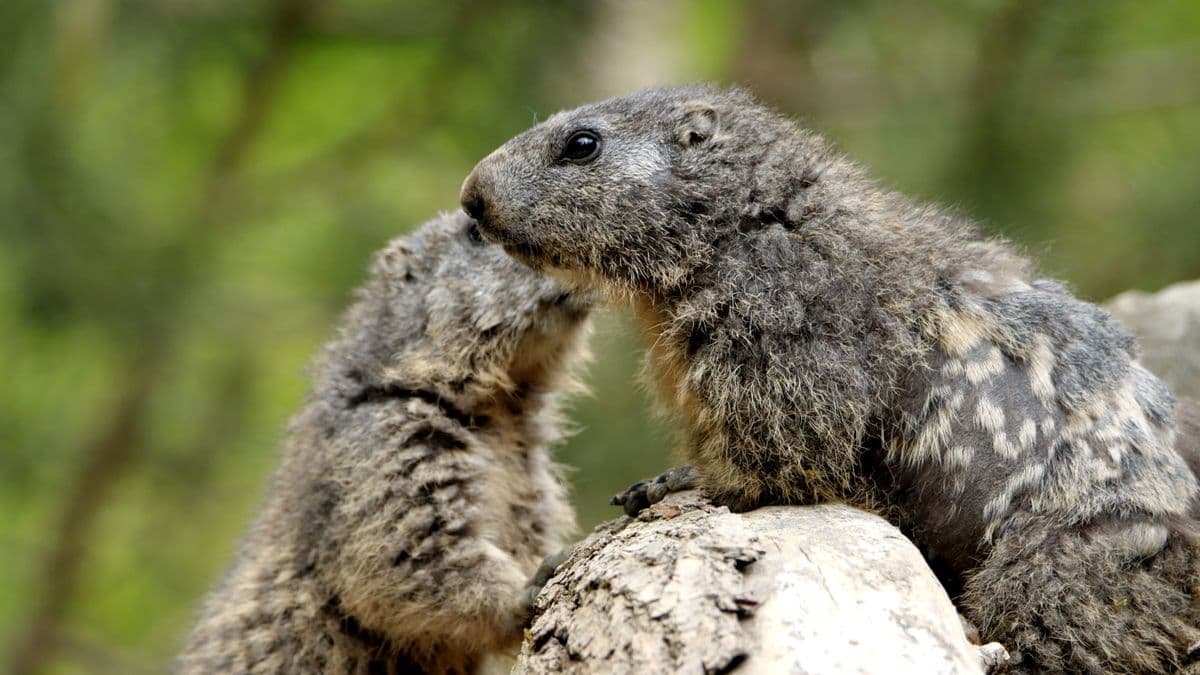
Fence it, in a specific shape. Wildlife agencies publish a minimum of 3 ft of wire, with the bottom bent outward into an L and buried, and the top 12 inches left unattached so it flops backward when the animal climbs. A groundhog does both things — climbs and digs — so a fence that stops only one is a fence it gets through.
Why an ordinary fence does not work
Most garden animals do one thing. Deer jump, rabbits squeeze through, squirrels climb. A groundhog — the same animal as a woodchuck — climbs and burrows, and it is good enough at both that a fence built against either one alone simply redirects it to the other method.
That is the whole design problem, and it is why the published answer is a shape rather than a height. Three feet of wire lying flat against the ground will be dug under by the afternoon. Three feet of wire with a buried L-shaped apron and a loose top is a different object entirely.
The published specification
Two sources, and they agree on the essentials. The Internet Center for Wildlife Damage Management states that "fences should be at least 3 feet high and made of heavy poultry wire or 2-inch mesh woven wire", and that you should "bury the lower edge 2 inches in the ground and bend the lower edge at an L-shaped angle leading outward", accompanied by an overhang. Connecticut DEEP puts it at "a sturdy fence at least 3 feet high" with "the fence extend underground another 1.5 to 2 feet" and "a 1-foot extension that is bent outward at a 90-degree angle."
| Element | ICWDM | Connecticut DEEP |
|---|---|---|
| Height above ground | At least 3 ft | At least 3 ft |
| Wire | Heavy poultry wire or 2 in mesh woven wire | Galvanized wire mesh |
| Below ground | Bury the lower edge 2 in | Extend underground another 1.5 to 2 ft |
| Bottom shape | Bend the lower edge into an L leading outward | A 1 ft extension bent outward at 90 degrees |
| Top | Accompanied by an overhang | — |
| Electric option | A wire a few inches from the top, or 4 to 5 in off the ground | A hot shot wire 4 to 6 in above ground |
Both figures are reproduced as published. Where they disagree, we say so rather than averaging them.
Where the two sources disagree, and which to follow
They differ by an order of magnitude on one number. ICWDM says bury the lower edge 2 inches; Connecticut DEEP says extend it underground 1.5 to 2 feet. That is not a rounding difference and it is worth understanding rather than splitting.
Read them together and the mechanism resolves it: both sources bend the bottom outward, and that horizontal apron is what actually does the work. A digging animal starts at the base of the fence and goes down. An apron lying flat under the soil, pointing away from the garden, means it hits wire wherever it starts. Depth alone does not do that — a groundhog will happily dig deeper than two inches, and deeper than two feet if there is nothing horizontal in the way.
So the honest reading is: the outward L is the specification, and the depth is the margin. Go as deep as your soil and patience allow, but do not skip the bend to buy depth. This is the same logic as the clearance geometry on the feeder side of this site — the shape defeats the animal, not the size.
The floppy top, and why it works
ICWDM's "overhang" is the second half. The practice is to leave the top 12 inches unattached to the posts, bent outward, so it is not a rigid surface.
A groundhog climbs the rigid lower section confidently. When it reaches an unsupported top, the wire folds backward under its weight and the animal loses purchase and drops. A taller fence gives it something solid to climb; a wobbly one does not. It is the closest thing in garden fencing to a spring baffle — weight defeats the climb rather than height.
Baffleworks is funded by affiliate commission. If you buy through a link on this page we may earn a commission at no extra cost to you, and it never decides a ranking. Full disclosure · how we pick.
Quick picks
Ranked, with the trade-off named. Tap a row for the full write-up; the price button goes straight to Amazon.
| # | Product | Best for | Price |
|---|---|---|---|
| 1 |  SANZEUS Welded Wire Fence, 3 ft x 50 ft, 2 x 4 in, 15 gaugeHeavy-gauge welded wire at the 3 ft height wildlife agencies publish for woodchucks, in a 50 ft roll — the right raw material for a fence that has to be buried and bent. | The fence itself, at the published height | $49.99 on Amazon |
| 2 |  HUNKA Hardware Cloth, 1/2 in mesh, 36 in x 50 ft, 19 gaugeRecommended by specification rather than by brand: 1/2 in mesh, 36 in tall, galvanized. This roll meets it — any roll matching the same three numbers does the same job. | A permanent rabbit barrier | $44.45 on Amazon |
| 3 |  Tongmo Welded Wire Fence, 3 ft x 100 ft, 2 x 4 in, 16 gaugeThe same 3 ft height in a 100 ft roll. Fewer joins around a real garden, at the cost of a lighter gauge than the 50 ft option. | A long perimeter in one run | $75.99 on Amazon |
| 4 |  Deer Out Rabbit & Groundhog Repellent, 40 oz ready-to-useOne of the few repellents whose label names groundhogs and woodchucks rather than leaving you to hope. Ready to use, mint-scented, published as rain resistant. | A repellent that actually names the animal | $17.95 on Amazon |
| 5 |  Messina Animal Stopper Granular RepellentGranular rather than spray, and the only product here whose instructions tell you to apply it to dens, tunnels and entries — which is where a groundhog problem actually lives. | Treating a den or a burrow entrance | $27.98 on Amazon |
| 6 |  Orbit Yard Enforcer Motion-Activated Sprinkler (62100)The one deterrent device category with a mechanism you can verify from the spec sheet: infrared detection out to 40 ft, and a burst of water the animal cannot argue with. | Deer and raccoons over a wide arc | $89.99 on Amazon |
#ad how we are funded · price as of September 20, 2026
The picks in full
Top pick The fence itself, at the published height
SANZEUS Welded Wire Fence, 3 ft x 50 ft, 2 x 4 in, 15 gauge
Heavy-gauge welded wire at the 3 ft height wildlife agencies publish for woodchucks, in a 50 ft roll — the right raw material for a fence that has to be buried and bent.
Published specifications
- Height
- 3 ft (published)
- Roll length
- 50 ft (published)
- Mesh
- 2 x 4 in (published)
- Gauge
- 15 (published)
- Material
- Galvanized steel, welded joints (published)
- Working
- Published as cuttable and installable with T-posts
Trade-offs
- 3 ft is the height both sources on this page publish as the minimum for woodchucks
- 15 gauge is heavier wire than the 16 gauge most garden rolls use, which matters on a fence an animal climbs
- Welded rather than woven, so the joints do not slip when you bend the bottom into an L
- 2 x 4 in mesh is small enough for a groundhog and open enough to see through
- 50 ft does not go far around a vegetable plot — measure the perimeter before ordering one roll
- Galvanized bare wire is visible in a way black PVC-coated fencing is not
- Cut ends are sharp and the roll has memory; this is a gloves-and-two-people job
- It is only the wire. Posts, ties and the digging are all still ahead of you
Who it is forA vegetable garden or a run of beds that needs a permanent barrier built to the published spec rather than a temporary screen.
Skip it ifYour perimeter is long. The 100 ft roll costs less per foot and saves a join, and joins are where a burrowing animal gets in.
#ad how we are funded · price as of September 20, 2026
Where these specifications came from
No. 2 A permanent rabbit barrier
HUNKA Hardware Cloth, 1/2 in mesh, 36 in x 50 ft, 19 gauge
Recommended by specification rather than by brand: 1/2 in mesh, 36 in tall, galvanized. This roll meets it — any roll matching the same three numbers does the same job.
Published specifications
- Mesh
- 1/2 in x 1/2 in (published); 1 in or smaller is the spec, 1/2 in excludes young rabbits
- Roll
- 36 in W x 50 ft L (published)
- Gauge
- 19, 0.91 mm wire diameter (published)
- Material
- Hot-dip galvanized over annealed wire (published)
- Height above ground
- At least 2 ft (Colorado State Extension)
- Buried depth
- 4 to 8 in (Colorado State Extension)
Trade-offs
- Extension services put chicken wire, hardware cloth or flexible netting at 2 ft high and buried 4 to 8 in as fairly effective against rabbits
- A permanent fix rather than a reapplication schedule
- Half-inch mesh also excludes young rabbits, which 2 in poultry netting does not
- Hot-dip galvanized after weaving, which is the coating that survives being buried
- Burying the bottom edge is the whole job, and it is real digging
- Galvanized wire is visible in a way black deer netting is not
- 36 in tall means you are burying roughly a third of what you paid for
- The listing warns of sharp edges at both ends — this is a gloves job, and nothing about this brand makes it better than any other roll at the same spec
Who it is forA vegetable plot or a border with a persistent rabbit problem, where you would rather dig once than spray for years.
Skip it ifDeer are the actual problem. Two feet of wire is a step-over for a deer; the height that matters there is 8 ft and up. See deer fencing.
#ad how we are funded · price as of September 20, 2026
Where these specifications came from
No. 3 A long perimeter in one run
Tongmo Welded Wire Fence, 3 ft x 100 ft, 2 x 4 in, 16 gauge
The same 3 ft height in a 100 ft roll. Fewer joins around a real garden, at the cost of a lighter gauge than the 50 ft option.
Published specifications
- Height
- 3 ft (published)
- Roll length
- 100 ft (published)
- Mesh
- 2 x 4 in (published)
- Gauge
- 16 (published)
- Material
- Galvanized steel, welded (published)
Trade-offs
- 100 ft covers most home vegetable plots without a join
- Every join in a buried fence is a weak point, and this removes one or two of them
- Same published 3 ft height and 2 x 4 in mesh as the heavier roll
- Cheaper per foot than buying two 50 ft rolls
- 16 gauge is lighter wire than the 15 gauge roll — thinner, and easier to deform where it is bent
- A 100 ft roll of galvanized wire is heavy and awkward to handle alone
- The listing's own note warns about sharp edges after cutting
- Still bare galvanized, so it is a visible fence
Who it is forA full garden perimeter where join count and cost per foot matter more than the extra stiffness of heavier wire.
Skip it ifYou are fencing a short run or a single bed. The 50 ft roll in 15 gauge is stiffer where it counts and you will not waste half of it.
#ad how we are funded · price as of September 20, 2026
Where these specifications came from
No. 4 A repellent that actually names the animal
Deer Out Rabbit & Groundhog Repellent, 40 oz ready-to-use
One of the few repellents whose label names groundhogs and woodchucks rather than leaving you to hope. Ready to use, mint-scented, published as rain resistant.
Published specifications
- Size
- 40 oz ready-to-use (published)
- Named animals
- Rabbits, groundhogs, woodchucks, gophers (published)
- Scent
- Mint; published as pleasant to people
- Rain
- Two natural stickers; published as rain resistant
- Season
- Published as year-round
- Ingredients
- Published as all natural
Trade-offs
- Names groundhogs and woodchucks on the label, which most repellents on the shelf do not
- Ready to use, so there is no mixing before the first application
- Publishes a sticker system rather than just claiming rain resistance
- Mint rather than putrescent egg, which matters on a vegetable plot you walk through
- Publishes no coverage area and no reapplication interval, so the schedule is yours to work out
- Ready-to-use is the expensive way to buy any repellent per treated area
- A repellent shifts a preference; a hungry groundhog with a burrow beside your beans is not reading labels
- No published duration figure, unlike the deer repellents on this site
Who it is forPlants outside the fence line, or a garden where fencing is not yet built and something has to happen this week.
Skip it ifYou are treating a large plot repeatedly. Buy the concentrate — cost per treated area is what decides whether you keep applying.
#ad how we are funded · price as of September 20, 2026
Where these specifications came from
No. 5 Treating a den or a burrow entrance
Messina Animal Stopper Granular Repellent
Granular rather than spray, and the only product here whose instructions tell you to apply it to dens, tunnels and entries — which is where a groundhog problem actually lives.
Published specifications
- Form
- Granular, applied with a spreader (published)
- Named animals
- Armadillos, beavers, gophers, groundhogs, rabbits, raccoons, skunks, woodchucks (published)
- Duration
- Guaranteed 30 days effective per application (published)
- Weather
- Published as effective regardless of rain, weather and watering
- Application
- Apply to dens, tunnels, entries and plants (published)
- Ingredients
- All natural food grade, plant extracts (published)
Trade-offs
- Publishes a duration — 30 days per application — which almost nothing in this category does
- Granular goes where a spray cannot: down a burrow entrance and along a tunnel line
- Names groundhogs and woodchucks separately in a long species list
- Published as safe around vegetables, which matters on the plot this is protecting
- Needs a spreader for even application, which is another thing to own
- Granules on open soil are a consumable — rain moves them even if the claim is that they keep working
- A repellent at a burrow entrance may move the animal a few feet rather than off the property
- 30 days guaranteed is a marketing guarantee, not a measured efficacy figure
Who it is forA yard with an active burrow where the goal is to make that specific spot unattractive before it is excluded properly.
Skip it ifThe burrow is under a shed or a porch. That needs galvanized mesh buried along the opening, not granules — and never while the animal is inside.
#ad how we are funded · price as of September 20, 2026
Where these specifications came from
No. 6 Deer and raccoons over a wide arc
Orbit Yard Enforcer Motion-Activated Sprinkler (62100)
The one deterrent device category with a mechanism you can verify from the spec sheet: infrared detection out to 40 ft, and a burst of water the animal cannot argue with.
Published specifications
- Detection
- Passive infrared
- Sensor range
- Up to 40 ft, adjustable (published)
- Spray duration
- Approximately 3 to 10 seconds (published)
- Modes
- Day and night detection
- Function
- Dual-purpose: deterrent and sprinkler
- Model
- 62100
Trade-offs
- Published detection range and spray duration, which almost nothing else in the deterrent aisle offers
- Water plus noise plus movement is a genuine startle, not a claimed one
- Day and night modes let you stop it firing at the postman
- It needs a hose, so its position is decided by your tap as much as by the animals
- Freezing weather takes it out of service exactly when deer browse hardest
Who it is forDeer, raccoons or cats on a defined approach — a bed, a path, a run of shrubs — during the frost-free months.
Skip it ifYour winter freezes. This is a hose-fed device, and a hose-fed device in January is a burst hose. Fence or repellent for the cold half of the year.
#ad how we are funded · price as of September 20, 2026
Where these specifications came from
Building it, in order
- Dig a trench along the fence line, as deep as you reasonably can, with a horizontal shelf on the outside of it.
- Bend the bottom 12 in of the wire outward at 90 degrees before you set it, so the apron points away from the garden.
- Set the wire so at least 3 ft stands above ground after the bend, and backfill over the apron.
- Attach the wire to posts for the lower two thirds only. Leave the top 12 in free and bend it outward.
- Walk the line and look for gaps at gates, corners and where the ground dips. A burrowing animal finds those first.
If the problem is a burrow under a shed, deck or porch rather than a vegetable plot, Connecticut DEEP's method is the same material in a different place: "galvanized wire mesh along the openings and burying it at least 1.5 to 2 feet underground." The same caution applies here as everywhere on this site — never close an opening that something may still be behind. Squirrel proofing your house sets out why, and it applies to a groundhog under a deck exactly as it does to a squirrel in a roof.
Repellents: what the labels actually say
Here is something worth knowing before you shop. Almost no mainstream repellent names groundhogs. Plantskydd's label lists deer, elk, moose, rabbits, voles, squirrels and chipmunks. Bobbex-R lists rabbit, squirrel and chipmunk. Liquid Fence lists deer and rabbits. None of them names a groundhog, and a label that does not name your animal is not evidence about your animal.
The two on this page do name it, which is the entire reason they are here rather than the products this site usually recommends. Even then, keep expectations calibrated: ICWDM's note on repellent efficacy is narrow — "fox urine has shown some effectiveness in reducing damage to crops and is registered for the control of woodchucks by the Environmental Protection Agency" — and Connecticut DEEP puts it at "commercial taste or odor repellents may provide some level of plant protection." Some level. That is the honest ceiling.
Use a repellent on the plants outside your fence, or while the fence is still a plan. Do not buy one instead of the fence.
The motion sprinkler, which the agency actually endorses
Connecticut DEEP lists a motion-activated noise alarm or spray water among its options, which is unusually specific support for a category that is normally long on claims. A motion sprinkler is covered in depth on the sprinkler roundup and the Orbit review, and everything said there applies here: aim it across the route the animal uses, not at the area, and move it every few weeks because habituation is the standing weakness of any startle device.
On trapping and relocation
This is the most common advice in the category and this site recommends against it, as it does for squirrels and raccoons. For groundhogs there is a regulatory point on top of the practical one: Connecticut DEEP states that "animals should not be released on state lands... nor on private property unless the landowner grants permission." Rules vary by state and it is your responsibility to know yours.
The practical objection is unchanged. A burrow in good habitat is valuable real estate, and removing its occupant leaves the burrow. A fence built to the published shape protects the garden from whichever groundhog arrives next; a trap deals with one animal.
What we would not do
- Build a taller fence instead of a shaped one. Height is the wrong variable — a groundhog climbs a rigid fence and digs under a flat one. The L and the loose top are the specification.
- Skip the apron to save digging. It is the part that actually stops the burrowing, and depth without it just moves the tunnel down.
- Attach the fence to the posts all the way up. A rigid top is a ladder. The top 12 inches are supposed to fail under weight.
- Buy a repellent whose label does not name groundhogs. Most do not. That silence is information.
- Close a burrow entrance without knowing it is empty. Same rule as every exclusion job on this site, and the season matters — young may be present.
Questions people actually ask
- How do I keep groundhogs out of my garden?
- Fence it to the published shape: at least 3 ft of wire above ground, the bottom bent outward into an L and buried, and the top 12 inches left unattached so it flops back when climbed. A groundhog both climbs and digs, so the fence has to defeat both.
- How high does a groundhog fence need to be?
- At least 3 feet above ground. Both the Internet Center for Wildlife Damage Management and Connecticut DEEP publish that figure. Height alone is not enough — the bent bottom and the loose top are what make it work.
- How deep should a groundhog fence be buried?
- The sources differ. ICWDM says bury the lower edge 2 inches; Connecticut DEEP says extend underground 1.5 to 2 feet. Both bend the bottom outward, and that outward apron is the part doing the work. Go as deep as you can, but do not skip the bend.
- Can groundhogs climb fences?
- Yes, which is why the top 12 inches are left unattached and bent outward. The animal climbs the rigid section, then the loose top folds under its weight and it drops back.
- What is the best groundhog repellent?
- Start with one whose label actually names groundhogs or woodchucks, because most do not — Plantskydd, Bobbex-R and Liquid Fence all omit them. Then calibrate: ICWDM notes only fox urine as EPA-registered for woodchucks, and Connecticut DEEP says repellents may provide some level of plant protection.
- Do groundhog repellents work?
- Partly, and the published language is deliberately modest. Use them on plants outside the fence or while the fence is being built, not instead of it.
- Should I trap a groundhog?
- We recommend against it. Connecticut DEEP notes animals should not be released on state land, nor on private property without the owner's permission, and rules vary by state. A burrow in good habitat gets reoccupied; a properly shaped fence protects the garden from the next animal too.
- What mesh size stops a groundhog?
- ICWDM publishes heavy poultry wire or 2-inch mesh woven wire. The welded wire on this page is 2 x 4 in, which is within that, and finer hardware cloth works for the buried apron and for closing openings under structures.
Sources
- Internet Center for Wildlife Damage Management, Woodchuck Damage Prevention and Control Methods
- Connecticut Department of Energy and Environmental Protection, Problems with Woodchucks
- Colorado State University Extension, Preventing Deer Damage
- Internet Center for Wildlife Damage Management, Tree Squirrels
Read next
- Rabbit fencing
Two feet high, buried four to eight inches, one inch mesh. The one garden problem with a published answer.
- How to keep squirrels out of the garden
Squirrels work a garden rather than browse it, which is why a cage holds and a drape does not.
- The best motion-activated sprinklers
The one deterrent category with published, checkable specs. Which unit states its numbers, and where to point it.
- The best raised bed covers to keep squirrels out
Fabric stops birds and insects; only wire stops a squirrel that digs. Which cover for which animal, sized to a 4 x 8 bed.
- Garden Protection
Cages, cloches, netting and rabbit fencing, sized to the animal doing the damage rather than to the bed.