Deterrents / Opossums
Opossum deterrents: there is no repellent, so exclude instead
This is the rare category where the standard reference rules out two whole aisles in one sentence each. What is left is a barrier and a tidy yard, and both of those actually work.
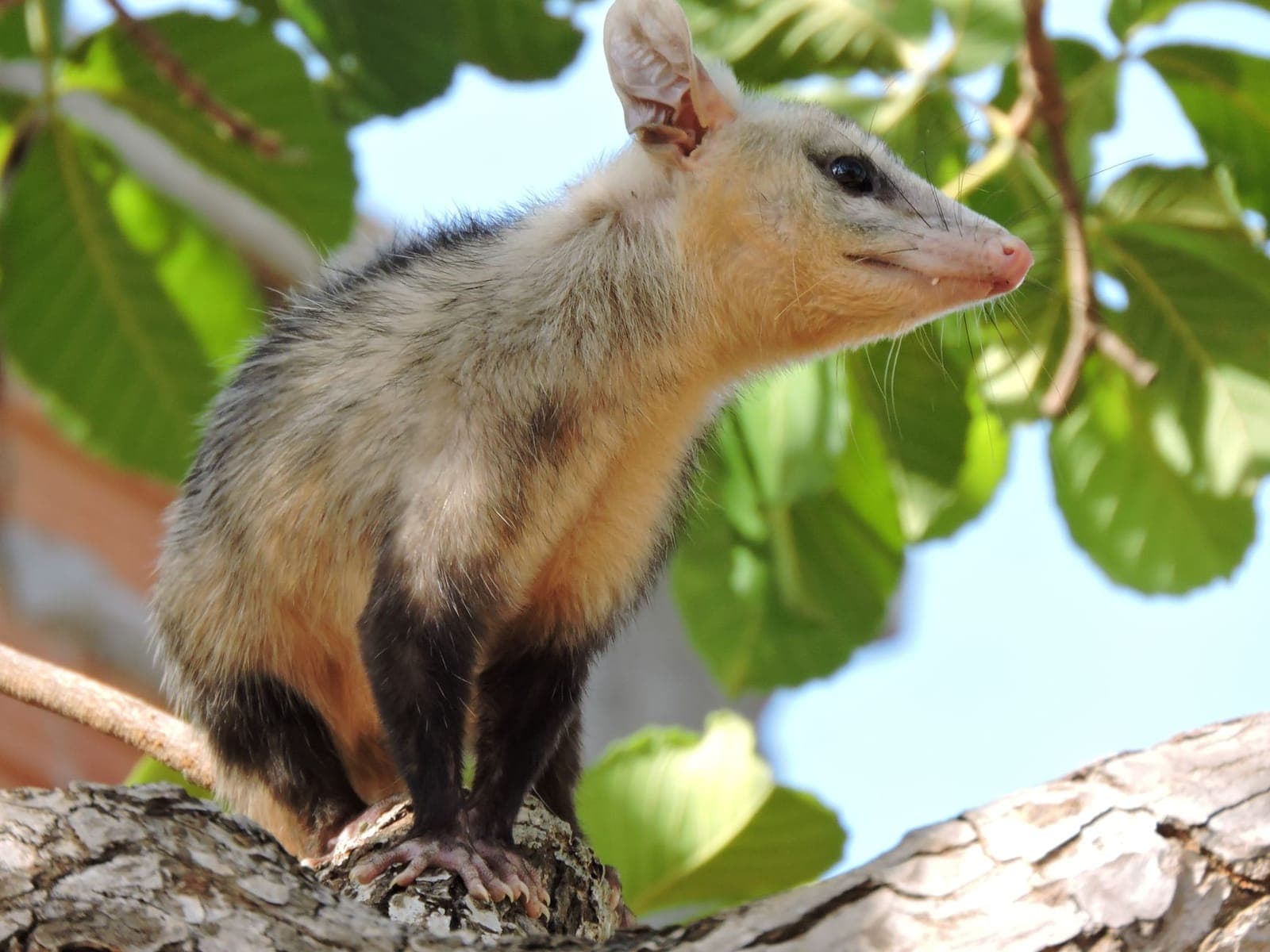
There is no repellent and no device. The Internet Center for Wildlife Damage Management states that no repellents are registered for the control of opossums and that no frightening devices are effective for them. The answer is exclusion and food: 1 x 1/2 in galvanized hardware cloth buried about 2 in with a 12 to 18 in skirt, plus no fallen birdseed, no open bins and no pet food outside.
Two sentences that decide the whole category
Most animal pages on this site involve weighing a repellent against a barrier against a device. The opossum page does not, because the standard damage-management reference removes two of those three options outright.
On repellents: no repellents are registered for the control of opossums. Registration is the mechanism by which a product has to show it does something, so an unregistered claim is the manufacturer's opinion. On devices: no frightening devices are effective for the control of opossums. Not unproven - ineffective.
That is unusually clean guidance, and it is good news rather than bad. It means you can ignore most of the aisle and spend the whole budget on the thing that works.
Food first, because it is the reason they are here
An opossum is a nocturnal generalist. It is not browsing your hostas and it is not after a particular crop - it is eating whatever is easy, which in most yards means three things.
- Fallen birdseed. ICWDM's instruction is to remove or modify bird feeders to prevent food from falling to the ground. The ground is the opossum's whole feeding strategy, so a seed tray under the feeder does more here than any deterrent.
- Open bins. Cover trash and garbage bins, and securely fasten the lids. An opossum has hands and patience.
- Pet food left outside. Remove dishes of pet food that are outside. This is the single most common reason a yard has a resident opossum rather than a passing one.
ICWDM also lists habitat work: clear brush piles and plug burrows. An opossum that finds no food and no den moves on without any further encouragement from you.
The published exclusion spec
Where the animal is getting under a structure, the figures are specific and worth following exactly rather than approximately.
| Element | Published figure | Why it is that number |
|---|---|---|
| Mesh | 1 x 1/2 in galvanized hardware cloth | Secures crawl spaces, porches and decks. Galvanized because it is buried and stays buried |
| Burial depth | At least 2 in belowground | Shallower than you would expect, because the skirt does the real work |
| Skirt | A 12 to 18 in skirt under the soil | Runs outward, not down. An animal digging at the wall meets wire and gives up |
| Deeper alternative | Some sources suggest 12 to 24 in with a 12 in perpendicular skirt | ICWDM notes the greater depth is not necessary to exclude opossums |
| Climb-stopper | A tightly stretched electric wire near the top of a fence, 3 in out from the mesh | For a fence rather than a crawl space. Opossums climb, so a plain fence is a ladder |
The skirt is the part people skip and the part that matters. A vertical trench twice as deep with no outward skirt is more work and less effective.
Note what ICWDM says about going deeper: it is not necessary. That is a rare and useful piece of guidance, because the instinct with a digging animal is to dig a deeper trench. Here the horizontal skirt beats vertical depth, and knowing that saves a weekend.
Baffleworks is funded by affiliate commission. If you buy through a link on this page we may earn a commission at no extra cost to you, and it never decides a ranking. Full disclosure · how we pick.
Quick picks
Ranked, with the trade-off named. Tap a row for the full write-up; the price button goes straight to Amazon.
| # | Product | Best for | Price |
|---|---|---|---|
| 1 |  HUNKA Hardware Cloth, 1/2 in mesh, 36 in x 50 ft, 19 gaugeRecommended by specification rather than by brand: 1/2 in mesh, 36 in tall, galvanized. This roll meets it — any roll matching the same three numbers does the same job. | A permanent rabbit barrier | $42.99 on Amazon |
| 2 |  HOOPLE Landscape Staples, 6 in, 11 gauge, 100 packSix inches of 11 gauge galvanized wire, a hundred of them. This is the cheapest item on the page and the one most likely to decide whether the fence works. | Pinning the bottom edge, which is where fences fail | $15.99 on Amazon |
| 3 |  24 in Anti-Flip Hanging Seed Catcher TrayThe widest hanging tray on the page, hung under whatever you already own: 24 in of tray with a published 4 in wall, and an anti-flip design aimed at the one thing hanging trays do worst. | A hanging feeder, at the widest catch | $18.99 on Amazon |
| 4 |  6 Gallon Galvanized Steel Seed Can with LidA galvanized can with a lid, which is the storage extension guidance actually names: rodents gnaw through plastic and paper, and do not gnaw through steel. | Storing seed where rodents cannot smell their way in | $28.79 on Amazon |
| 5 |  Erva SB2D Cylindrical Squirrel and Raccoon Baffle, 28 x 6.25 inA cylinder rather than a disk, so it defeats the climb by length instead of width, and it is one of the few baffles whose listing names raccoons as well as squirrels. | Round poles, raccoons too | $62.99 on Amazon |
#ad how we are funded · price as of October 24, 2026
The picks in full
Top pick A permanent rabbit barrier
HUNKA Hardware Cloth, 1/2 in mesh, 36 in x 50 ft, 19 gauge
Recommended by specification rather than by brand: 1/2 in mesh, 36 in tall, galvanized. This roll meets it — any roll matching the same three numbers does the same job.
Published specifications
- Mesh
- 1/2 in x 1/2 in (published); 1 in or smaller is the spec, 1/2 in excludes young rabbits
- Roll
- 36 in W x 50 ft L (published)
- Gauge
- 19, 0.91 mm wire diameter (published)
- Material
- Hot-dip galvanized over annealed wire (published)
- Height above ground
- At least 2 ft (Colorado State Extension)
- Buried depth
- 4 to 8 in (Colorado State Extension)
Trade-offs
- Extension services put chicken wire, hardware cloth or flexible netting at 2 ft high and buried 4 to 8 in as fairly effective against rabbits
- A permanent fix rather than a reapplication schedule
- Half-inch mesh also excludes young rabbits, which 2 in poultry netting does not
- Hot-dip galvanized after weaving, which is the coating that survives being buried
- Burying the bottom edge is the whole job, and it is real digging
- Galvanized wire is visible in a way black deer netting is not
- 36 in tall means you are burying roughly a third of what you paid for
- The listing warns of sharp edges at both ends — this is a gloves job, and nothing about this brand makes it better than any other roll at the same spec
Who it is forA vegetable plot or a border with a persistent rabbit problem, where you would rather dig once than spray for years.
Skip it ifDeer are the actual problem. Two feet of wire is a step-over for a deer; the height that matters there is 8 ft and up. See deer fencing.
#ad how we are funded · price as of October 24, 2026
Where these specifications came from
No. 2 Pinning the bottom edge, which is where fences fail
HOOPLE Landscape Staples, 6 in, 11 gauge, 100 pack
Six inches of 11 gauge galvanized wire, a hundred of them. This is the cheapest item on the page and the one most likely to decide whether the fence works.
Published specifications
- Length
- 6 in (published)
- Gauge
- 11 (published)
- Quantity
- 100 (published)
- Finish
- Galvanized (published)
Trade-offs
- 11 gauge is thick enough to drive into firm soil without folding, which 12 and 14 gauge staples do
- 100 staples at roughly one every 2 ft covers about 200 ft of bottom edge
- Galvanized, so they survive being left in wet ground season after season
- 6 in is short for loose or sandy soil, where a longer pin or a buried apron holds better
- Pinning a bottom edge is slow, unglamorous work that most people skip — which is precisely why it is on this page
- They disappear into grass, so mark the line before you mow
Who it is forEvery mesh fence, without exception. The top of a deer fence gets all the attention and the bottom is where the animals get through.
Skip it ifYou are burying an apron of wire instead, which is better and considerably more work.
#ad how we are funded · price as of October 24, 2026
Where these specifications came from
No. 3 A hanging feeder, at the widest catch
24 in Anti-Flip Hanging Seed Catcher Tray
The widest hanging tray on the page, hung under whatever you already own: 24 in of tray with a published 4 in wall, and an anti-flip design aimed at the one thing hanging trays do worst.
Published specifications
- Diameter
- 24 in (published)
- Depth
- 4 in (published)
- Stability
- Anti-flip, windproof platform (published)
- Mounting
- Hanging, accessories included (published; the listing does not itemise them)
- Fit
- Published as fitting most bird feeders
Trade-offs
- The widest hanging tray here — 24 in against the 16 in hanging pair, and wider in span than the 20 in pole tray
- A published 4 in wall, which is what stops a gust lifting the husks back out
- Anti-flip and windproof are the published claims, and flipping is exactly what a hanging tray does worst
- Accessories come with it, so it goes under an existing feeder without a second order
- The listing publishes no material and no drainage detail, which is half of how this page ranks trays
- Anti-flip and windproof are claims with no figure behind them — no wind speed and no weight
- 24 in of tray under a small feeder is a lot of hardware to look at
- Nothing about it is squirrel-rated; it catches seed, it does not exclude anything
Who it is forA hanging feeder on a hook or branch where the ground beneath is patio, deck or lawn you would rather keep clean.
Skip it ifThe feeder is on a pole. The pole-mount tray sits centered and still, and this one will swing.
#ad how we are funded · price as of October 24, 2026
Where these specifications came from
No. 4 Storing seed where rodents cannot smell their way in
6 Gallon Galvanized Steel Seed Can with Lid
A galvanized can with a lid, which is the storage extension guidance actually names: rodents gnaw through plastic and paper, and do not gnaw through steel.
Published specifications
- Capacity
- 6 gallon (published)
- Material
- Galvanized steel (published)
- Lid
- Included (published)
- Stated use
- Bird seed storage, rodent proof (published)
Trade-offs
- Steel is on the short list of materials rodents cannot gnaw through, alongside concrete and wire mesh
- 6 gallons takes a 15-20 lb bag of seed with the bag opened flat inside
- A lid that seats properly also keeps the seed dry, which is the other way stored seed goes bad
- A lid that merely rests on top is not enough where raccoons are active — they lift lids; a locking or strapped lid is the fix
- Galvanized steel left in the weather will eventually rust at the seams
Who it is forAnyone storing seed in a garage, shed or porch — which is the single most common reason rats appear at a feeder.
Skip it ifYou buy 5 lb bags and use them in a fortnight. The bag in a sealed bin indoors is fine.
#ad how we are funded · price as of October 24, 2026
Where these specifications came from
No. 5 Round poles, raccoons too
Erva SB2D Cylindrical Squirrel and Raccoon Baffle, 28 x 6.25 in
A cylinder rather than a disk, so it defeats the climb by length instead of width, and it is one of the few baffles whose listing names raccoons as well as squirrels.
Fits: Round pole
Published specifications
- Type
- Cylindrical / stovepipe
- Dimensions
- 28 in long x 6.25 in diameter (published)
- Named animals
- Squirrel and raccoon (published)
- Finish
- Black (published)
- Origin
- Made in USA (published)
- Pole fit
- Not published — measure your pole first
Trade-offs
- Cylinder geometry tilts and rocks under weight rather than presenting a rim to grab
- 28 in of published length is a long climb to defeat, and length is this shape's entire mechanism
- Explicitly specified for raccoons as well as squirrels, which most baffles are not
- No published pole-diameter fit, and a cylinder is fitment-critical — measure before you buy
- A cylinder hides the pole, which some people dislike visually
- Costs noticeably more than a plain disk baffle of similar overhang
Who it is forA round pole, especially one that raccoons also visit, where you would rather beat the climb by length than by overhang.
Skip it ifYour pole will not pass through a 6.25 in cylinder, or you are on a 4x4 post. Cylinders are fitment-critical in a way disks are not.
#ad how we are funded · price as of October 24, 2026
Where these specifications came from
What we would skip
Opossum repellents - all of them
ICWDM states plainly that no repellents are registered for the control of opossums. A product sold as an opossum repellent is not a registered one, which means nobody has had to demonstrate it does anything. Spend the money on mesh.
Ultrasonic, strobe and motion-activated devices
ICWDM is equally direct: no frightening devices are effective for the control of opossums. Havahart's Critter Ridder names opossums on its spec sheet, and we rate that unit well for deer and raccoons - but a named species is a claim, and this is one the literature contradicts.
Trapping as a first move
Extension sources note opossums are not wary of traps and are easily caught, which is exactly why it looks attractive. Protections, permits and relocation rules vary by state, a trapped animal is replaced by the next one if the food is still there, and this site's position is exclusion over removal. Check your state law before you consider it at all.
They climb, which changes the feeder answer
An opossum is a competent climber with a prehensile tail, and that puts it in the same bracket as a raccoon rather than a squirrel for feeder purposes: heavier than the animal most baffles are specified against, and able to reach further.
Most baffle listings name squirrels only. A few name raccoons, and those are the ones worth buying if a climbing night visitor is the problem - Erva's SB2D and SB3 both do. Raccoon deterrents covers that reasoning in full and it transfers directly, with one difference: the sprinkler that page recommends alongside the baffle has no published support against opossums, so for this animal the baffle and the food management carry the whole job.
The height and clearance numbers are the same ones the rest of this site runs on. The clearance spec sets them out, and a pole that satisfies them for a squirrel is a reasonable starting point here too.
What an opossum is actually doing in the yard
Worth a paragraph, because it affects how much effort this deserves. Opossums are not territorial, do not dig lawns the way skunks do, do not girdle trees and do not strip a vegetable bed. The complaint is almost always the bins, the pet bowl, the fallen seed, or the animal living under the deck.
So the realistic goal is not an opossum-free yard - it is a yard with nothing in it worth an opossum's night. That is the same conclusion the food-management section arrives at, from the other direction.
The order we would do this in
- Remove the food for a week. Pet bowls in, bins fastened, a tray under the feeder or the feeder down. Most cases end here and cost nothing.
- Find the den, if there is one. Decks, porches and crawl spaces. Look for a worn entry rather than guessing.
- Check it is empty before you close it. Closing an animal in is both cruel and a bigger problem than the one you started with. Young are a real possibility in spring.
- Screen it properly. 1 x 1/2 in galvanized hardware cloth, about 2 in down, with the 12 to 18 in skirt running outward. Pin the skirt with landscape staples before you backfill.
- Clear the brush piles and plug the burrows ICWDM mentions, so the next animal through finds nowhere to settle.
- Skip the repellent aisle entirely. There is nothing registered in it for this animal.
How we picked
- We filtered on published mechanism first. If a maker will not state a detection range, a dose or a frequency, we cannot compare the product and we do not rank it.
- We recorded published figures only — detection ranges, spray durations, mixing ratios, stated species coverage.
- We separated startle from exclusion. A device that works by surprise decays through habituation; a barrier does not. We say which is which on every page.
- We named at least one product to skip on every page, with the reason.
- We have not tested any of these. How we pick sets out what that does and does not cover.
Everyone in this category says they tested twenty of these. We have not tested any, and we say so. What we did instead: read the manuals, compiled the published specifications, worked out the clearance geometry, and cited every source. The full method is published.
Questions people actually ask
- What is the best opossum repellent?
- There isn't one. ICWDM states that no repellents are registered for the control of opossums, which means no product on the shelf has had to demonstrate that it works on this animal. Exclusion with hardware cloth and removing the food source are the methods with published support.
- Do ultrasonic or motion-activated opossum deterrents work?
- ICWDM states that no frightening devices are effective for the control of opossums. Some motion sprinklers name opossums on their spec sheets - Havahart's Critter Ridder does - but a named species is a marketing claim, and this is one the damage-management literature directly contradicts.
- How do I stop opossums getting under my deck?
- Screen it with 1 x 1/2 in galvanized hardware cloth buried at least 2 in belowground with a 12 to 18 in skirt running outward under the soil, per ICWDM. Check the space is empty first, especially in spring. The outward skirt matters more than digging a deeper trench.
- How deep do I need to bury the wire?
- About 2 in, with a 12 to 18 in horizontal skirt. ICWDM notes that while some sources suggest 12 to 24 in deep, the greater depth is not necessary to exclude opossums. The skirt does the work that extra depth would.
- How do I keep opossums off my bird feeder?
- Stop the seed reaching the ground - ICWDM's instruction is to remove or modify feeders to prevent food falling - and use a baffle whose listing names raccoons rather than squirrels only, since an opossum is a heavier climber. Erva's SB2D and SB3 both name raccoons.
- Should I trap an opossum?
- Not as a first move. Opossums are easily trapped, which is the trap of it: state protections, permits and relocation rules vary, and a removed animal is replaced by the next one while the food is still there. Secure the food and screen the den instead.
- Are opossums dangerous to a garden?
- They are generalist scavengers rather than browsers. They do not dig lawns the way skunks do or strip beds the way rabbits and deer do. The usual complaints are bins, pet food, fallen birdseed and an animal denning under a deck.
Sources
- Internet Center for Wildlife Damage Management, Opossum Damage Prevention and Control Methods
- Internet Center for Wildlife Damage Management, Bird Feeders
- Penn State Extension Master Gardener, Critter Control
- Havahart, Critter Ridder Motion-Activated Animal Repellent & Sprinkler 5277 (manufacturer page)
Read next
- Raccoon deterrents
Food management first, then a baffle that actually names raccoons, then a sprinkler on the route.
- Skunk deterrents: a low fence works, because skunks cannot climb
They do not jump or climb, so a three-foot pinned fence works. The damage diagnostic, the five-grubs-per-square-foot threshold and the treatment calendar.
- The best seed catcher trays
A tray's real job is denying squirrels the ground buffet, not tidiness. Ranked on diameter and drainage, with the ones that double as feeders flagged.
- How to keep rats away from bird feeders
Rats under a feeder are eating what falls, not what hangs. Catch the spill, store the seed in metal, clear the ground at dusk - and why rodenticide is the wrong tool in a yard full of birds.
- Havahart Critter Ridder 5277, reviewed on its published specifications
Four sensitivity levels, 35 ft spray, 2 to 3 cups a burst, eleven named species - and two conflicting detection ranges on Havahart's own page.
- Active Deterrents
Motion sprinklers, seed treatments and per-animal answers for raccoons, opossums and skunks, judged on whether the mechanism is published or just claimed.