Guides / Structure
Squirrel proofing solar panels
A rooftop array creates a warm, dry, sheltered cavity a few inches above your roof, and it runs the system's DC wiring through it. Closing the perimeter is a genuinely good idea. Closing it over an occupied nest is not.

Fit PVC-coated galvanized mesh around the array perimeter, clipped to the panel frames rather than screwed to the roof. Measure the panel-to-roof gap first, because that decides whether you need 6 in or 8 in mesh. Clear any existing nest before the mesh goes on — never close a perimeter over an animal.
Why the space under an array is attractive
A flush-mounted rooftop array is a roof over a roof. The cavity between the panel backs and the shingles is dry, sheltered from wind and predators, warmed by the panels above it, and almost entirely inaccessible to anything larger than the animal that wants it. It is, from a squirrel's point of view, an unusually good structure that somebody else built.
It is also easy to get into. The University of Nebraska Extension states that squirrels can squeeze through holes 1.5 inches in diameter and will enlarge smaller holes by gnawing. An array perimeter is not a 1.5 in hole — it is an open gap running the full length of every row. Nothing about the standard installation is designed to keep anything out, because keeping animals out is not what a mounting system is for.
That gnawing clause matters more here than almost anywhere else on this site. It is why the answer is steel mesh rather than plastic trim, and why the mesh on this shelf is uniformly galvanized steel with a coating over it rather than the polypropylene used for garden netting.
What actually gets damaged
Not the panels. Panels are glass and aluminum and hold no interest. The damage is to what runs underneath them.
Every module has a junction box on its back with cables running from it to the next module and down to the inverter. Those cables sit in the same cavity the animal is living in. Greentech Renewables puts the prevention plainly: "If the wiring is kept snug against the racking system and module frames, it is unlikely that there will be sagging wires that the squirrels will target." The same source recommends "installing perimeter screens, cable trays or other custom cable protection" as an additional layer where squirrel pressure is known.
Read that in order, because the order is the useful part. Wire management comes first and costs nothing. Perimeter mesh is the second layer, not the first. If your array was installed with cable draped rather than clipped, mesh around the outside does not fix the sagging cable — it just puts a fence around it.
The one measurement that picks your kit
Critter guard mesh is sold by height, and the height has to exceed the gap it is closing. Unirac, which makes racking rather than accessories, publishes its GUARDIAN mesh fence in 5 in, 6 in and 8 in sizes — and a manufacturer offering three heights is telling you that the gap genuinely varies between installations. Yours is a number you have to go and read off your own roof, or off your installer's drawings.
Measure from the roof surface to the underside of the panel frame, at the point where the gap is largest — arrays sit on pitched roofs and the standoffs are not always equal. Then buy mesh taller than that number. Mesh that is too tall can be trimmed on the ground. Mesh that is too short means a second order and a second trip up a ladder, which is the expensive mistake on this page and the only one that is entirely avoidable.
What you are actually choosing between
This is a commodity shelf, and pretending otherwise would be dishonest. Effectively every kit sold for this job is the same thing: 1/2 in opening, welded galvanized steel, black PVC coating, 100 ft roll, plastic fastener clips. No listing on it publishes a wire gauge. There is no brand story here worth paying for.
| Variable | Range on sale | What it decides |
|---|---|---|
| Mesh height | 6" or 8" in kit form; Unirac publishes 5", 6" and 8" | Whether it covers your measured gap at all. The one specification that can make a kit useless |
| Clip count per 100 ft roll | 60 or 100 | Fixing spacing: one clip per foot at 100, one per 20 in at 60. The unclipped span is where mesh gets levered up |
| What else is in the box | Cable cutter, gloves, scissors, or nothing | How unpleasant the afternoon is. 1/2 in welded steel does not cut with household scissors and the cut ends are sharp |
Wire gauge would be the fourth variable and the most useful one. No listing on this shelf publishes it, so no comparison here uses it.
Clip count is the one people get wrong, because it looks like a packaging detail. It is not. Both roll lengths are 100 ft; a 100-clip kit gives a fixing roughly every foot and a 60-clip kit gives one roughly every 20 inches. That arithmetic is ours, not a published figure, but it follows directly from the two numbers on the box.
Baffleworks is funded by affiliate commission. If you buy through a link on this page we may earn a commission at no extra cost to you, and it never decides a ranking. Full disclosure · how we pick.
Quick picks
Ranked, with the trade-off named. Tap a row for the full write-up; the price button goes straight to Amazon.
| # | Product | Best for | Price |
|---|---|---|---|
| 1 | 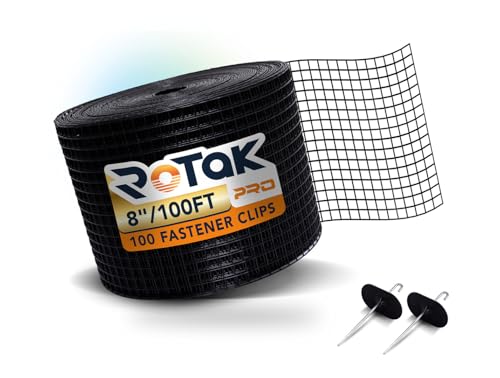 ROTAK Critter Guard PRO, 8 in x 100 ft, 100 clipsThe specification most of this shelf is copying: 8 in mesh, 100 ft, and 100 clips, which is the only combination here that gives you a fixing every foot without a second order. | The default kit, at one clip per foot | $124.99 on Amazon |
| 2 |  PROLEE Solar Panel Bird Guard, 8 in x 100 ft, 100 clipsThe same mesh and the same clip count as the ROTAK, with a heavy-duty cable cutter in the box — which is the single most useful thing a seller can add to this category. | The kit that includes the cutter | $62.99 on Amazon |
| 3 |  ExploreHorizon Solar Panel Critter Guard Kit, 8 in x 100 ftThe only kit here that ships gloves AND pliers with the mesh. Cut galvanized mesh has sharp ends and fighting it with the wrong tool is the part of this job people regret. | The kit that includes the tools | $35.99 on Amazon |
| 4 |  ROTAK Critter Guard, 6 in x 100 ft, 100 clipsROTAK's 6 in kit, for arrays mounted close to the roof deck. Cheaper and easier to handle than the 8 in PRO, and useless if your gap is taller than the mesh. | A shallow panel-to-roof gap | $84.99 on Amazon |
| 5 |  ROTAK Critter Guard PRO roll, 8 in x 100 ftThe roll on its own, published as pairing with the fastener clips sold separately. The right purchase for a second run or a repair, and the wrong one for a first fit. | Topping up mesh when you already have clips | $94.99 on Amazon |
| 6 |  ROTAK Critter Guard, 8 in x 100 ft, 60 clipsThe same 100 ft of mesh with 60 clips instead of 100. That is a fixing every 20 in rather than every 12, and the gap between fixings is the part of this job that matters. | Only if you are also buying clips | $79.99 on Amazon |
#ad how we are funded · price as of October 24, 2026
The picks in full
Top pick The default kit, at one clip per foot
ROTAK Critter Guard PRO, 8 in x 100 ft, 100 clips
The specification most of this shelf is copying: 8 in mesh, 100 ft, and 100 clips, which is the only combination here that gives you a fixing every foot without a second order.
Published specifications
- Mesh height
- 8" (published)
- Roll length
- 100 ft (published)
- Mesh opening
- 1/2 in (published)
- Material
- Galvanized steel, black PVC coated (published)
- Clips included
- 100 (published)
- Clip spacing at 100 ft
- One per foot (arithmetic, not a published figure)
- Removal
- Published as removable without damage
Trade-offs
- 100 clips against a 100 ft roll is the ratio that does not leave you short mid-job
- 8 in covers the taller panel-to-roof gaps as well as the shallow ones
- PVC over galvanized steel is the right pairing on a roof — the coating is what stops rust streaking the shingles
- Published as removable without damage, which matters because panels have to come off for service
- Publishes no wire gauge, so 'heavy duty' in the title is not a number you can compare against anything
- No cutter in the box, and 1/2 in galvanized mesh is not something household scissors will cut cleanly
- Clips are plastic; the listing publishes no UV rating or service life for them
- 100 ft sounds generous and is not — a modest array perimeter consumes a surprising amount of it
Who it is forThe straightforward case: a pitched-roof array, a gap you have measured at under 8 in, and no mesh cutter problem because you already own one.
Skip it ifYou do not own a proper cutter. The PROLEE kit bundles one and that is worth more than any difference between the two meshes.
#ad how we are funded · price as of October 24, 2026
Where these specifications came from
No. 2 The kit that includes the cutter
PROLEE Solar Panel Bird Guard, 8 in x 100 ft, 100 clips
The same mesh and the same clip count as the ROTAK, with a heavy-duty cable cutter in the box — which is the single most useful thing a seller can add to this category.
Published specifications
- Mesh height
- 8" (published)
- Roll length
- 100 ft (published)
- Mesh opening
- 1/2 in (published)
- Material
- PVC-coated galvanized wire, black (published)
- Clips included
- 100 (published)
- Tool included
- Cable cutter (published)
- Removal
- Published as removable
Trade-offs
- Includes a cable cutter, which turns the worst part of this job into a manageable one
- Matches the 100-clip ratio, so the cutter is an addition rather than a trade
- Anti-rust PVC over galvanized wire, the same construction as the rest of the shelf
- Published as removable, so panel service is not a destructive operation
- No published wire gauge, same as every other kit here
- A bundled cutter is a bundled cutter — it is sized for this job and is not a tool you will reach for again
- No gloves, and freshly cut galvanized mesh ends are genuinely sharp
- PROLEE is a thinner brand presence than ROTAK if you care about being able to reorder the identical thing in three years
Who it is forFirst-time fitters, and anyone who has ever tried to cut welded wire mesh with the wrong tool and remembers it.
Skip it ifYou already own a decent pair of bolt cutters or aviation snips. Then you are paying for a tool you do not need and should buy on clip count alone.
#ad how we are funded · price as of October 24, 2026
Where these specifications came from
No. 3 The kit that includes the tools
ExploreHorizon Solar Panel Critter Guard Kit, 8 in x 100 ft
The only kit here that ships gloves AND pliers with the mesh. Cut galvanized mesh has sharp ends and fighting it with the wrong tool is the part of this job people regret.
Published specifications
- Mesh height
- 8" (published)
- Roll length
- 100 ft (published)
- Mesh opening
- 1/2 in (published)
- Material
- PVC vinyl-coated wire mesh (published)
- Clips included
- 70 fastener clips (published)
- Also included
- 100 cable ties, gloves, pliers (published)
- Clip spacing at 100 ft
- One per 17 in (arithmetic, not a published figure)
Trade-offs
- Gloves and pliers in the box — the listing even warns about the sharp cut ends, which is unusually honest
- 100 cable ties alongside the clips gives a second fixing method for awkward runs
- Same 1/2 in PVC-coated construction as the rest of the shelf
- Published as usable for vents and fence barriers too, so the offcuts are not waste
- 70 clips against a 100 ft roll is a fixing every 17 in — the cable ties are there to make up the difference
- Publishes no wire gauge, like everything on this shelf
- Pliers in a bundled kit are bundled-kit pliers
- Cable ties are UV-exposed on a roof and will need checking in a few seasons
Who it is forA first solar critter guard fit, by somebody who does not already own gloves and a decent cutter.
Skip it ifYour perimeter is near 100 ft and you want clips throughout. Buy the 100-clip kit instead and do not stretch 70 clips to fit.
#ad how we are funded · price as of October 24, 2026
Where these specifications came from
No. 4 A shallow panel-to-roof gap
ROTAK Critter Guard, 6 in x 100 ft, 100 clips
ROTAK's 6 in kit, for arrays mounted close to the roof deck. Cheaper and easier to handle than the 8 in PRO, and useless if your gap is taller than the mesh.
Published specifications
- Mesh height
- 6" (published)
- Roll length
- 100 ft (published)
- Material
- PVC coated galvanized steel (published)
- Clips included
- 100 (published)
- Removal
- Published as removable without damage
Trade-offs
- Less material to fight with on a roof, which is a real advantage at height
- Same 100-clip ratio as the 8 in kit
- Lower profile, so the finished job is less visible from the ground
- Correct choice on a low-standoff mount where 8 in would just be surplus buried under the eave
- Wrong product entirely if your gap exceeds 6 in, and you cannot know that without measuring
- Publishes neither a wire gauge nor the mesh opening, where the 8 in PRO at least states 1/2 in
- No cutter and no gloves
- Leaves you no margin — 8 in trimmed down is recoverable, 6 in short is a second order
Who it is forAnyone who has actually measured the gap between the underside of the panels and the roof surface and knows it is under 6 in.
Skip it ifYou have not measured. Buy the 8 in and trim, because the failure mode of guessing short is a return and a second trip onto the roof.
#ad how we are funded · price as of October 24, 2026
No. 5 Topping up mesh when you already have clips
ROTAK Critter Guard PRO roll, 8 in x 100 ft
The roll on its own, published as pairing with the fastener clips sold separately. The right purchase for a second run or a repair, and the wrong one for a first fit.
Published specifications
- Mesh height
- 8" (published)
- Roll length
- 100 ft (published)
- Mesh opening
- 1/2 in (published)
- Material
- Galvanized steel, black PVC coated (published)
- Clips included
- None — published as pairing with clips sold separately
Trade-offs
- Correct product when the array is bigger than one kit and you only ran out of mesh
- Identical mesh specification to the kit versions
- Avoids paying twice for clips you already have spare
- Useful for a repair after panel service, when a short run has to be remade
- No clips, so as a first purchase it is an incomplete job and a second order
- The listings in this range look nearly identical — it is genuinely easy to buy this one by mistake
- No published wire gauge
- No cutter, no gloves
Who it is forA second run on a large array, or a repair, by somebody who already has a bag of clips.
Skip it ifThis is your first order. You will not have clips, and mesh without fixings sits in the garage until you order again.
#ad how we are funded · price as of October 24, 2026
Where these specifications came from
No. 6 Only if you are also buying clips
ROTAK Critter Guard, 8 in x 100 ft, 60 clips
The same 100 ft of mesh with 60 clips instead of 100. That is a fixing every 20 in rather than every 12, and the gap between fixings is the part of this job that matters.
Published specifications
- Mesh height
- 8" (published)
- Roll length
- 100 ft (published)
- Mesh opening
- 1/2 in (published)
- Material
- Galvanized steel, black PVC coated (published)
- Clips included
- 60 (published)
- Clip spacing at 100 ft
- One per 20 in (arithmetic, not a published figure)
Trade-offs
- Identical mesh to the 100-clip kit — the roll is not the compromise
- Genuinely fine on a small array where 60 clips comfortably covers the perimeter
- Same removable-without-damage construction
- Cheapest way into the brand if you already have fixings
- 60 clips against a 100 ft roll is the mismatch — you run out of fixings before you run out of mesh
- Spacing the clips out to make them reach is the one thing you should not do, because the unclipped span is where the mesh gets levered
- No published wire gauge
- Buying clips separately usually erases the saving
Who it is forA short perimeter, or a buyer who has already priced a separate bag of clips and done the arithmetic.
Skip it ifYour perimeter is anywhere near 100 ft. Buy the 100-clip kit — the difference in price is smaller than the difference in fixings.
#ad how we are funded · price as of October 24, 2026
Where these specifications came from
How it attaches, and why that is the safety question
The mesh clips to the module frame. It does not screw to the roof and it does not screw to the panel.
Unirac describes its GUARDIAN system as a tool-free design that "clips securely in place in three simple steps: Clip, Cover, and Cap", with the clips engaging the module return flange. That flange is the lip on the underside edge of the panel frame, and it is the attachment point the whole category is built around. The consumer kits use the same principle with plastic clips instead of aluminum ones.
This is not a detail. Two things on a solar roof are expensive to compromise: the roof penetrations, which are the waterproofing, and the module frames, which carry the panel warranty. A clip that hooks a flange touches neither. Anything that involves drilling, screwing or adhering to a panel frame or a shingle is a different job with a different risk, and it is not what these kits are for.
Unirac also notes the clips work with modules with a return flange specifically. Not every module has one. That is a fitment question of exactly the kind this site exists to ask before you buy — the same question as whether a baffle fits your mount, applied to a roof.
Cut the route as well as the perimeter
Mesh closes the destination. It does nothing about how the animal reached your roof, and the route is usually free to remove.
The University of Nebraska Extension recommends trimming tree limbs at least 8 feet away from buildings to stop squirrels jumping to roofs, and adds a point most people miss: failing to trim the upper branches simply lets a squirrel drop down onto the roof from above. The Alabama Cooperative Extension System publishes the same 8 ft figure and the arithmetic behind it — gray squirrels jump about 4 ft vertically and roughly twice that horizontally.
That is the identical number that governs feeder clearance, which is not a coincidence. It is one animal with one set of capabilities, and everything on this site is downstream of them.
What we would not do
- Fit mesh without inspecting under the panels first. Named again because it is the failure that turns a Saturday job into a call-out.
- Drill anything. Not the frame, not the roof. The clips exist precisely so you do not have to, and a penetration you made yourself is a leak you own.
- Substitute chicken wire. It is not PVC-coated, it will rust on a roof, and it will streak the shingles — the same reason vent guards on a roof should be stainless rather than galvanized bare.
- Buy an ultrasonic device for this. The category publishes nothing measurable, and a cavity under a panel array is about the worst possible acoustic environment to aim an unverifiable claim at.
- Go up there at all if roof work is not something you do. This is perimeter work along the edge of an array on a pitched surface. Installers charge for this partly because it is genuinely exposed.
One more, less obvious: do not fit the mesh so tightly to the roof surface that it blocks drainage. The cavity sheds water and debris, and mesh at a 1/2 in opening passes water fine but can dam up against leaf litter if it is pinned flat into the shingle line.
Questions people actually ask
- How do I stop squirrels getting under my solar panels?
- Fit PVC-coated galvanized steel mesh around the array perimeter, clipped to the module frames. Measure the panel-to-roof gap first so the mesh height covers it, and have the array inspected and any existing nest cleared before the perimeter is closed.
- What size mesh do I need for solar panel critter guard?
- The kits sell 6 in and 8 in heights and Unirac publishes 5 in, 6 in and 8 in, so measure your own gap at its largest point and buy taller than that. Mesh that is too tall can be trimmed; mesh that is too short means a second order.
- Does critter guard damage the panels or the roof?
- It should not. The clips engage the module frame's return flange, so nothing is drilled into the roof or the panel. That is the point of the design, and it is why kits publish that they are removable without damage.
- Can squirrels really get under solar panels?
- Easily. The University of Nebraska Extension states squirrels can squeeze through holes 1.5 inches in diameter and enlarge smaller ones by gnawing. An array perimeter is an open gap along the full length of every row.
- What damage do squirrels do to a solar array?
- They chew the DC wiring that runs between the modules in the cavity under the panels. Greentech Renewables notes that keeping wiring snug against the racking and module frames makes sagging cable much less likely to be targeted in the first place.
- Is 1/2 inch mesh small enough?
- For squirrels and nesting birds, comfortably. Note that the same Nebraska guidance specifies quarter-inch hardware cloth for sealing air vents, which is a different job — sealing an opening in a structure, rather than fencing a ventilated cavity.
- Should I pay an installer to do this?
- It is a reasonable thing to pay for. The professional job includes inspecting under every panel and clearing nests and debris before the mesh goes on, and it is roof-edge work along the whole array perimeter.
Sources
Read next
- Squirrel proofing your house
Exclusion hardware prevents entry and must never be fitted over an occupied one. Where they get in, and what closes it.
- Squirrel damage around the yard
Gnawing is maintenance, not appetite, so taste repellents miss. Conduit for cable, covers for cushions, and the mains-voltage line to not cross.
- How high should a squirrel baffle be?
Four to five feet high, eight to ten feet clear. The sourced numbers, the arithmetic, and the popular page that gets it wrong.
- Do ultrasonic repellents work?
No listing publishes a frequency, sound level, coverage area or habituation data. Why that means we will not rank them, and what to buy instead.
- Active Deterrents
Motion sprinklers, seed treatments and per-animal answers for raccoons, opossums and skunks, judged on whether the mechanism is published or just claimed.