Guides / Garden
Plants squirrels avoid
Squirrels are not browsers, they are diggers. That changes what plant choice can do for you, and it makes bulb selection the highest-leverage decision in the whole garden.
Plant choice matters far less against squirrels than against deer, because squirrels dig rather than browse. The one place it genuinely helps is bulbs: squirrels dig freshly planted bulbs in the weeks after planting. Wire mesh laid over the planting area and covered with soil is the reliable fix.
This page is shorter on plant names than people expect, and the reason is structural. With deer, plant choice works because deer are eating foliage and can choose to eat something else. With squirrels the damage is mostly digging, and a squirrel digging in fresh soil is not evaluating your plant selection.
Digging, not browsing
| Deer | Squirrels | |
|---|---|---|
| Primary damage | Browsing foliage, buds and shoots | Digging, plus taking fruit and seed |
| Does plant choice help? | Yes — they can choose to eat elsewhere | Barely — digging is not about the plant |
| What triggers it | Hunger and availability | Disturbed soil, and caching instinct in autumn |
| The reliable fix | Fence at 8 to 10 ft, or repellent on a schedule | A physical barrier over the soil |
The deer version of this argument is on deer-resistant plants, where planting genuinely is a useful layer.
That second row is the whole page. A squirrel excavating a newly planted bed is responding to freshly turned soil, which reads as either a cache site or a place something was buried. The plant that happens to be there is incidental.
Where plant choice does help: bulbs
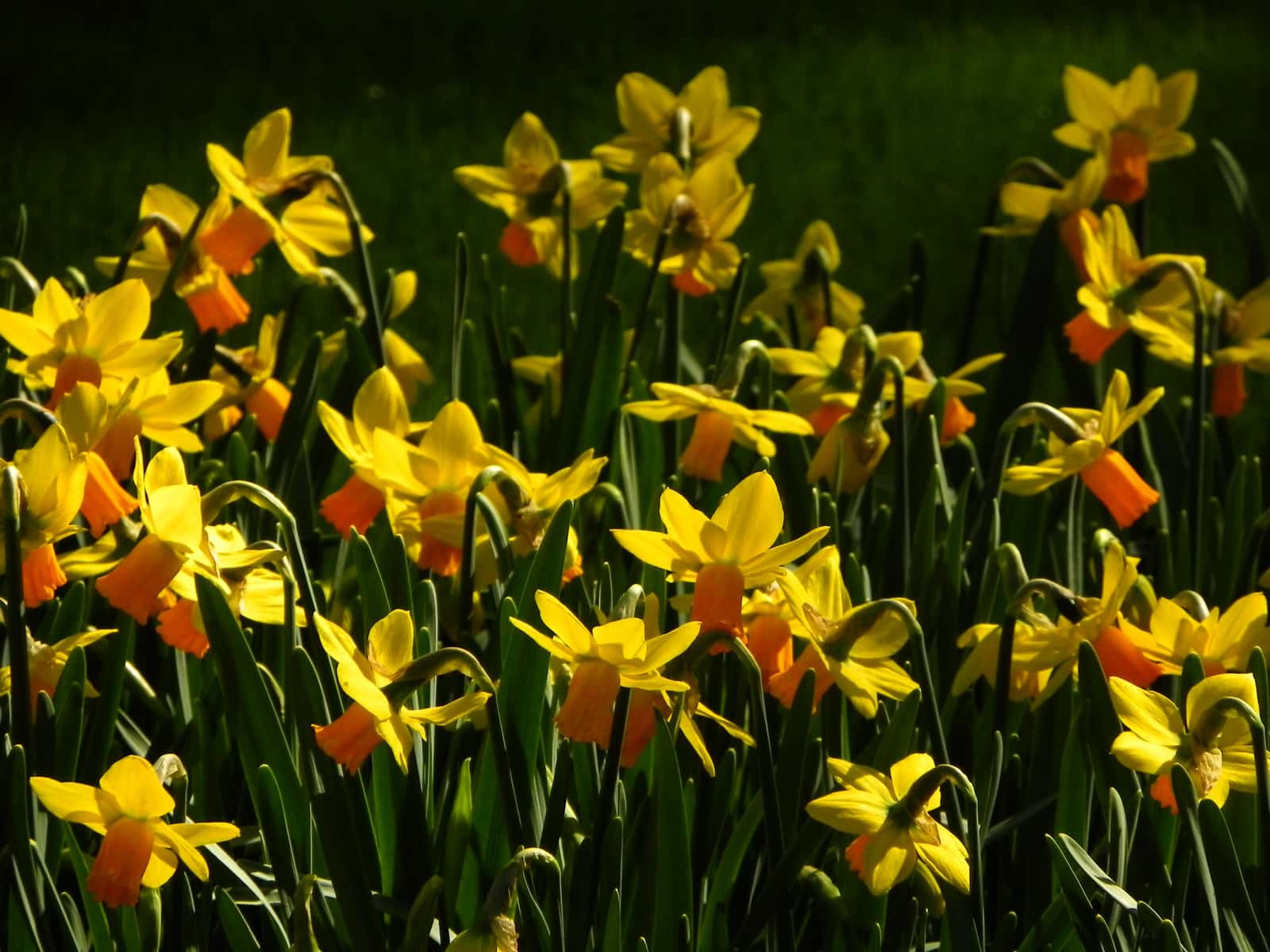
Bulbs are the exception, and it is a real one. Some bulbs are toxic or unpalatable and get left alone; others are essentially food and get dug up systematically. Daffodils are the classic example of the first category — every gardener notices that their daffodils survive while their crocus and tulips vanish.
We are not going to publish a definitive palatability table, because we have not found an authority that publishes one and inventing it would break our sourcing standard. What we can point you at is the extension lists that cover this alongside deer and rabbits — Colorado State University Extension publishes one for rabbit, ground squirrel and deer-resistant plants, and your own state's service will have a regional equivalent.
The fix that always works: wire over the bulbs
Whatever you plant, this closes the vulnerable window entirely, and it is the single most useful technique in this section of the site.
- Plant the bulbs as normal and firm the soil.
- Lay a sheet of 1 in or smaller mesh flat over the whole planted area, extending a few inches past it.
- Pin the corners with landscape staples so it cannot be flipped.
- Cover with an inch or two of soil, then mulch as usual.
- Shoots grow up through the mesh in spring; the digging is blocked all winter.
The reason this works so well is that the vulnerable window is short. Squirrels dig where soil has recently been disturbed. Get the bulbs through the first few weeks and the problem largely disappears on its own — which is also why the mesh can stay buried and forgotten rather than needing seasonal management.
The University of Georgia Extension notes hex netting is sold in 1 in and 2 in openings. Take the 1 in or smaller; you are doing the work once.
Baffleworks is funded by affiliate commission. If you buy through a link on this page we may earn a commission at no extra cost to you, and it never decides a ranking. Full disclosure · how we pick.
Quick picks
Ranked, with the trade-off named. Tap a row for the full write-up; the price button goes straight to Amazon.
| # | Product | Best for | Price |
|---|---|---|---|
| 1 |  HUNKA Hardware Cloth, 1/2 in mesh, 36 in x 50 ft, 19 gaugeRecommended by specification rather than by brand: 1/2 in mesh, 36 in tall, galvanized. This roll meets it — any roll matching the same three numbers does the same job. | A permanent rabbit barrier | $42.99 on Amazon |
| 2 |  ANC POP Pop-Up Mesh Plant Cover, 2-packANC POP's pop-up cage, sold as a pair. The single-unit listing is gone, so this is now the only way to buy this cage. | Two beds at once | $51.99 on Amazon |
| 3 |  Bobbex-R Rabbit, Squirrel and Chipmunk Repellent, 32 ozFormulated for the small raiders rather than for deer, which matters because the animal eating your bulbs is usually not the animal eating your hostas. | Rabbits and chipmunks specifically | $27.95 on Amazon |
| 4 |  Plantskydd Ready-to-Use Liquid, 1.3 galReady-to-use and covering the widest published species list here: deer, rabbits, elk, moose, voles, squirrels and chipmunks from one bottle. | No mixing, widest species list | $80.18 on Amazon |
#ad how we are funded · price as of October 24, 2026
The picks in full
Top pick A permanent rabbit barrier
HUNKA Hardware Cloth, 1/2 in mesh, 36 in x 50 ft, 19 gauge
Recommended by specification rather than by brand: 1/2 in mesh, 36 in tall, galvanized. This roll meets it — any roll matching the same three numbers does the same job.
Published specifications
- Mesh
- 1/2 in x 1/2 in (published); 1 in or smaller is the spec, 1/2 in excludes young rabbits
- Roll
- 36 in W x 50 ft L (published)
- Gauge
- 19, 0.91 mm wire diameter (published)
- Material
- Hot-dip galvanized over annealed wire (published)
- Height above ground
- At least 2 ft (Colorado State Extension)
- Buried depth
- 4 to 8 in (Colorado State Extension)
Trade-offs
- Extension services put chicken wire, hardware cloth or flexible netting at 2 ft high and buried 4 to 8 in as fairly effective against rabbits
- A permanent fix rather than a reapplication schedule
- Half-inch mesh also excludes young rabbits, which 2 in poultry netting does not
- Hot-dip galvanized after weaving, which is the coating that survives being buried
- Burying the bottom edge is the whole job, and it is real digging
- Galvanized wire is visible in a way black deer netting is not
- 36 in tall means you are burying roughly a third of what you paid for
- The listing warns of sharp edges at both ends — this is a gloves job, and nothing about this brand makes it better than any other roll at the same spec
Who it is forA vegetable plot or a border with a persistent rabbit problem, where you would rather dig once than spray for years.
Skip it ifDeer are the actual problem. Two feet of wire is a step-over for a deer; the height that matters there is 8 ft and up. See deer fencing.
#ad how we are funded · price as of October 24, 2026
Where these specifications came from
No. 2 Two beds at once
ANC POP Pop-Up Mesh Plant Cover, 2-pack
ANC POP's pop-up cage, sold as a pair. The single-unit listing is gone, so this is now the only way to buy this cage.
Published specifications
- Dimensions
- 40 x 40 x 30 in each (published)
- Quantity
- 2
- Stakes
- 8 ground stakes
- Assembly
- Pop-up, folds flat
Trade-offs
- Two beds covered from one purchase, which suits a plot where more than one bed is under pressure
- Identical footprint, so beds can be laid out to one dimension
- You are committed to the 40 in module whether or not your beds match it
- The published 30 in height caps what you can grow under it
Who it is forA vegetable plot with more than one bed under pressure, which is most vegetable plots by midsummer.
Skip it ifYou have one bed and do not want a spare. There is no single-unit listing for this cage any more, so the cheaper two-pack covers on this page are the alternative.
#ad how we are funded · price as of October 24, 2026
Where these specifications came from
No. 3 Rabbits and chipmunks specifically
Bobbex-R Rabbit, Squirrel and Chipmunk Repellent, 32 oz
Formulated for the small raiders rather than for deer, which matters because the animal eating your bulbs is usually not the animal eating your hostas.
Published specifications
- Size
- 32 oz concentrate (published)
- Targets
- Rabbit, squirrel, chipmunk
- Form
- Dilute and spray
- Part number
- B550120
Trade-offs
- Targets the species that deer repellents are not formulated for
- Concentrate, so a season of reapplication is affordable
- Same reapplication burden as every other repellent
- It will not fix a rabbit problem that a 2 ft buried fence would fix permanently
Who it is forBulbs, seedlings and container plants that rabbits, chipmunks or squirrels are working through, where a cage would be impractical.
Skip it ifThe damage is at ground level along a boundary. Colorado State Extension is specific: two feet of wire buried 4 to 8 inches is fairly effective against rabbits, and that is a permanent fix a spray is not. See rabbit fencing.
#ad how we are funded · price as of October 24, 2026
No. 4 No mixing, widest species list
Plantskydd Ready-to-Use Liquid, 1.3 gal
Ready-to-use and covering the widest published species list here: deer, rabbits, elk, moose, voles, squirrels and chipmunks from one bottle.
Published specifications
- Size
- 1.3 gal ready-to-use (published)
- Targets
- Deer, rabbit, elk, moose, voles, squirrels, chipmunks
- Form
- Ready-to-use liquid
- Part number
- PS-5L
Trade-offs
- No mixing, so it is the one people actually reapply on schedule
- The species list covers the garden raiders as well as the browse animals
- 1.3 gal is enough to treat a real garden rather than a planter
- Ready-to-use costs considerably more per treated area than concentrate
- It is a blood-meal-based product and it smells like one for a day or so
Who it is forA mixed garden problem — deer on the shrubs, rabbits on the greens, chipmunks in the bulbs — where you want one bottle rather than three.
Skip it ifYou are treating a large area regularly. Buy the powder concentrate and mix it; the ready-to-use maths stops working quickly at scale.
#ad how we are funded · price as of October 24, 2026
Where these specifications came from
Repellents, and their real limits here
Plant repellents formulated for the small raiders — Bobbex-R names rabbits, squirrels and chipmunks; Plantskydd's ready-to-use lists squirrels and chipmunks among its targets — reduce damage on treated foliage and bulbs while the coating is present.
The limit is the same as everywhere: rain strips it, new growth is untreated, and on a buried bulb the coating is not where the digging happens. Use a repellent for containers, specimen plants and beds you will not cover. Do not use one as the primary defense on a bed you could simply cover.
Fruit and vegetables
Plant choice does essentially nothing for soft fruit and tomatoes. A squirrel taking a single bite from each ripening tomato is not making a considered botanical judgement, and there is no variety that solves it.
That is a barrier problem, and a rigid cage over the bed is the answer — plant cages and cloches covers the options, and keeping squirrels out of the garden covers the whole picture.
Containers are the same problem at a smaller scale, and they are easier to solve because the area is small and the rim gives you an edge to cut to. Keeping squirrels out of potted plants covers the surface covers that stop the digging.
Questions people actually ask
- What plants do squirrels avoid?
- Some bulbs are unpalatable or toxic and get left alone — daffodils being the commonly noticed example — while crocus and tulips get dug. For a list that applies to your region, use your state extension service; Colorado State University Extension publishes one covering squirrels, rabbits and deer together.
- Does plant choice stop squirrels the way it slows deer?
- Much less. Deer browse and can choose to eat elsewhere; squirrels mostly dig, and digging is a response to disturbed soil rather than to the plant. Barriers do the work here.
- How do I stop squirrels digging up bulbs?
- Lay 1 in or smaller mesh flat over the planted area, pin the corners, and cover with an inch or two of soil. Shoots grow through in spring. The vulnerable window is the first few weeks after planting.
- Do squirrel repellents work on plants?
- On treated foliage while the coating is there, with the usual reapplication burden. On a buried bulb the coating is not where the digging happens, so a barrier is the better tool for bulbs.
- Is there a tomato variety squirrels leave alone?
- No. A squirrel taking one bite from each ripening tomato is not making a botanical choice. That is a barrier problem — a rigid cage over the bed.
Sources
Read next
- How to keep squirrels out of the garden
Squirrels work a garden rather than browse it, which is why a cage holds and a drape does not.
- The best plant cages and cloches
Pop-up cages and cloches ranked by published dimensions and how well the skirt actually pins down.
- Deer-resistant plants
Resistant means less-preferred, not inedible. What planting actually buys, and where to get a list that applies to your region.
- How to keep chipmunks out of the garden
Too light for a weight mechanism, small enough to pass 2 in mesh. Why the answer is a finer aperture.
- Garden Protection
Cages, cloches, netting and rabbit fencing, sized to the animal doing the damage rather than to the bed.